Tariff claims clash with economic reality as Toyota and Stellantis announce US expansions
While major automakers pivot production to American soil, research indicates domestic households and firms are absorbing the vast majority of tariff-related inflation.
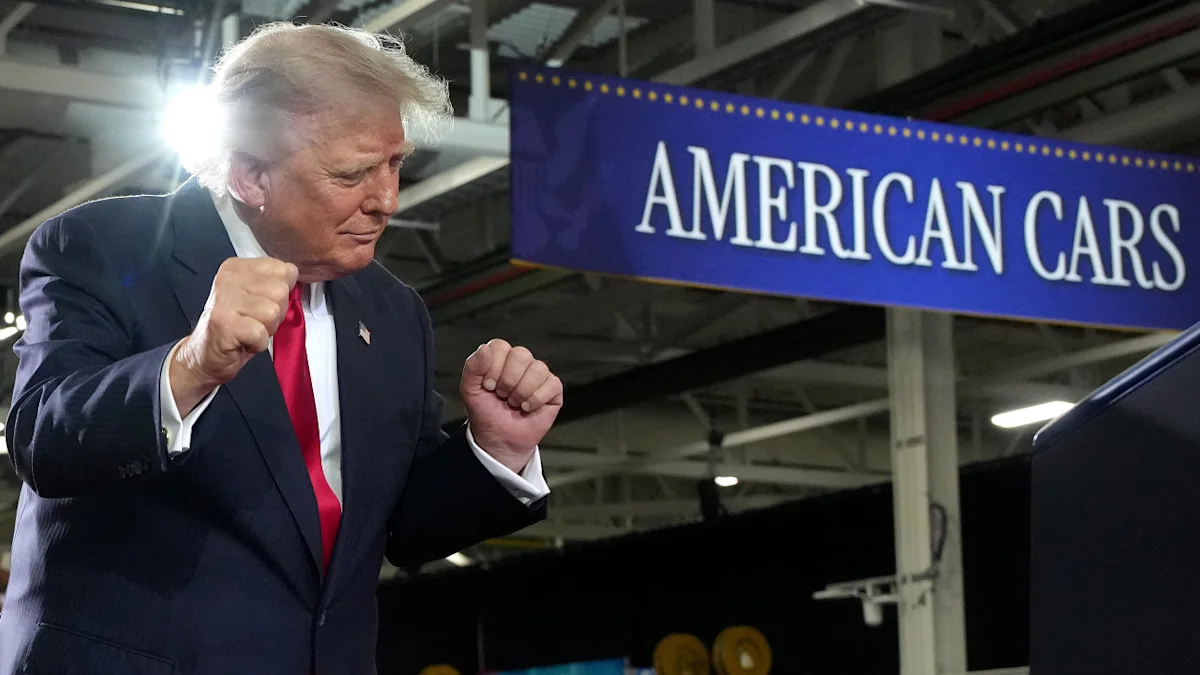
President Donald Trump has declared the US economy is "rocking," pointing to recent announcements from major manufacturers as evidence that his tariff strategy is successfully driving corporate investment back to American soil. Citing billions of dollars in new capital expenditure from companies such as Toyota and Stellantis, Trump argued that the policy has forced firms to rethink their supply chains to avoid duties. During a recent interview with Fox News, the President stated that tariffs have been "incredible," noting his administration has collected "hundreds of billions of dollars" in revenue despite a recent Supreme Court ruling that struck down the initial legal mechanism used to impose many of those duties.
Toyota confirmed a $3.6 billion investment to construct a new manufacturing facility at its San Antonio campus in Texas. The Japanese automaker plans to shift production of its Tacoma pickup truck from a plant in Baja California, Mexico, to Texas, a move expected to create more than 2,000 jobs. This expansion aligns with the White House’s broader narrative that production is returning to the United States, alongside significant pledges from other industrial giants. Stellantis, for instance, announced a $13 billion investment intended to expand its domestic production by more than 50%, described as the largest in the company’s history.
The President highlighted these moves, along with investments from Kraft Heinz and various semiconductor and energy businesses, as proof that companies are choosing to manufacture locally rather than pay tariffs on imported goods. Trump maintained that alternative legal routes remain viable following the Supreme Court’s decision, describing the new approach as "just as good" despite being more complex. He further pointed to record highs in the S&P 500 and Dow Jones Industrial Average, supported by strong corporate earnings and optimism regarding geopolitical tensions, as indicators of sustained economic success.
However, economists and financial researchers present a more nuanced view of the tariff impact, suggesting that the costs are predominantly borne by domestic entities rather than foreign producers. Research from the Federal Reserve Bank of New York indicates that nearly 90% of tariff costs are absorbed by US firms and consumers. The Joint Economic Committee estimated that these duties cost the average American family more than $1,700 during the 12 months from February 2025 through January 2026, raising concerns about the erosion of household purchasing power.
The inflationary pressure from tariffs compounds a longer-term decline in the value of the dollar. Since 2020, the US consumer price index has risen by 28%, with data from the Federal Reserve Bank of Minneapolis showing that $100 in 2026 holds the same purchasing power as just $11.74 did in 1970. While investors have responded to the economic outlook with record market valuations, the trade-off between accelerated domestic manufacturing and higher consumer costs remains a critical variable for long-term financial stability.