Taliban investigation yields no results as Herat attack deepens Shiite fears
While authorities pledge protection, witness accounts and expert analysis point to a governance failure where security is defined by military presence rather than political recognition or legal equality.
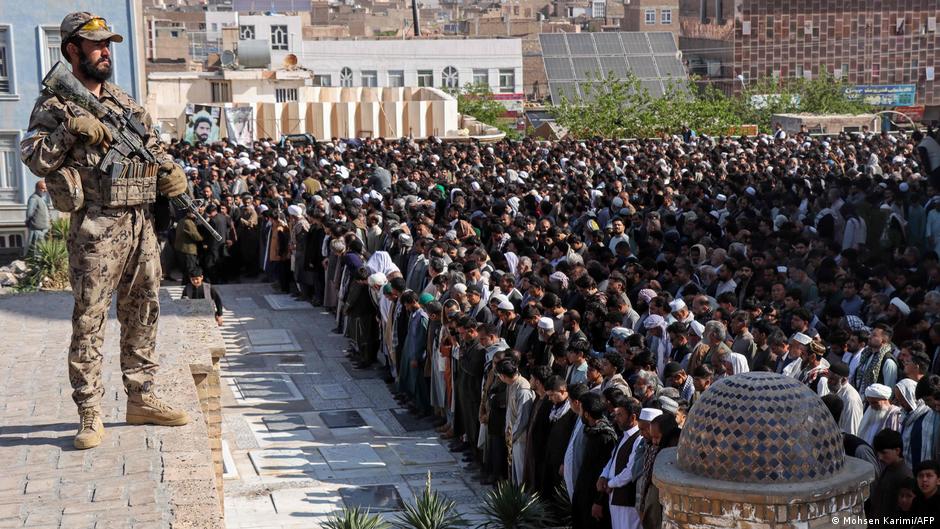
An attack on a Shiite place of worship in Herat, western Afghanistan, resulted in the deaths of at least 11 people in early April, though local sources suggest the casualty toll may be higher. Taliban authorities have announced an investigation and pledged to hold perpetrators accountable, yet no results have been reported to date and no group has claimed responsibility for the incident. This silence has intensified feelings of vulnerability within the Shiite minority, who constitute between 10 and 20 per cent of the population, challenging the regime's assertion that it has restored stability and guaranteed protection for all citizens regardless of religious affiliation.
A witness account from a woman in Herat describes the violence, noting that 14 people were buried and that injured individuals were transported to nearby Iran for treatment. She reported that her son was killed and his wife injured, leaving the children afraid to attend school due to the presence of armed guards outside. The witness stated there has been no tangible support from authorities despite promises made during the funeral, and she is considering leaving the country but faces barriers to seeking refuge in Iran.
Niala Mohammad of the Center for the Study of Organized Hate characterises the attack as a manifestation of deep-rooted vulnerability, noting that the Taliban's ultra-conservative Sunni interpretation of Islam labels Shiites as heretics. Besmillah Taban, a former Afghan Criminal Investigation Department head, suggests that violence against Shiites is driven by ideological prejudice, potentially facilitated by a fatwa declaring them infidels, which would allow fighters to act without direct regime orders. Mashkur Kabuli, a Shiite cleric in exile, reiterates that the Taliban do not accept religious denominations other than the Sunni Hanafi school and expect others to convert, viewing this as structural exclusivity.
The incident highlights ongoing structural discrimination against the Shiite minority in Afghanistan, where the teaching of Shiite jurisprudence has been banned in all schools and the Shiite legal system abolished. International organisations have documented measures affecting the community, including the expulsion of families from Bamiyan Province and the forced conversion of Ismaili members in Badakhshan. These developments affect both religious practice and institutional participation, with the attack in Herat taking place against a backdrop of these documented restrictions.
Observers view the situation of the Shiite community as a barometer of the Taliban's ability to institutionally safeguard religious diversity. Security is defined not solely by military presence, but by political recognition, legal equality, and reliable protection. The attack in Herat has shaken the promise made by Taliban spokespeople that all citizens are protected, and for many members of the community, the question of safety remains fundamental.