Takamatsu High Court Upholds February House of Representatives Election Despite Vote Disparity
The Takamatsu High Court has ruled that the February House of Representatives election was constitutional, dismissing a lawsuit that sought to invalidate the results due to vote disparity.
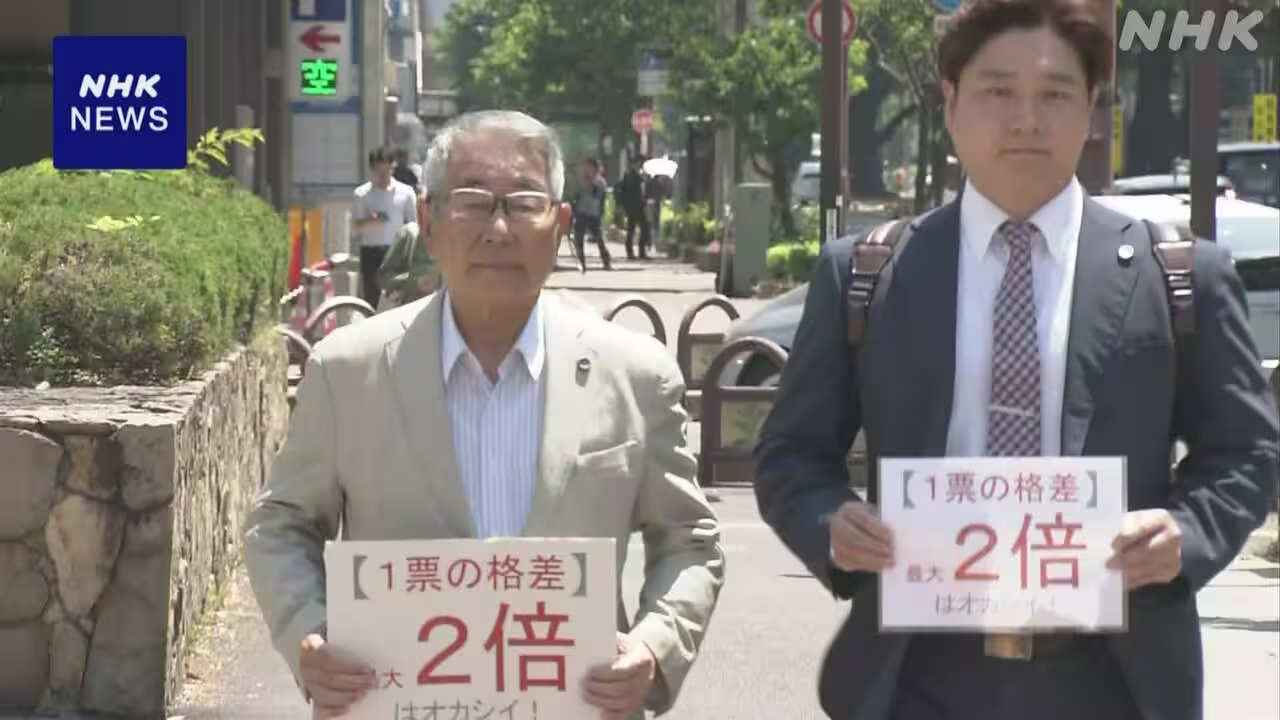
The Takamatsu High Court has delivered a ruling declaring the February House of Representatives election constitutional, effectively rejecting a legal challenge that sought to invalidate the vote. The court determined that the maximum vote disparity recorded during the election, a ratio of 2.1 to 1, did not constitute a violation of the constitution.
The decision, issued on 19 May 2026, addresses a specific lawsuit challenging the electoral integrity of the February poll. The plaintiffs had argued that the disparity in voting power, often referred to as the "one vote disparity," rendered the election invalid. However, the High Court, which holds jurisdiction over Kagawa Prefecture and surrounding areas, found the 2.1-to-1 ratio to be within constitutional bounds.
This ruling stands in contrast to historical precedents set by Japan’s Supreme Court, which has frequently declared similar vote disparities unconstitutional in past lower house elections. The Takamatsu High Court’s determination suggests a different judicial interpretation of the current electoral framework, although the specific legal reasoning employed to justify the acceptance of this disparity ratio was not fully detailed in the available reporting.
The case highlights the ongoing tension between the principle of equal voting rights and the practical administrative constraints of Japan’s electoral system. By upholding the election results, the court has maintained the validity of the February House of Representatives election, leaving the political outcome intact despite the acknowledged disparity in vote weight.
It remains unclear whether the plaintiffs intend to appeal the High Court’s decision to the Supreme Court of Japan. The truncated nature of the source material from NHK News Japan does not provide further insight into the court’s detailed legal arguments or the potential for further litigation regarding the 2.1-to-1 ratio.