Taiwan president rejects ‘foreign forces’ interference as defence spending surges
Taipei’s parliament approves $25 billion defence bill for US weapons as President Lai Ching-te insists island’s future cannot be held hostage by external leverage or fear.
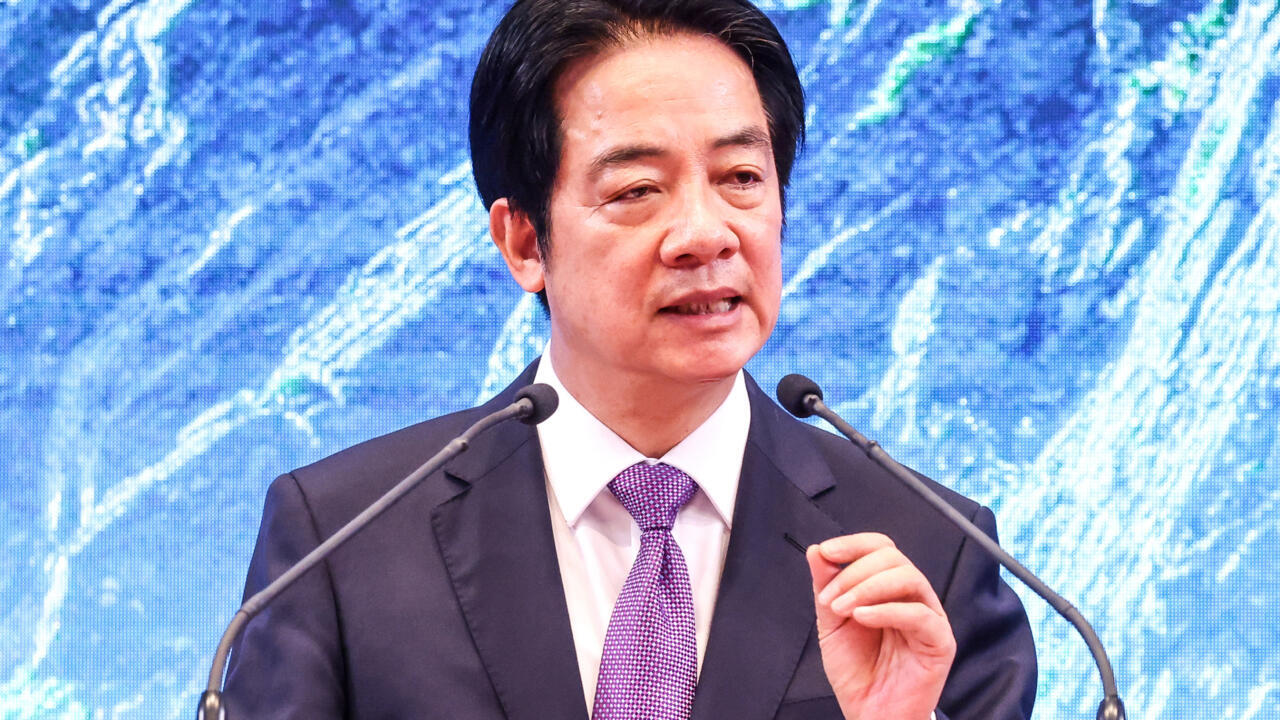
Taiwanese President Lai Ching-te has firmly rejected the notion that external powers should dictate the island’s geopolitical trajectory, stating that “foreign forces” cannot decide the future of the democratic territory. Speaking on Wednesday to mark the second anniversary of his presidency, Lai emphasised that Taiwan’s destiny must not be held hostage by fear, division, or short-term strategic interests. The remarks were delivered against a backdrop of heightened diplomatic tension following comments by US President Donald Trump, who suggested that arms sales to Taiwan could be utilised as leverage in negotiations with Beijing.
Lai’s address came shortly after Trump indicated that he would determine the pace of arms sales “over the next fairly short period of time,” while urging both China and Taiwan to “cool down.” These statements followed a state visit by the US president to Beijing, where Chinese President Xi Jinping reportedly pressed Washington not to support Taiwan. In response, Lai’s government has maintained that US policy on the island remains unchanged and that no commitments were made to China regarding arms transfers, asserting that Washington’s sales are a legal commitment to the defence of the island’s democracy.
To bolster its defensive capabilities, Taipei’s parliament recently approved a $25 billion defence spending bill, with the majority of funds earmarked for US weapons packages. Lawmakers indicated that the allocation would cover nearly $9 billion of an $11.1 billion arms package announced by Washington in December, alongside a second phase of sales valued at approximately $15 billion that has yet to receive final US approval. This financial commitment underscores Taiwan’s strategy to increase its own protection and reduce reliance on uncertain external guarantees, despite remaining heavily dependent on high-tech weaponry from the United States.
Lai clarified that the government’s increase in defence expenditure is intended to “prevent a war” rather than initiate one, noting that “threats are greater than ever before.” He asserted that Taiwan must possess the capability to protect itself and uphold peace and stability in the Taiwan Strait. While expressing willingness to engage in “healthy and orderly exchanges with China” on an equal footing, Lai insisted that the island would not sacrifice its sovereignty or its democratic way of life to appease external pressures.
Should the opportunity arise for direct dialogue, Lai stated he would emphasise to Trump that his government “upholds the status quo” and that it is China that is “undermining” regional peace and stability. A conversation between the two leaders would represent a significant departure from established diplomatic norms, as Washington switched recognition from Taipei to Beijing in 1979. Such a meeting risks a rupture with Beijing but highlights Taipei’s determination to assert its agency in the face of intensifying geopolitical scrutiny.