Japan Meteorological Agency issues aftershock warning after Kagoshima quake
The Japan Meteorological Agency has advised residents in Kagoshima Prefecture to remain vigilant for approximately one week following a significant seismic event on 20 May 2026.
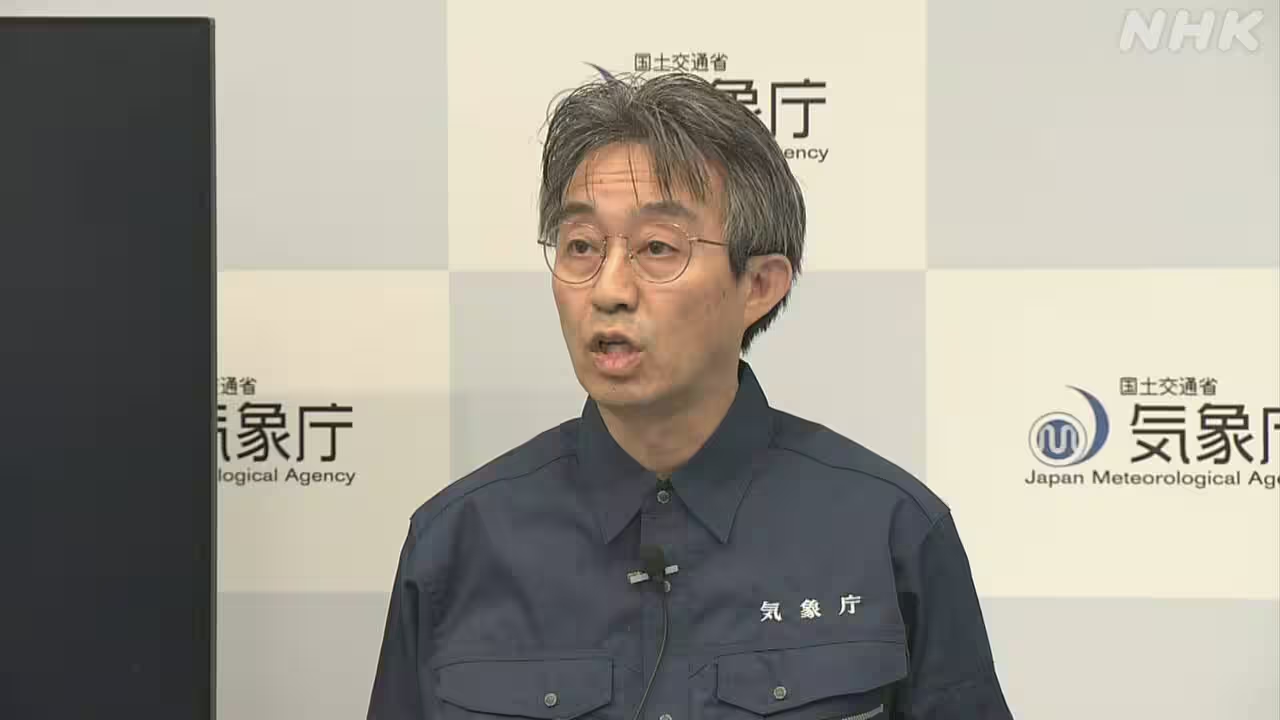
A strong 5 intensity earthquake struck the southern Amami region of Kagoshima Prefecture on 20 May 2026, prompting an immediate response from national authorities. The Japan Meteorological Agency (JMA) convened a press conference at 12:50 PM JST to address the incident, confirming the severity of the shaking and outlining the expected duration of seismic activity in the area.
The JMA explicitly advised the public to remain cautious for approximately one week due to the elevated risk of aftershocks. This warning follows the initial tremors, which registered a strong 5 intensity on Japan’s seismic scale. This level of intensity indicates strong shaking capable of causing damage to poorly constructed buildings and making it difficult for individuals to move without holding on to stable objects.
Updates provided at 13:01 JST and 13:05 JST confirmed that no tsunami warning was issued for the affected region. The agency stated there is no cause for concern regarding tsunamis, alleviating immediate coastal threats for the southern Amami islands. Aerial footage of the affected area was subsequently broadcast by NHK, providing visual context to the seismic event.
Reported impacts from the earthquake were limited but specific. By 13:04 JST, reports confirmed that an elevator had stopped at a hospital in Yoron Town, highlighting the operational disruptions caused by the strong shaking. While the exact magnitude, precise depth, and epicentre coordinates were not detailed in the initial reports, the observed intensity was sufficient to disrupt essential services in the region.
The JMA continues to monitor the situation closely as part of its mandate as Japan’s national authority for seismic data and disaster warnings. Residents in Kagoshima Prefecture are urged to adhere to the one-week caution period and remain prepared for potential secondary seismic events.