Taiwan President Lai Ching-te Links Status Quo to Supply Chain Security at COMPUTEX
Amidst a backdrop of US-China diplomatic friction and significant foreign investment pledges, the Taiwanese government emphasises that political stability is a prerequisite for global technology infrastructure.
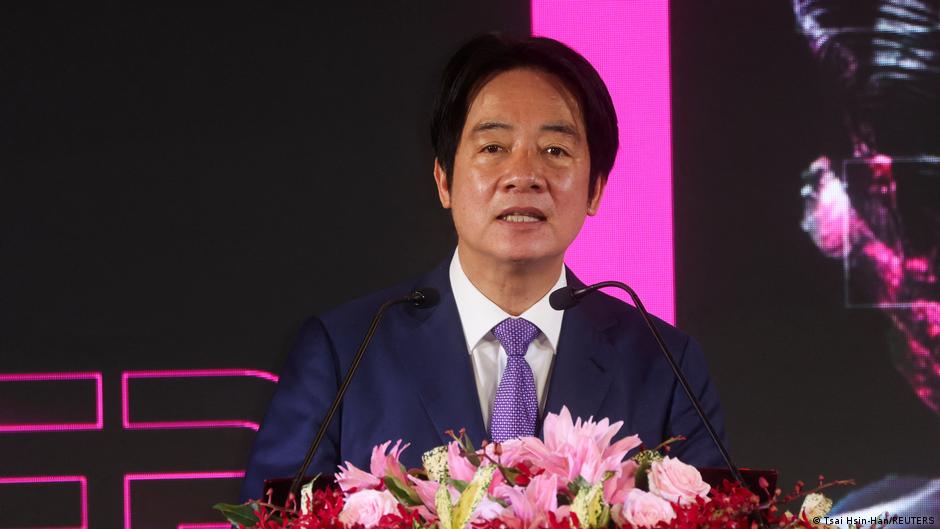
Taiwanese President Lai Ching-te has opened the COMPUTEX technology trade fair in Taipei, asserting that maintaining the political status quo is essential for securing global technology supply chains. Addressing executives from major technology firms, including Nvidia and Apple, at the Taipei World Trade Center on Tuesday, Lai emphasised that Taiwan’s role as a critical semiconductor manufacturer requires a stable and trustworthy governance environment.
Lai told assembled industry leaders that as the world’s demand for artificial intelligence grows, so does the reliance on Taiwan’s manufacturing capabilities. "The government will firmly safeguard peace and stability across the Taiwan Strait and is committed to maintaining the status quo," he said, referring to the narrow strip of ocean separating the island from mainland China. His remarks underscored the government’s position that political continuity is a key component of its value proposition to the global tech sector.
The event highlighted the strategic importance of Taiwan, home to TSMC, the world’s largest contract chipmaker. Nvidia CEO Jensen Huang spoke at the opening, describing Taiwan as the "epicenter of the ecosystem" for technology manufacturing. Huang also announced that Nvidia plans to invest approximately $150 billion annually in the region, a figure that underscores the scale of capital flowing into the island’s high-end semiconductor infrastructure.
The summit took place against a backdrop of heightened geopolitical friction. China asserts that Taiwan is part of its territory, creating a constant source of diplomatic tension. For decades, an uneasy stalemate has endured, with Beijing maintaining its claims but not acting on threats to seize the territory, while the international community largely adheres to a "one China" policy.
This delicate balance was further complicated by recent developments involving the United States. During a recent trip to China, US President Donald Trump paused a fresh tranche of military assistance for Taipei and made comments suggesting Taiwan had "stole" the chip industry from the US. Despite these tensions, the US continues to walk a fine line, adhering to the "one China" policy while remaining Taiwan’s most important security guarantor and trade partner.