Syria highway collision kills 35 as infrastructure failures expose governance gaps
At least 35 people died and 30 were injured after two buses collided on the Deir Az Zor–Damascus highway, highlighting the deteriorating state of Syria’s civilian infrastructure and the persistent public health crisis of road safety.
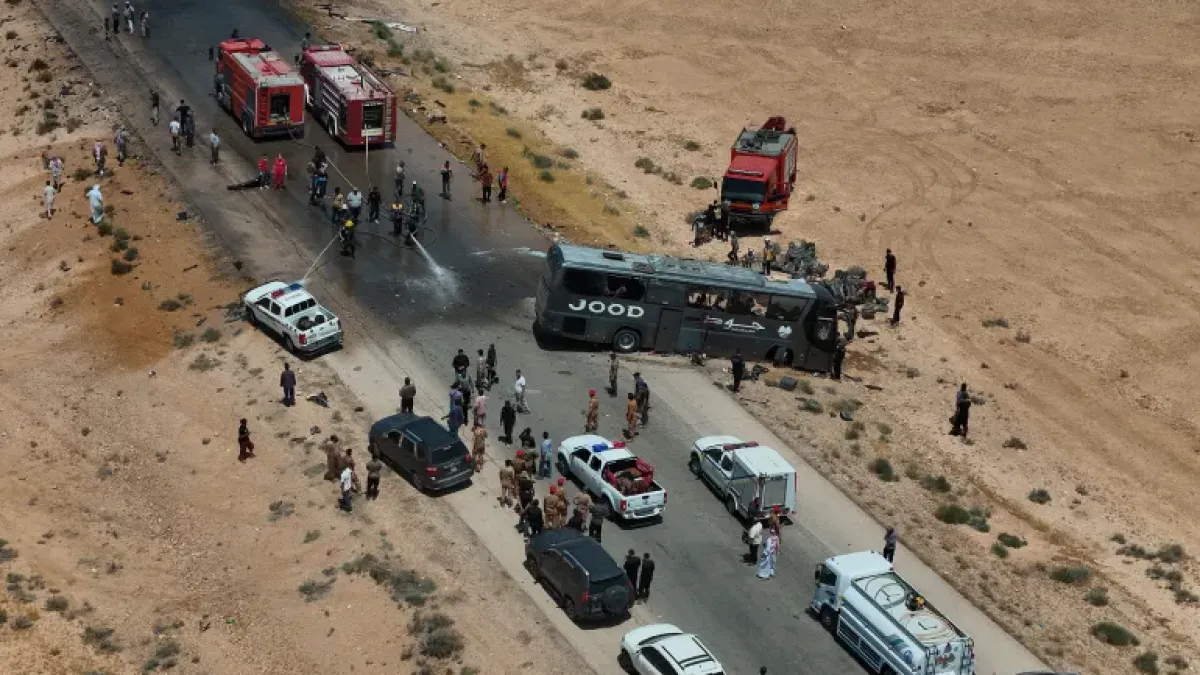
At least 35 people were killed and 30 injured following a collision between two buses on the Deir Az Zor–Damascus highway in Syria on Saturday. The incident occurred on the critical 400km route connecting eastern Syria to the capital, specifically between the towns of al-Sukhnah and Palmyra. The Ministry of Interior confirmed that one of the vehicles was transporting members of the Internal Security Forces, while the other was carrying civilians.
Emergency response efforts were immediately mobilised to the scene, with ambulances dispatched to the site. According to the state-run Syrian Arab News Agency (SANA), the severity of the crash necessitated the deployment of several helicopters to medically evacuate the injured. Those requiring treatment were transported to Homs Military Hospital, underscoring the reliance on military infrastructure for civilian emergency care.
The collision has drawn attention to the poor safety standards of the highway, a vital artery for national connectivity. The state of the road reflects the broader dire condition of Syria’s civilian infrastructure, which has suffered significant degradation following a civil war that lasted nearly 14 years. The lack of maintenance and safety protocols on such key transport links remains a persistent issue for the state’s governance capabilities.
This tragedy is part of a wider pattern of road safety failures in the country. In October, Minister of Disaster Management and Emergency Response Raed al-Saleh reported that more than 2,000 road traffic accidents had occurred between January and the end of September. He identified these incidents as among the leading causes of death in Syria, pointing to a systemic public health crisis exacerbated by inadequate infrastructure management.
The exact cause of the collision has not been detailed in official reports, leaving questions regarding whether mechanical failure, driver error, or road conditions played a primary role. As the death toll is currently reported as at least 35, authorities may need to revise these figures as rescue and recovery operations continue. The incident serves as a stark reminder of the challenges facing the Syrian government in maintaining basic public safety and infrastructure integrity.