Swiss talks yield foundation for Iran-US deal amid deep mistrust
Direct negotiations between US Vice President JD Vance and Iranian officials mark the first stage of a preliminary agreement aimed at ending the conflict initiated on 28 February, yet analysts warn that ideological contradictions and domestic instability undermine prospects for a durable settlement.
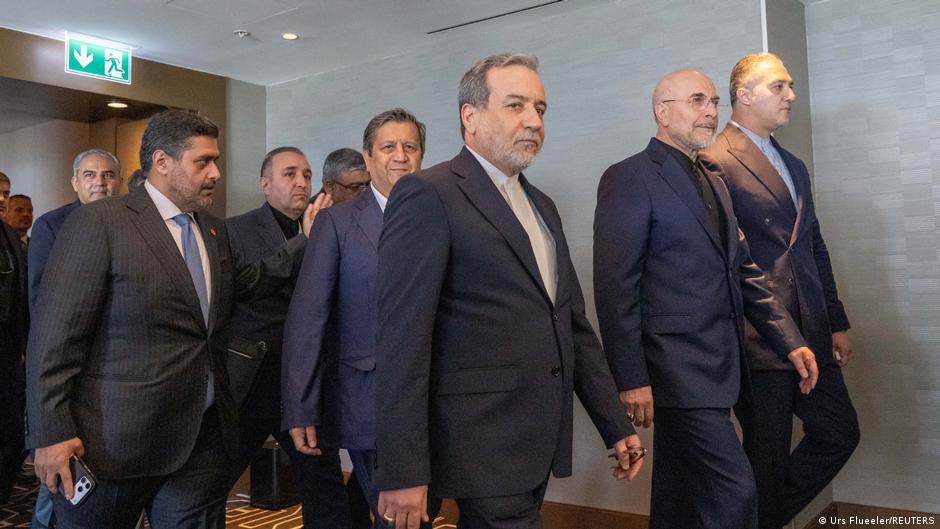
US Vice President JD Vance declared that a "very good foundation" has been laid for a successful final agreement with Iran following direct talks at a mountain-top resort in Switzerland. These discussions represent the initial phase of a two-month negotiating period established under a preliminary deal agreed last week, with the stated objective of ending the war launched by the United States and Israel on 28 February. Iranian Foreign Minister Abbas Araghchi and Parliament Speaker Mohammad Bagher Qalibaf led the Iranian delegation, with technical teams under Deputy Foreign Minister Kazem Gharibabadi remaining in Switzerland to continue the process.
Iranian officials reported significant concessions during the talks, with Araghchi citing "major progress" in resolving the Lebanon War, which involves clashes between Israel and Iran-backed Hezbollah militants. Tehran claims to have secured waivers for oil and petrochemical exports, the release of certain frozen funds, and the initiation of a reconstruction and development plan. The interim framework also includes a promise to lift all primary and secondary US sanctions on Iran, a measure described as extending beyond the scope of the 2015 nuclear deal.
Despite these claims, the diplomatic process is strained by mutual hostility and hardline opposition. Iranian Parliament Speaker Mohammad Bagher Qalibaf warned Washington to exercise caution, stating that Iran’s armed forces are prepared to respond differently to threats. This rhetoric followed a brief pause in talks after US President Donald Trump threatened to restart attacks on Iran if Tehran did not rein in its allies in Lebanon. Analyst Kambiz Ghafouri noted that the ideological contradiction between the revolutionary nature of the Iranian government and the need for stable coexistence with the US remains unresolved.
Regional tensions further complicate the negotiations, particularly regarding Hezbollah. Ghafouri argued that Iran is unlikely to reduce Hezbollah to an ordinary political party, viewing the group as integral to the regime’s regional architecture. While Tehran treats the Lebanon ceasefire as part of the negotiation framework, the US and Israel have attempted to separate regional escalation from the core deal. Israel continues its strikes in Lebanon, and Iran’s military command has previously declared the Strait of Hormuz closed to all vessel traffic, although US Central Command denied the closure.
Critics argue that the negotiations overlook critical domestic issues within Iran. Analyst Omid Shams stated that the talks have ignored human rights, civil liberties, and political prisoners, potentially failing to stabilize the country internally. Human rights activist Shirin Shams suggested that the Islamic Republic often uses negotiations to buy time and reduce international pressure while maintaining domestic repression. With ongoing economic crises and a widening legitimacy gap, experts suggest that external agreements may remain fragile without addressing the rupture between the state and Iranian society.