Swiss glaciers lose nearly one-fifth of their ice since 2021
Researchers link a 5.5 per cent annual loss to record summer heat and low winter snowfall, warning of pressure on water supplies and hydropower.
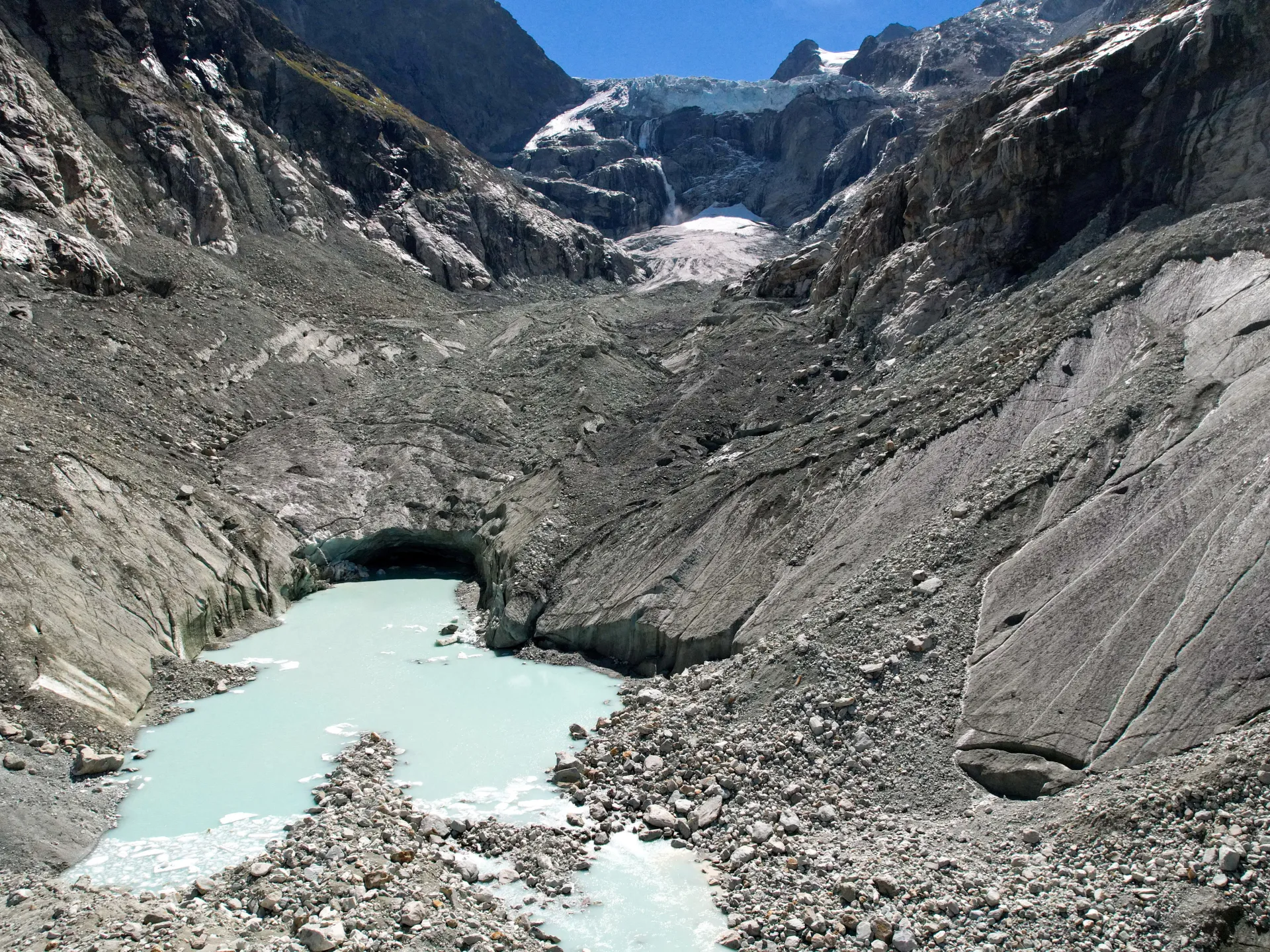
Swiss glaciers lost 5.5 per cent of their ice volume in the year ending 30 September 2026, and nearly 20 per cent since 2021, according to a report by the Swiss Glacier Monitoring Network (GLAMOS) and the Swiss Academy of Sciences’ cryosphere commission.
Researchers attributed the latest decline to record summer heat and low winter snowfall, which left glaciers with little protective snow. Average glacier thickness fell by 2.5 to four metres during the year, while some glacier tongues lost up to 10 metres over summer.
The report estimated glaciers lost about 2.2 trillion litres of water between July and September. Researchers warned that continued ice loss could affect water supplies and hydropower, as well as Alpine tourism; the scale and timing of those effects were not quantified.
Glaciers provide water during hot, dry summers, but a glaciologist cited in the report said that seasonal supply peak has passed for glaciers in the European Alps. As glaciers shrink, they are expected to contribute less water in coming years.
Projections cited by researchers vary with future warming. Rapid emissions cuts could preserve about one-third of Swiss glacier ice, while under strong warming glaciers could lose more than 90 per cent of their volume by 2100.