Swift boost mission scaled back after LINK spacecraft issue
NASA and Katalyst Space have confirmed that the LINK spacecraft will not boost the Neil Gehrels Swift Observatory, but will proceed with rendezvous operations to test key servicing capabilities.
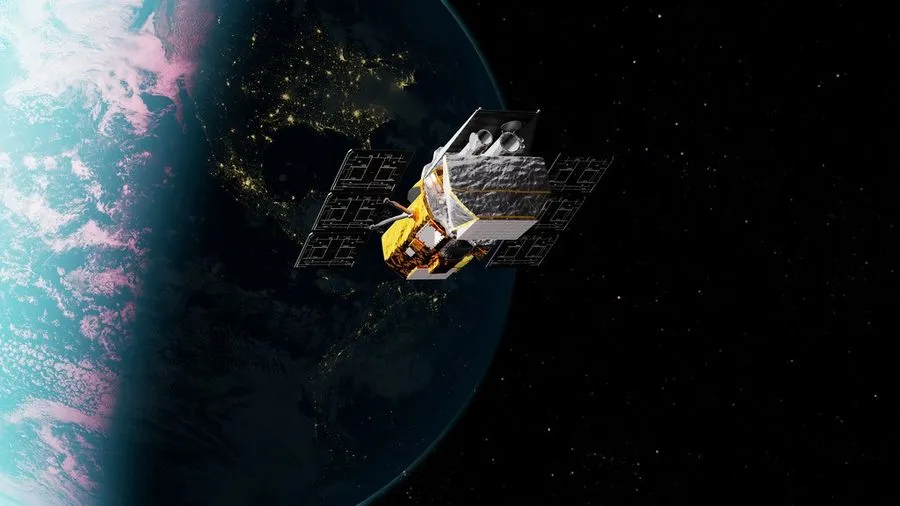
NASA and Katalyst Space have announced that the LINK spacecraft will not capture or boost the Neil Gehrels Swift Observatory to a higher altitude, citing an ongoing attitude control issue. The decision marks a significant adjustment to the mission’s primary objective, which was to extend the operational life of the ageing satellite.
Despite the cancellation of the boost, the mission will continue with rendezvous and proximity operations. These activities are designed to demonstrate key capabilities for future space exploration and satellite servicing. NASA and Katalyst are currently working closely to assess next steps and gather data to inform future operations.
NASA Administrator Jared Isaacman stated that the team moved with extraordinary speed to advance satellite servicing capabilities. He noted that while this was not the desired outcome, the mission was worth attempting to give Swift a chance to carry out more science. Isaacman emphasised that the agency would learn from the rendezvous attempt and apply those lessons to subsequent missions.
Shawn Domagal-Goldman, director of the Astrophysics Division at NASA Headquarters, described the effort as a high-risk, high-reward first-of-its-kind attempt. He acknowledged that the team had hoped for more science from Swift but stated that the takeaways from the mission would be worthwhile regardless of the final outcome. The mission was developed on an unprecedented timeline driven by increased solar activity.
The Neil Gehrels Swift Observatory was launched in 2004 to study gamma-ray bursts and other cosmic events. Although designed for a two-year prime mission, it has operated for 21 years. Its low Earth orbit began to rapidly decay due to increased solar activity, prompting NASA to award Katalyst a contract in September 2025 to mount a robotic servicing mission in less than a year.
The LINK spacecraft launched on 3 July from Kwajalein Atoll on a Northrop Grumman Pegasus XL rocket. Teams established communications with the spacecraft and conducted in-orbit checkouts over the following weeks before the attitude control issues were identified. Without intervention, NASA anticipates that Swift is likely to re-enter Earth’s atmosphere later this year.