Sweden designates critical minerals as national security interest to curb China dependence
Energy Minister Ebba Busch announces strategy to boost defence capabilities and attract investment, acknowledging tensions with Sami communities over land use.
The Swedish government has declared the extraction of critical minerals and rare earths a matter of national security, a move designed to expedite permit processes and reduce European reliance on Chinese supply chains. Announced in Stockholm on Thursday, the policy shift aims to streamline authorisation procedures and attract investment in the strategic mining sector.
Energy Minister Ebba Busch, who also serves as deputy prime minister, stated that the government intends to accelerate decision-making to bolster defence capabilities for Sweden, the European Union, and NATO. She described Europe’s dependence on China—which accounts for approximately 70% of global mining and refining—as a systemic risk to industry.
To support this objective, the government is considering the establishment of a state-owned investment company. Busch noted that the state currently lacks concrete tools to effectively accelerate and attract investment in crucial strategic projects. The new framework would also facilitate the assignment of land for mining activities, a provision that has drawn scrutiny regarding its impact on indigenous rights.
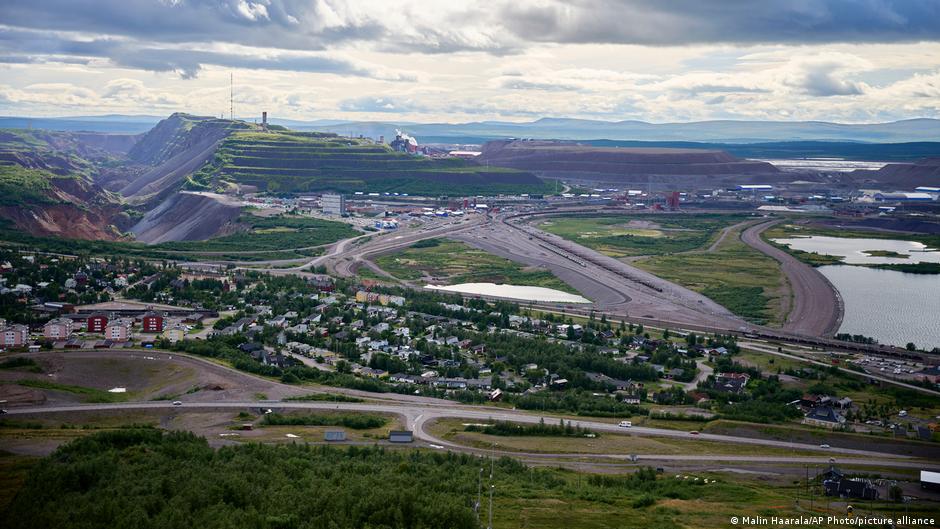
The policy operates against the backdrop of Sweden’s significant mineral wealth. The country holds roughly 60% of Europe’s known iron ore deposits and was responsible for about 90% of the continent’s extraction as of 2021. Near the Arctic Circle town of Kiruna, the Per Geijer project, a flagship EU initiative, has identified approximately 1.2 billion tons of mineral resources, including 2.2 million tons of rare earth oxides.
However, the expansion faces substantial social and administrative hurdles. More than 90% of Sweden’s mines are located in the Norrland region, within Sapmi, the traditional territory of the Sami people. The Sami community has expressed concerns that mining expansion threatens their traditional reindeer-herding livelihood. According to mining group LKAB, obtaining permits to excavate on Sami land can take up to 10 years, highlighting the friction between national security goals and indigenous land rights.
Four of the EU’s 47 strategic projects aimed at reducing mineral dependence on China are located in Sweden. The government’s latest measures seek to overcome these procedural delays while navigating the complex historical and contemporary landscape of Swedish mining, which dates back to the 10th century.