Student protests escalate in Jakarta as rupiah hits historic low
Approximately 1,500 demonstrators gathered in the capital to challenge President Prabowo Subianto’s administration, citing currency devaluation, recent price hikes, and concerns over democratic backsliding.
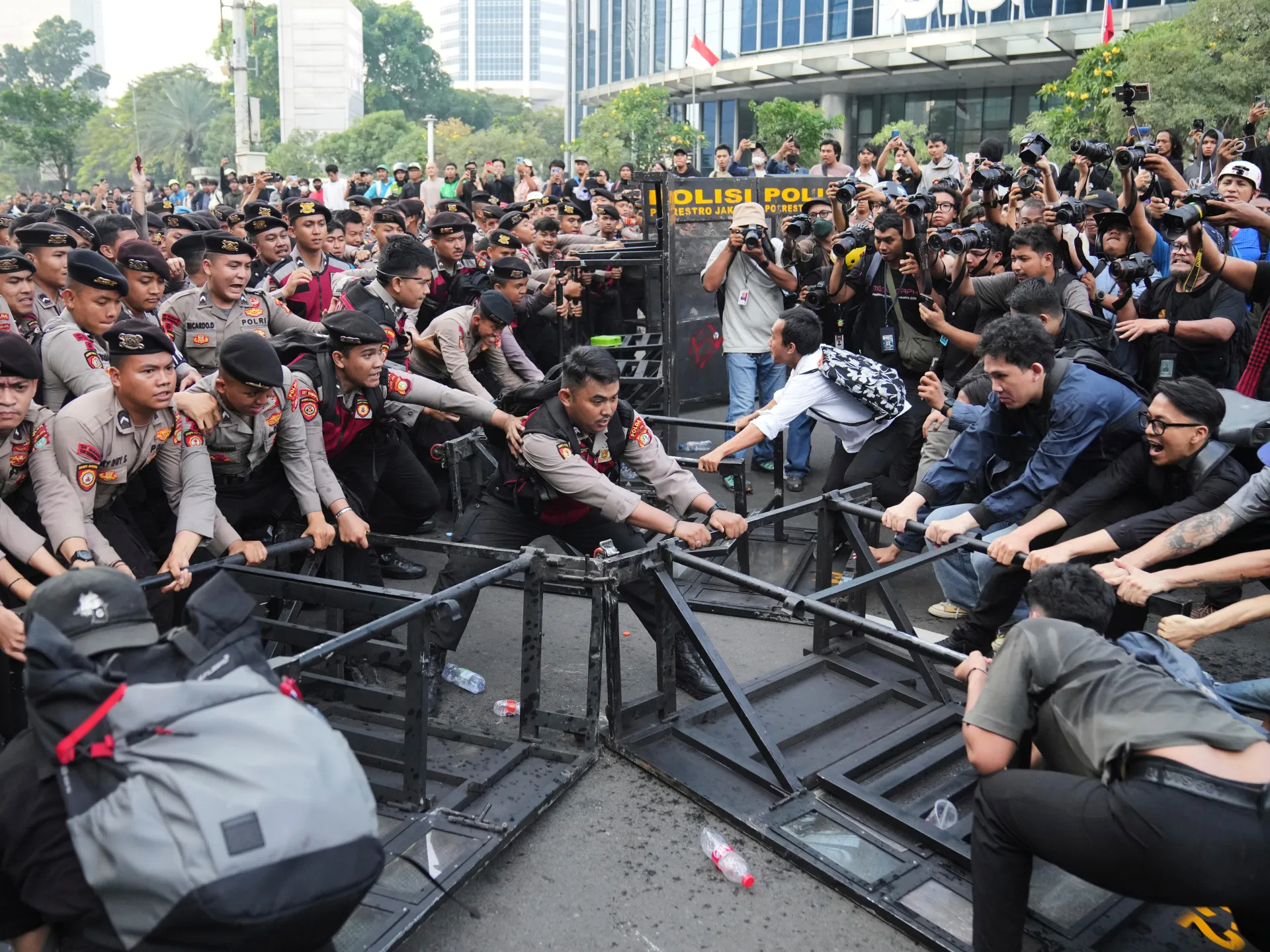
Security tensions rose in Jakarta on Friday as approximately 1,500 students marched to protest the economic policies of President Prabowo Subianto’s administration. The demonstrators, identifying themselves as the “Heading to Bankrupt Indonesia” movement, gathered at the Hotel Indonesia traffic circle following Friday prayers, wearing yellow university jackets to signal their unified stance against the government’s fiscal management.
The protest was marked by scuffles as some demonstrators attempted to breach police lines and metal barricades. In response, authorities deployed 6,000 police and military personnel to the area. Organisers reported that some protesters were blocked from joining the march by security officials, leading to the physical confrontations that disrupted the gathering near the city’s central monument.
Central to the demonstrators’ grievances is the severe devaluation of the Indonesian rupiah, which hit a historic low of 18,000 to the US dollar in early June, a significant drop from 16,000 in March. The currency’s weakness comes as the import-dependent nation faces mounting fiscal pressures linked to a global supply chain crisis and energy spikes resulting from the conflict in the Middle East. Despite previous efforts to keep fuel prices unchanged amidst global energy volatility, the government recently introduced a 32 percent price hike, further angering citizens.
Protesters outlined five key demands, including lower fuel and food prices and a rollback of state welfare programmes they characterise as expensive and wasteful. Specific targets include the $15bn-a-year free meals programme, a flagship initiative of President Prabowo aimed at reducing poverty and malnutrition. The programme is currently under a corruption probe, which led to the firing of its head in early June. Student protester Rafael Arreva cited the programme as evidence of wasteful spending that has led to the withdrawal of initial subsidies.
Beyond economic concerns, the demonstrators called for an end to the expanding role of the military in government, describing it as a threat to the country’s democracy. Yatalathof Ma’shum Imawan, who chairs the student group organising the rally, urged President Prabowo to acknowledge the current economic situation rather than denying it. This event follows the last major mass protests in August, which resulted in at least 13 deaths during clashes over housing reforms.