Strait of Hormuz transit fees: Economic logic clashes with political and legal barriers
As the Iran war enters its eleventh week, experts argue that paying Iran’s reported $2m transit tolls is financially preferable to the daily losses of a blockade, yet US sanctions and international law hinder widespread adoption.
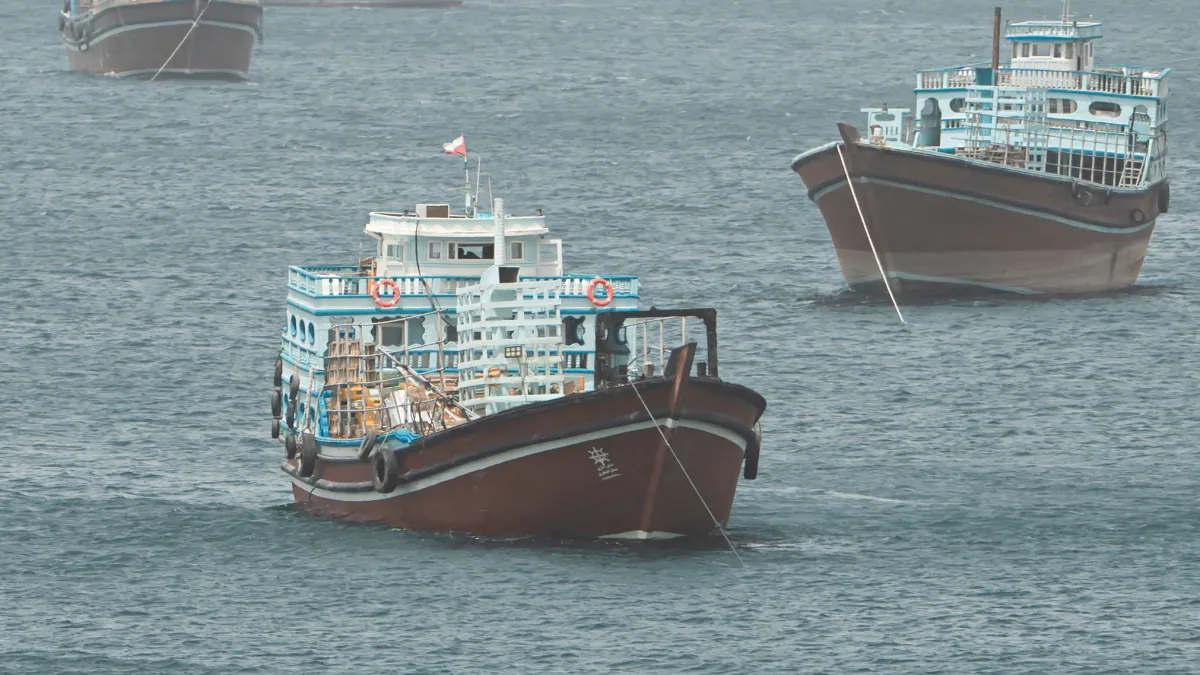
Eleven weeks into the Iran war, the Strait of Hormuz remains largely closed to naval traffic, with the Islamic Revolutionary Guard Corps (IRGC) maintaining strict control over the strategic waterway. Iran has established the Persian Gulf Strait Authority (PGSA) to formalise a mechanism for charging transit fees, reportedly up to $2m per ship. While experts argue that paying these tolls is economically preferable to the daily losses incurred by a blockade—estimated at $114.8bn in lost oil revenues and $7.8bn in LNG value—political constraints hinder adoption. The United States has instructed ships not to comply with Iranian rules, maintaining that the waterway remains open under international law. The UAE has dismissed Iran’s claims of control over 22,000 square kilometres of the strait as unrealistic. Analysts suggest a regional cooperative framework involving Iran, the UAE, Oman, and Qatar may be the most realistic path to restoring predictable transit.
The economic calculus for vessel operators has shifted dramatically since the conflict began. Before the war, between 120 and 140 ships, including oil tankers carrying approximately 20 million barrels of oil, traversed the strait daily. Now, less than 4 percent of peacetime traffic passes through, with only a few vessels permitted to sail after negotiating with the IRGC. On Wednesday, Iran coordinated the transit of 26 vessels in a 24-hour period, two days after announcing the formation of the PGSA. The authority has published a map asserting military oversight across more than 22,000 square kilometres of the strait, a move that extends into the territorial waters of Oman and the UAE.
Mohammad Reza Farzanegan, an economist at Germany’s Marburg University, argues that from a purely economic perspective, a negotiated transit arrangement makes more sense than continued closure. He notes that the geography gives Iran significant leverage, and the crisis has demonstrated Tehran’s ability to enforce control in practice. The cost of remaining stranded is steep for shipowners, encompassing crew wages, loan repayments, repairs, and inflated war risk premiums. Nader Habibi, an Iranian American economist, stated that paying Iran is cheaper than a continuous blockade because a sitting tanker bleeds money, yet he cautioned that such arrangements are not politically feasible due to pressure from US sanctions.
International law traditionally protects free transit through natural straits, barring countries from imposing passage tolls even where waterways fall within territorial boundaries. However, services such as security controls and inspections can be charged for. Habibi highlighted that the Strait of Hormuz differs from other chokepoints like the Bosphorus because it passes through the territorial waters of Iran and Oman, with external parts reaching the UAE. Consequently, any formalised arrangement would require unprecedented coordination between Gulf Cooperation Council countries and Iran, with approval from major international powers such as China and the United States.
In response to Iran’s expanded claims, the United Arab Emirates has dismissed the assertions as unrealistic, with diplomatic adviser Anwar Gargash describing them as "fragments of dreams." Gargash asserted that Iran is attempting to consecrate a reality born from military defeat, and any encroachment on UAE maritime sovereignty is baseless. The US has similarly instructed ships not to comply with Iranian rules, maintaining that the waterway remains open under international law. Despite these tensions, analysts suggest that a regional cooperative framework involving Iran, the UAE, Oman, and Qatar may be the most realistic path to restoring predictable transit, rather than reliance on external military enforcement.