Strait of Hormuz: Frontline report reveals enduring instability through asymmetric maritime tactics
Iran's strategy relies on speedboats and hidden mines to create a persistent threat of disruption rather than traditional warfare, according to a rare on-water observation
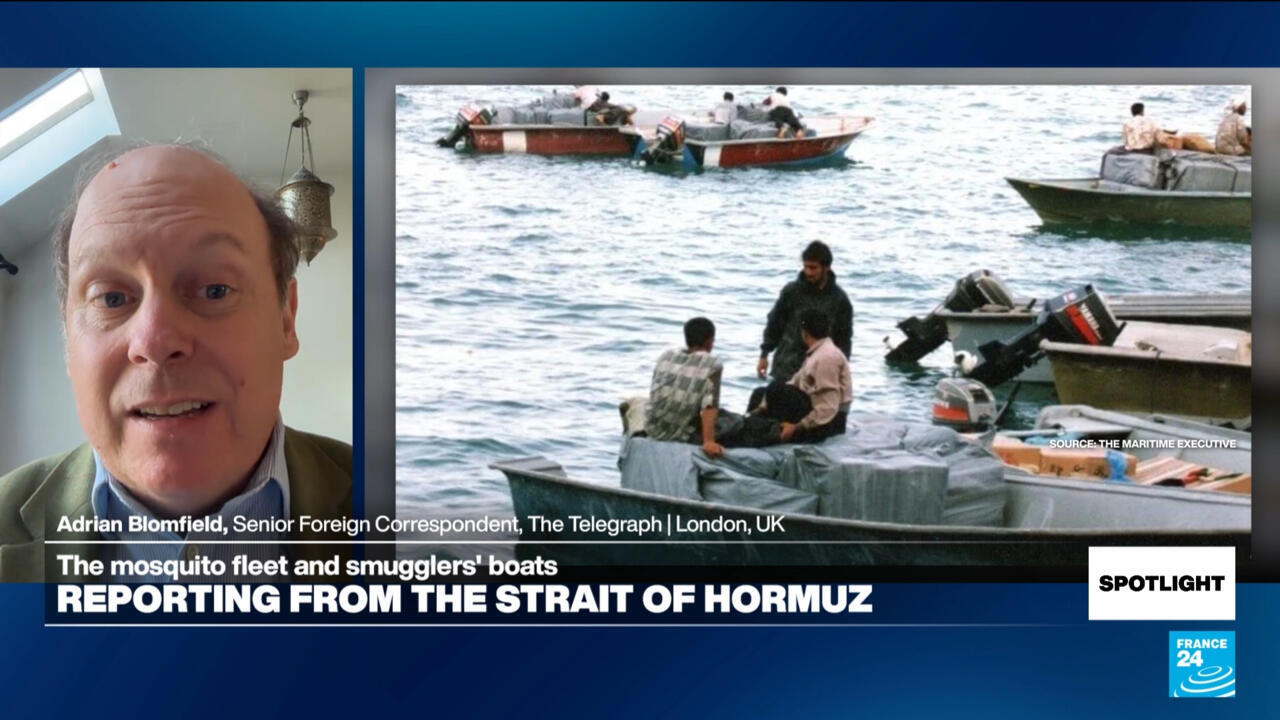
A rare frontline report from the Strait of Hormuz has characterised the critical global energy chokepoint as a complex maritime ecosystem where smugglers, civilians, and military actors are effectively indistinguishable. Senior Foreign Correspondent Adrian Blomfield of The Telegraph provided this assessment from the water, offering a kinetic perspective that contrasts sharply with previous reporting reliant on satellite imagery and policy abstraction.
Blomfield observed approximately 300 small speedboats operating at high speeds, creating a dense flow that fuses civilian and military actors into a single ambiguous entity. This convergence allows military assets to hide in plain sight, sustaining coastal communities while simultaneously enabling Iran's asymmetric leverage. In this environment, power is asserted not through overwhelming force, but through persistence and opacity.
The correspondent described the threat as a weapon of mass disruption rather than traditional weapons of mass destruction. Mining the strait requires little sophistication, with Blomfield noting how easily mines can be hidden under tarpaulins and deployed quickly. He estimated that between five and six thousand mines could potentially be in play within the waterway, posing a banal yet profound danger to global energy flows.
This asymmetric strategy aims to create enduring instability rather than engage in decisive conflict. Blomfield emphasised that there is no obvious easy solution to eliminating these threats, suggesting the region's future is defined by a persistent state of uncertainty. The difficulty of distinguishing between the various actors on the water makes attribution of specific actions challenging and complicates any potential response.
The report highlights the limitations of viewing the situation through the lens of conventional geopolitics. By narrowing the distance between the observer and the story, the frontline perspective reveals layered realities that define modern conflict zones. The complexity is not merely theoretical but is embodied in the obscured and kinetic nature of the maritime environment.
Ultimately, the testimony reinforces the difficulty of resolving the crisis without a clear path to elimination. The Strait of Hormuz remains a zone where the fusion of economic necessity and military strategy creates a persistent threat that may never lead to a definitive resolution.