Starship reaches orbit and deploys 26 next-generation Starlink satellites
SpaceX’s 14th test flight achieved the vehicle’s first orbital insertion, but an engine issue cut the planned mission short.
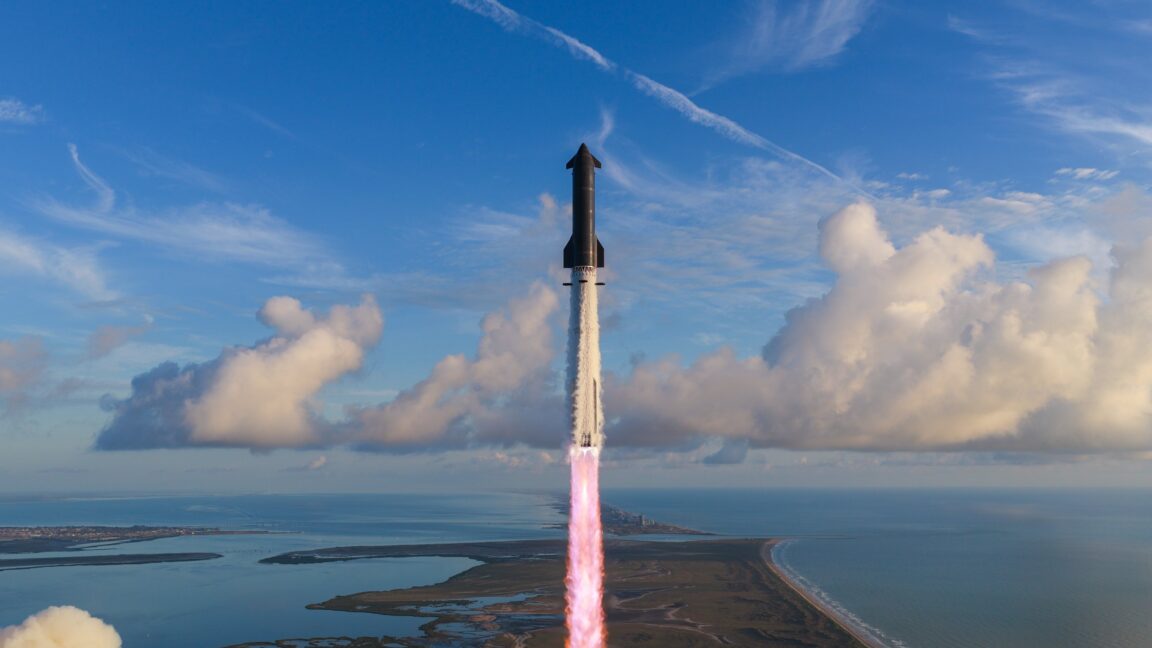
SpaceX’s Starship reached low-Earth orbit for the first time on its 14th test flight, then released 26 of the company’s next-generation Starlink V3 satellites. The milestone advances the rocket’s role in deploying satellites too large for SpaceX’s Falcon 9.
A 19-second Raptor engine restart added about 204 mph, placing Starship in an orbit roughly 171 miles above Earth. SpaceX said it established contact with all 26 satellites after deployment.
The mission proceeded despite an engine shutting down prematurely during Starship’s ascent. The flight team shortened the time in orbit and ordered an early return, ending a planned flight of nearly 10 hours after a little over three.
SpaceX completed the de-orbit burn and re-entry, but Starship broke apart when it hit the ocean at its planned splashdown site in the northern Pacific. The vehicle did not return intact.
SpaceX says each V3 satellite can add substantially more capacity to its network than older models, and that the satellites may begin serving customers within weeks. The company said many more launches will be needed before customers are likely to notice a difference in service.