Starmer vows strict legal action as UK riots spread from Belfast to Southampton
Unrest characterised by arson and targeted attacks has escalated across the United Kingdom, prompting condemnation from senior officials and highlighting deep-seated socio-economic fractures.
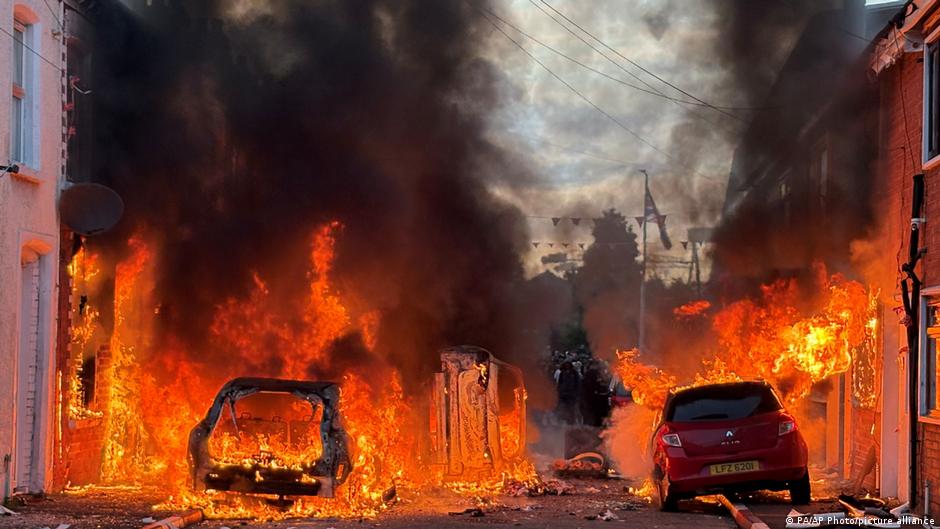
Prime Minister Keir Starmer has pledged that rioters will face the full force of the law as violent disorder spreads across the United Kingdom. The unrest, which began in Belfast, Northern Ireland, and has since reached cities including Southampton, involves mob violence, arson, and targeted attacks on individuals based on skin colour. Starmer stated there would be no tolerance for such abhorrent scenes, joining Northern Ireland First Minister Michelle O’Neill in condemning the violence and the social media disinformation fueling it.
The disorder was triggered by a viral video of a knife attack in Belfast, where a 30-year-old Sudanese man was arrested and charged with attempted murder after stabbing a 44-year-old Irish man. The victim remains in hospital with serious wounds. The footage, which showed the victim lying on the ground, was shared widely on platforms such as X and Telegram, where far-right figures amplified calls for protest. Stephen Yaxley-Lennon, a convicted extremist known as Tommy Robinson, called for mass demonstrations, a post that was retweeted by X CEO Elon Musk.
Claire Hanna, leader of the Social Democratic and Labour Party in Northern Ireland, described the events as a race-based pogrom. Speaking to the UK Parliament, she reported that masked men had targeted homes and residents, terrorising people based on their appearance or accent. While security forces prevented a recurrence of the violence in Belfast on Wednesday, unrest continued in other parts of the country, with reports of people being specifically targeted and attacked due to their skin colour.
The riots mirror the unrest of summer 2024, which followed the Southport stabbings and was similarly driven by disinformation. The current disorder has spread to Southampton, where 18 neighbourhoods rank among the 10 per cent most deprived areas nationwide. This mirrors the 2024 riots, which were concentrated in former industrial powerhouses such as Sunderland, Middlesbrough, and Hull, areas grappling with high inflation, stagnant wages, and austerity-affected public services.
In Northern Ireland, the violence has impacted largely Protestant working-class communities in traditional unionist strongholds. Despite the 1998 Good Friday Agreement ending the Troubles, legacy issues of neglect and high unemployment persist. Since Brexit, many Protestants in Northern Ireland have reported feeling increasingly disconnected from the rest of the UK. The anti-migration debate has been intensified by previous Conservative policies, including the Rwanda asylum plan, and political rhetoric from figures such as Nigel Farage and Boris Johnson regarding border control.