Starmer and Tusk formalise UK–Poland defence pact to counter Russian aggression
Prime ministers sign agreement at London bunker as GCHQ chief warns of relentless hybrid threats
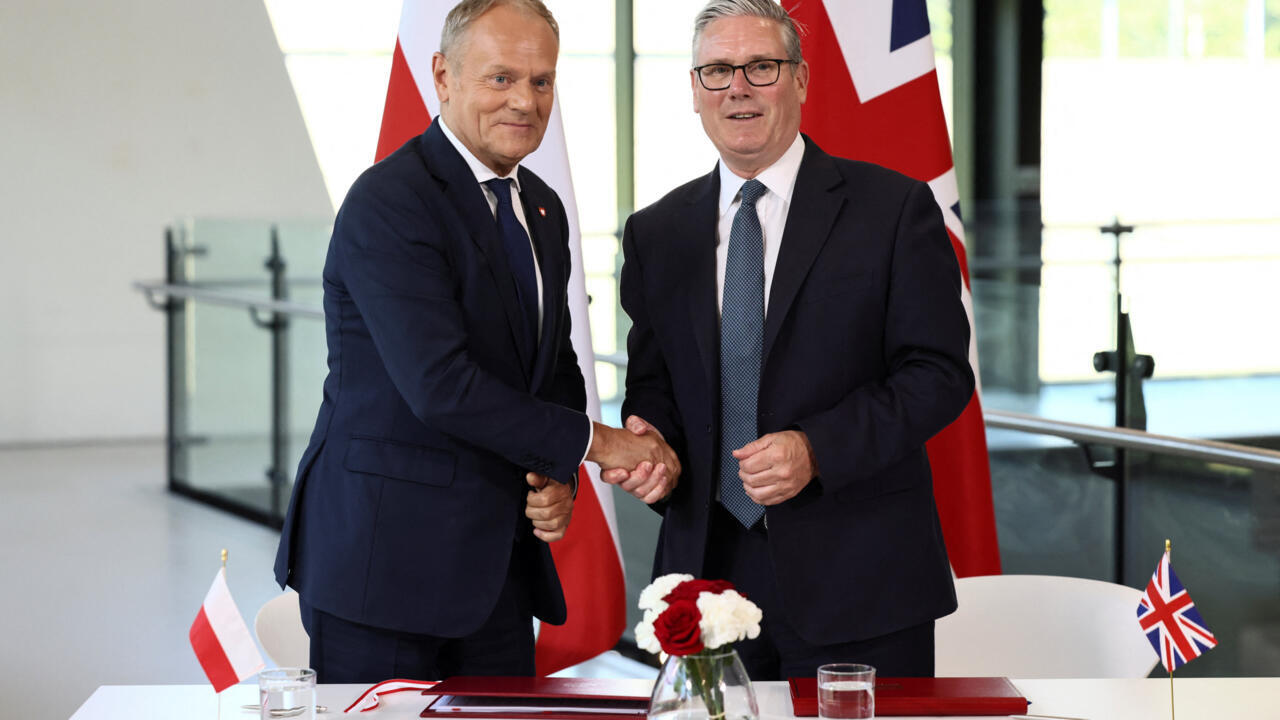
Prime Minister Keir Starmer and his Polish counterpart Donald Tusk have signed a new defence pact designed to deepen military and security cooperation between the two NATO allies. The agreement, formalised on Wednesday, 27 May 2026, focuses on strengthening joint capabilities, cyber defence, and coordinated responses to Russian aggression. The signing took place at a World War II-era bunker in northwest London, following bilateral talks at RAF Northolt.
The treaty aims to combine the armed forces' expertise and industrial capability of both nations to develop and manufacture next-generation complex weapons. It also paves the way for large-scale joint land exercises and an increased use of uncrewed systems to reinforce NATO's eastern flank. The security elements of the deal will bolster information-sharing to tackle organised crime and facilitate joint work on cyber, migration, and health security.
Starmer described the agreement as a generational uplift in the security and defence relationship between the two countries. He stated that there was no greater challenge for either nation than Russian aggression, noting that the threat extends beyond Ukraine to impact both countries directly. Tusk thanked Starmer for his commitment to defending shared values, including the rule of law, democracy, and human rights, which he said formed the foundation of the treaty.
The signing coincided with warnings from GCHQ chief Anne Keast-Butler regarding relentless Russian hybrid threats. Delivering her inaugural annual lecture on the same day, Keast-Butler accused Russia of targeting critical infrastructure, democratic processes, supply chains, and public trust in Britain and Europe. She urged the public and businesses to make cyber security ten times more urgent, highlighting her agency's work in disrupting Russia's efforts to smuggle western technology and countering sabotage.
Starmer and Tusk were expected to discuss an uptick in allegedly Russian-ordered arson attacks in London and elsewhere across Europe, as well as other malign threats. The new pact follows similar defence agreements Britain has signed with Germany and France in recent years, and comes after Poland inked a separate deal in Paris to ramp up joint defence ties.