Stanford players initiate ACC unionisation drive amid shifting governance landscape
Ernest Cooper and Fisher Anderson lay groundwork for player representation, acknowledging professional careers will likely precede any legislative or institutional victory.
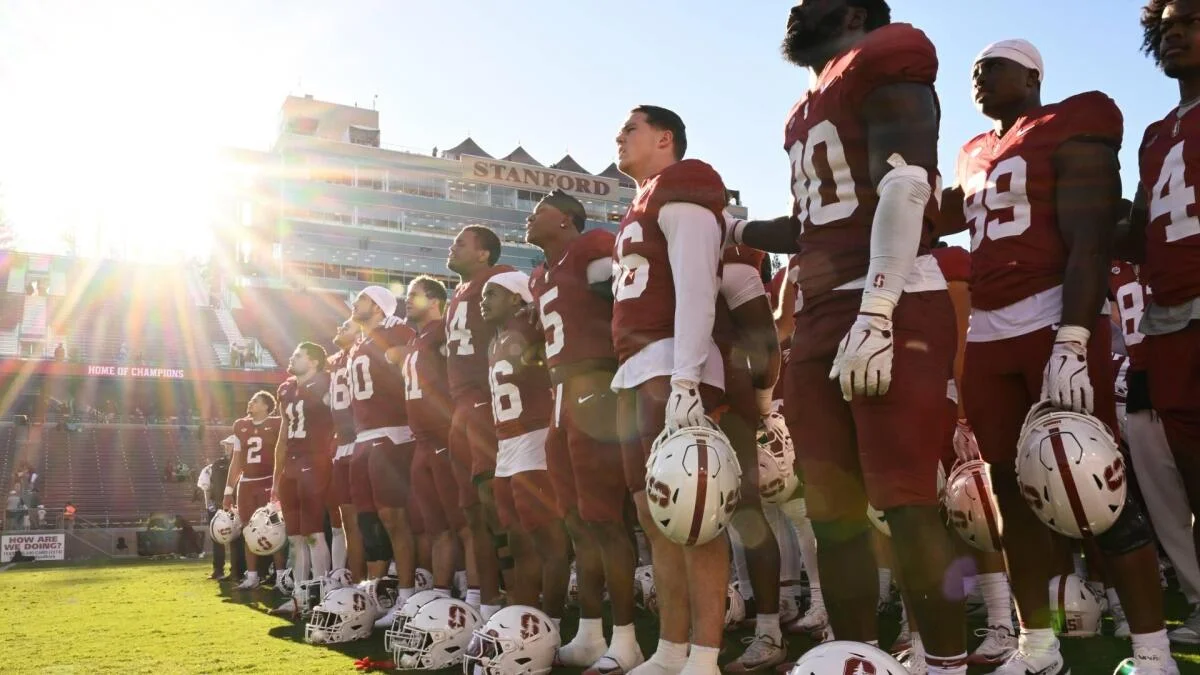
Stanford University football players Ernest Cooper and Fisher Anderson have established a player-led fraternity chapter, colloquially termed the "Tunnel Diggers Union," to educate teammates and lay the groundwork for a potential players' union within the Atlantic Coast Conference (ACC). The initiative, supported by Jason Stahl of the College Football Players Association, aims to eventually secure collective bargaining rights. While the players acknowledge they will likely not be present to see the outcome, as they intend to pursue professional careers, they view unionisation as a necessary step to protect the future of college athletics.
The players have met with Jason Stahl, who has previously worked with players at other institutions, including a secret meeting at Penn State in 2021 that was exposed and led to the effort ending. Stanford administration is aware of the meetings; Cooper and Anderson met with general manager Andrew Luck, a former NFL Players Association member, in a meeting described as "neutrally positive." Stahl outlines a multi-year plan requiring over 1,000 ACC football players to sign over collective bargaining rights to form a union.
Boston College coach Bill O'Brien has publicly called for a collective bargaining agreement, citing his experience in the NFL. Syracuse Chancellor Kent Syverud stated that negotiation with a "real collective voice" for athletes is the best path forward. College athletes do not currently have employee status, though high-level conversations about their classification often exclude athlete voices. In 2014, Northwestern players attempted to unionise, but the National Labor Relations Board (NLRB) ruled it lacked jurisdiction because Northwestern was a private institution, while other conference members were public.
In 2024, Dartmouth men's basketball players voted to unionise but withdrew their petition due to uncertainty regarding the newly Republican-led NLRB. The Protect College Sports Act, which does not address player employment or collective bargaining, may be shelved if Congress does not vote before the August recess. Industry sources suggest conference-by-conference bargaining may be easier than school-by-school approaches, with Big Ten athletes receiving revenue-sharing compensation via 1099 tax forms from the conference. Gig workers in California recently unionised, demonstrating that full-time employee status is not a prerequisite for unionisation.
Anderson and Cooper expect to play in the NFL next year and acknowledge they will likely not be present to see the unionisation effort come to fruition. Cooper and Anderson serve as elected player representatives for the group. The initiative represents a strategic pivot from individual advocacy to structured institutional negotiation, mirroring trends in other sectors of the labour market.