Standoff at Philippine Senate Follows ICC Arrest Claims
Gunshots were fired at the Philippine Senate on Wednesday, prompting a security breach and causing people to run for cover. The incident follows statements by Senator Ronald dela Rosa, a key figure in former President Rodrigo Duterte’s drug war, who claimed his handover to the International Criminal Court was imminent.
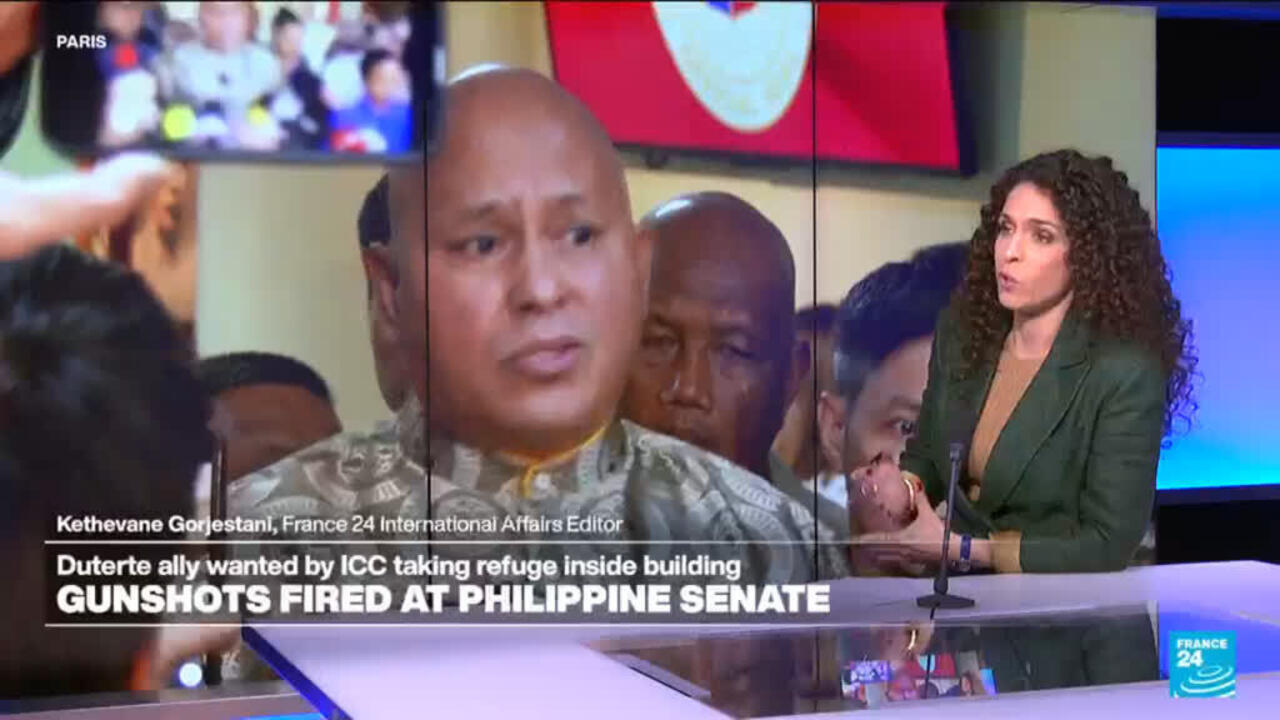
Gunshots rang out at the Philippine Senate on Wednesday, triggering a security response that saw personnel run for cover as armed forces entered the legislative building. The standoff occurred shortly after Senator Ronald dela Rosa, a former police chief and central figure in the administration of former President Rodrigo Duterte, stated that his arrest by the International Criminal Court (ICC) was imminent.
Dela Rosa, who served as the primary enforcer of Duterte’s controversial “war on drugs,” had previously called on his supporters to mobilise to prevent his arrest and subsequent handover to the international tribunal. The escalation at the Senate appears directly linked to these warnings, marking a significant disruption in the country’s political capital.
FRANCE 24’s International Affairs Editor, Kethevane Gorjestani, reported on the developments, noting the tense atmosphere inside the Senate complex. The source material indicates that the incident was precipitated by dela Rosa’s claims regarding the ICC’s interest in his case, though specific details regarding the number of shots fired or the identity of the shooter remain unconfirmed in the initial reports.
The “war on drugs” launched under Duterte has drawn intense international scrutiny, with the ICC investigating alleged crimes against humanity. As a former police chief, dela Rosa’s potential arrest represents a critical juncture in the legal and political fallout from that campaign. His assertion that the arrest was imminent suggests a heightened state of alert among his supporters and the security apparatus.
While the immediate aftermath saw security forces securing the building, the broader implications for Philippine governance and its relationship with international judicial bodies remain unclear. The incident underscores the volatile intersection of domestic politics and international law, with the Senate serving as the unexpected flashpoint for a conflict that has spanned years.