Spotify to introduce AI Persona labels for non-human artists
New badges will identify synthetic accounts, with content excluded from personalised recommendations by default.
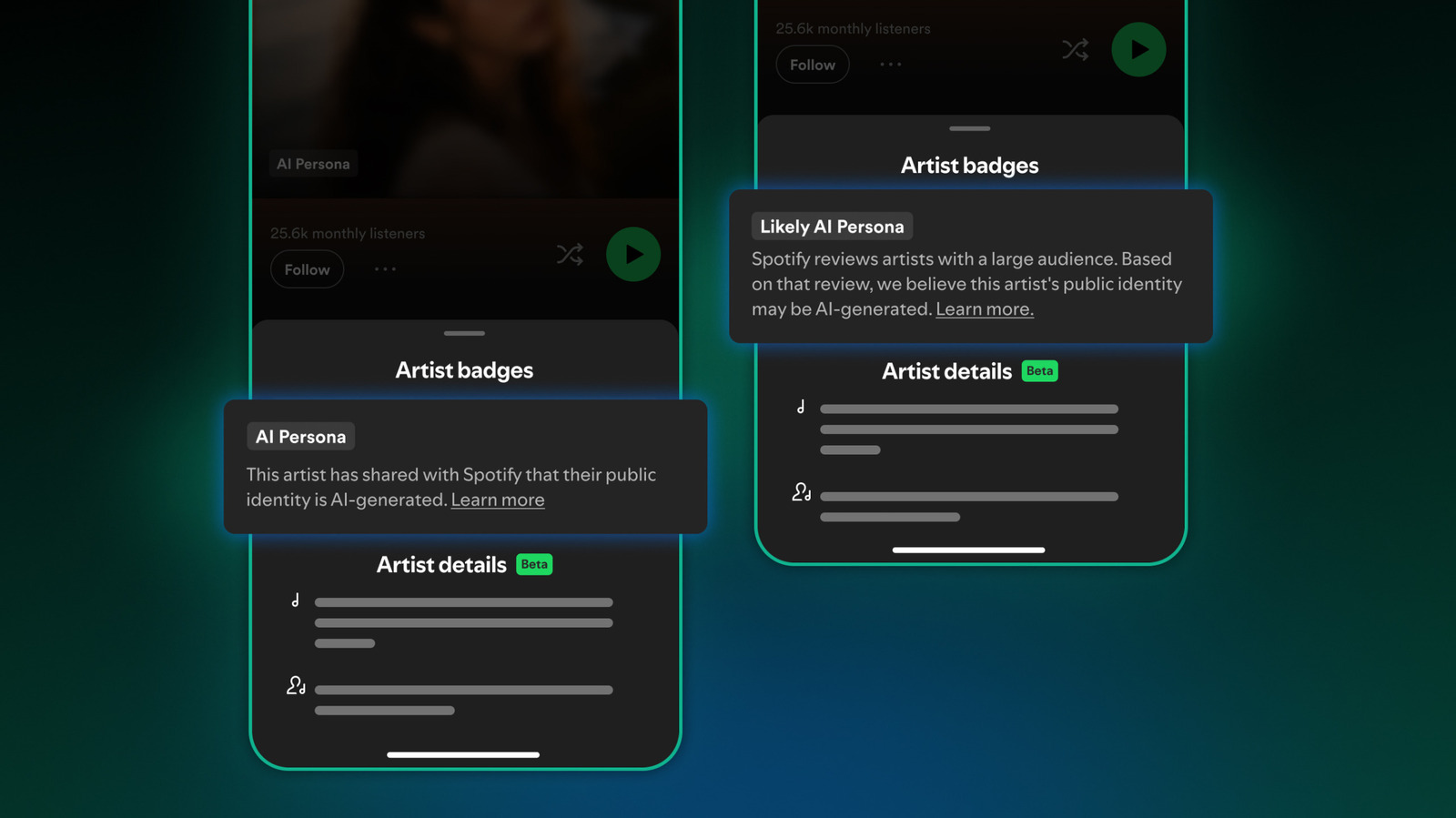
Spotify has announced the introduction of 'AI Persona' labels to identify artist accounts that are not real people. The initiative aims to provide transparency regarding generative AI creations on the platform, responding to an increase in AI-generated music on the service.
Starting 11 August, accounts may voluntarily declare themselves as AI Personas via the Spotify for Artists portal. The company will also apply a 'Likely AI Persona' badge using a combination of human checks and AI-powered reviews for accounts it identifies as non-human.
Artists will be alerted if the 'Likely AI Persona' badge is applied and will have access to an appeal process if the tag is erroneous. The specific criteria used by Spotify’s AI-powered reviews to determine the badge are not detailed in the announcement.
The labels will begin appearing on mobile devices in mid-September, visible on artist profiles, in search results, and on playlist track rows. By default, content from AI Personas will be excluded from Spotify’s personalised recommendation tools.
This move is part of a broader industry trend where companies are balancing the identification of AI content with the integration of AI features. Spotify is simultaneously developing tools to identify AI creations while also integrating generative and agentic AI tools into its service.
The source notes Spotify is "playing both sides" of AI, suggesting a potential conflict of interest between transparency measures and the promotion of its own AI tools. Claims regarding the effectiveness of the labels in preventing listener confusion are not substantiated in the source material.