Spain crowned champions as 2026 World Cup concludes amid governance controversy
Spain becomes first nation to hold both men’s and women’s World Cup titles, but tournament marred by ticket pricing, in-game advertising, and eligibility disputes.
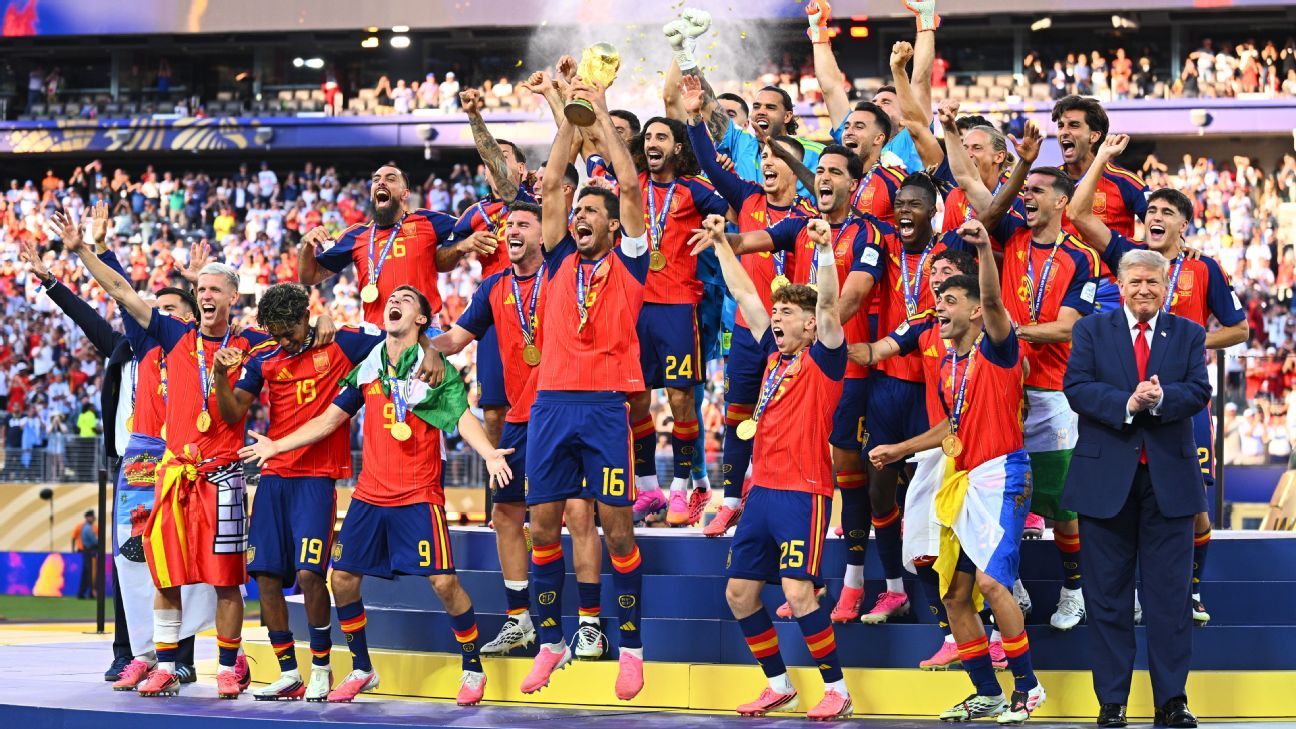
The 2026 FIFA World Cup, hosted across the United States, Canada, and Mexico, has concluded with Spain winning the men’s tournament. Spain became the first nation in history to hold both the men’s and women’s World Cup trophies simultaneously, a feat underscored by high-quality football that saw strong performances from the United States, Mexico, and Norway. Kylian Mbappé secured the Golden Boot, beating out Lionel Messi and Jude Bellingham, while Erling Haaland contributed to Norway’s campaign.
Despite the sporting excellence, the tournament was characterised by significant administrative controversies. FIFA faced intense scrutiny for the introduction of in-game commercial breaks, which critics described as disrupting the sport’s fluidity. Dynamic ticket pricing was also implemented, with FIFA collecting commissions on secondary market sales, a move that led to fan groups being pushed out of stadiums.
Allegations of political interference further complicated the event’s legacy. US striker Folarin Balogun received an automatic suspension but was cleared to play following efforts by President Donald Trump and the US government. This intervention raised questions about the integrity of player eligibility and FIFA’s transparency regarding review legitimacy and potential influence on suspensions.
The tournament structure also drew criticism for advancing eight third-placed teams to the knockout rounds, a decision linked to what was described as inane math and convenient Matchday 3 results. Additionally, uncertainty surrounded Iran’s travel arrangements due to the country being at war with one of the tournament’s hosts, highlighting logistical and political tensions.
FIFA intends to use the significant revenue generated by the event to spread soccer globally, reinforcing concerns about increased commercialisation. A partnership between FIFA and the United States for a future World Cup, possibly in 2038, is described as inevitable, suggesting that the mix of sporting joy and administrative grime will likely persist in future editions.