Spain completes historic football double with 2026 World Cup victory
The Spanish national team has become the first nation to simultaneously hold both the men’s and women’s World Cup titles, cementing a period of institutional dominance under head coach Luis de la Fuente.
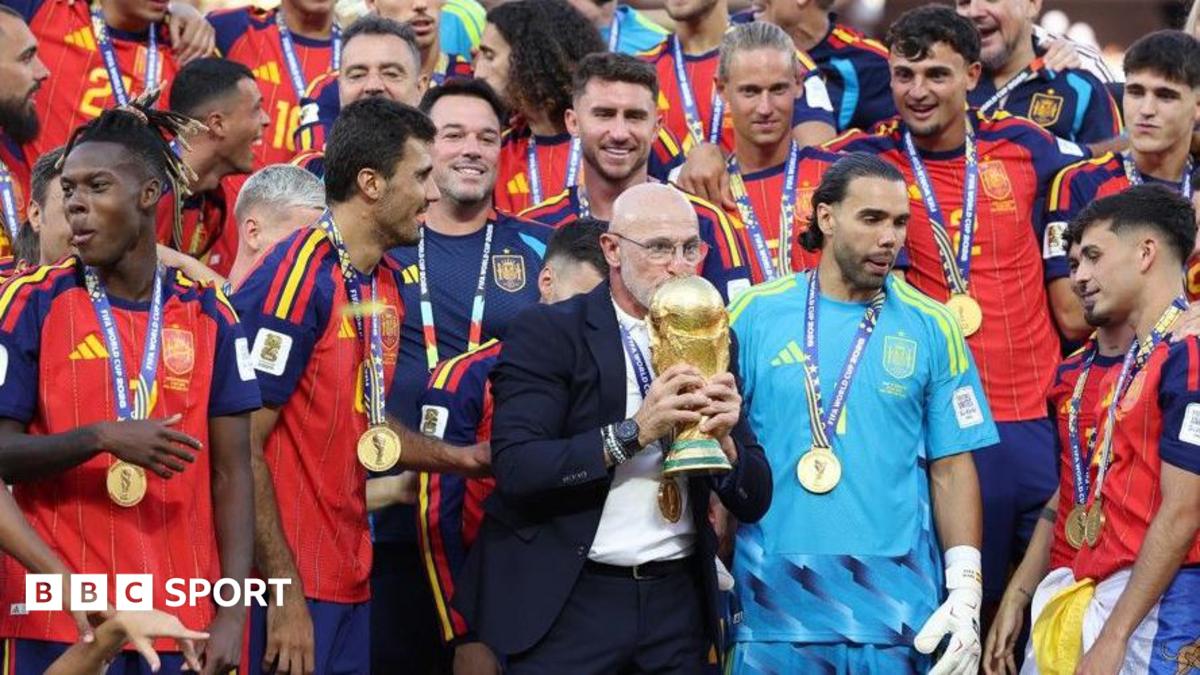
Spain has secured its second FIFA World Cup title, defeating defending champions Argentina 1-0 in extra time at the 2026 final in New Jersey. The victory, decided by a goal from Ferran Torres in the 105th minute, marks the culmination of a five-year period during which the Spanish football federation secured 16 major titles across senior and youth levels. This achievement makes Spain the first nation to hold both the men’s and women’s World Cup trophies simultaneously.
The win follows Spain’s European Championship triumph in 2024, making them the first country to achieve the Euro-World Cup double on two separate occasions, having previously accomplished the feat in 2008 and 2010. The current success is attributed to head coach Luis de la Fuente, who implemented a cohesive system and culture following his appointment in December 2022. His tenure has seen the team win the 2023 Nations League, the 2024 European Championship, and the 2024 Olympic gold medal, alongside the latest World Cup victory.
Spanish football expert Guillem Balague described the period as a "perfect storm" driven by a unified cultural approach to the sport. De la Fuente, who had previously managed Spain’s youth teams, was credited with understanding the existing style and system. Former Spain midfielder Juan Mata noted that the coach’s familiarity with players from the academies has created a team built for both the present and the future, characterised by patience and respect for experience.
The dominance extends significantly into the women’s game, which has undergone substantial infrastructure improvements over the last decade. The women’s team won the 2023 World Cup and secured back-to-back Nations League titles in 2024 and 2025. Former player Maria Garrido highlighted the dramatic shift in conditions, citing the creation of youth categories, better facilities, and a dedicated football academy for girls as key factors in elevating the respect and performance of the women’s team.
Spain’s institutional strength is also evident in its youth development and club influence. The federation has won five Under-19 European Championships between 2022 and 2026, along with an Under-17 World Cup and European Championship. At the senior level, Spain remains unbeaten in its last 38 matches, the longest such run by any European or South American team in history. Furthermore, the success of Spanish coaching has spilled over to club football, with at least a quarter of managers starting the 2026-27 Premier League season being Spanish.
The 2026 final also highlighted the integration of young talent, with Spain becoming the first side to feature two teenagers, Lamine Yamal and Pau Cubarsi, both aged 19, in a single World Cup final. Yamal became the third-youngest player to appear in a final, while Cubarsi started the match at 19 years and 178 days. This blend of experienced leadership and emerging talent has led former France star Thierry Henry to suggest that Spain has the potential to dominate international football for years to come.