Spain claim historic double with 2026 World Cup victory over Argentina
Ferran Torres scores decisive goal as Spain become first nation to win European Championship and World Cup in successive tournaments twice
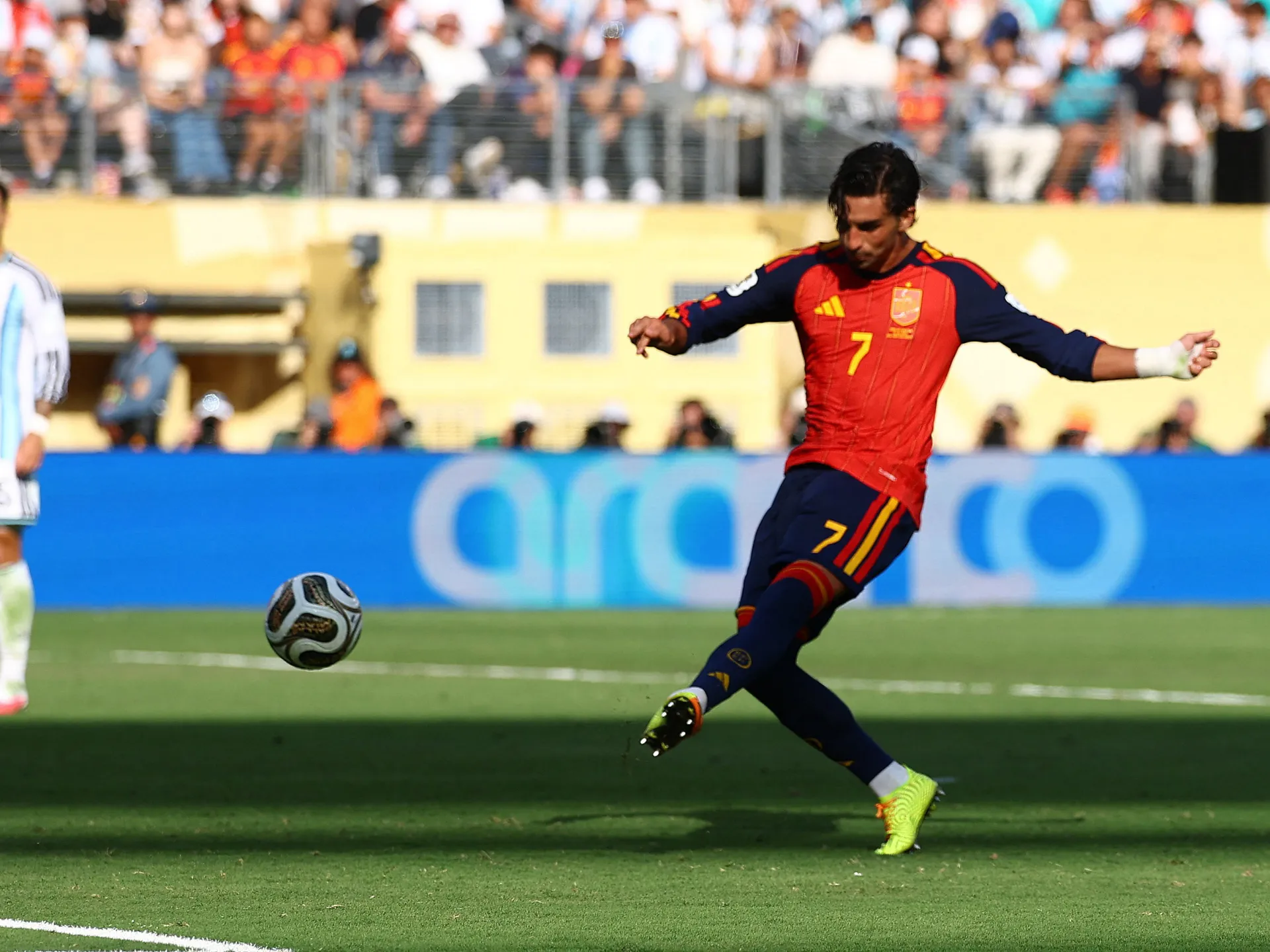
Spain have secured their second FIFA World Cup title, defeating defending champions Argentina 1-0 in extra time at the 2026 final. The victory, decided by a single goal in the 106th minute, cements Spain’s status as the only nation to win both the European Championship and the World Cup in successive tournaments on two separate occasions. The match, held at MetLife Stadium in New Jersey, concluded a tournament in which Spain demonstrated superior tactical control, recording 20 shots on target compared to Argentina’s zero.
The decisive moment arrived shortly into the second period of extra time. Pedro Porro delivered an outswinging cross from the left flank, which Nico Williams headed back into space. Ferran Torres, who had not scored in the tournament prior to this moment, struck a half-volley past Argentina goalkeeper Emi Martinez. Torres’ goal proved to be the only one of the contest, ending a match where Argentina struggled to maintain possession against a dominant Spanish side.
Argentina’s campaign to retain their title unraveled late in normal time. Enzo Fernandez received a second yellow card in the 120th minute for a late challenge on Pau Cubarsi, reducing La Albiceleste to 10 men. Referee Slavko Vincic had no choice but to dismiss Fernandez just before the end of regulation, a pivotal moment that left Argentina unable to mount a significant response in the dying stages of the game.
For Argentina, the defeat marked the end of Lionel Messi’s bid for a third World Cup title. The 39-year-old, who finished the competition with eight goals and four assists, found little time on the ball as Spain’s defensive structure, anchored by players such as Cubarsi, stifled the Argentine attack. Emi Martinez made 11 saves for Argentina, but his side failed to become the first consecutive World Cup champions since Brazil in 1962.
The victory establishes several historic benchmarks for Spain. They became the first World Cup champion to concede only one goal across an entire tournament. Additionally, Spain coach Luis de la Fuente, aged 65, became the oldest manager ever to lead a team to a World Cup title. The win mirrors Spain’s previous triumph in 2010, when Andres Iniesta scored the winning goal in extra time, a span of 16 years and eight days between the two victories.
Post-match proceedings saw minor pushing and shoving before cooler heads prevailed. Spain’s players formed an honour guard for the Argentina squad, who sat on the turf in disbelief before receiving their runner-up medals. De la Fuente described the victory as a collective achievement, stating, “We are world champions. It was together we reached this stage.”
Spain’s performance in New Jersey underscores a level of institutional consistency that has eluded their rivals. While Argentina failed to secure a major title for the first time in three tournaments, having won the 2021 and 2024 Copa Americas, Spain’s ability to win both continental and global titles in successive cycles highlights their current dominance in international football governance and structure.