SpaceX Scrubs Starship Flight 13 After Engine Ignition Failure
The 13th test flight of the Starship rocket and Super Heavy booster at Starbase, Texas, was called off on Thursday following a failure in the startup sequence of the 33 Raptor 3 engines.
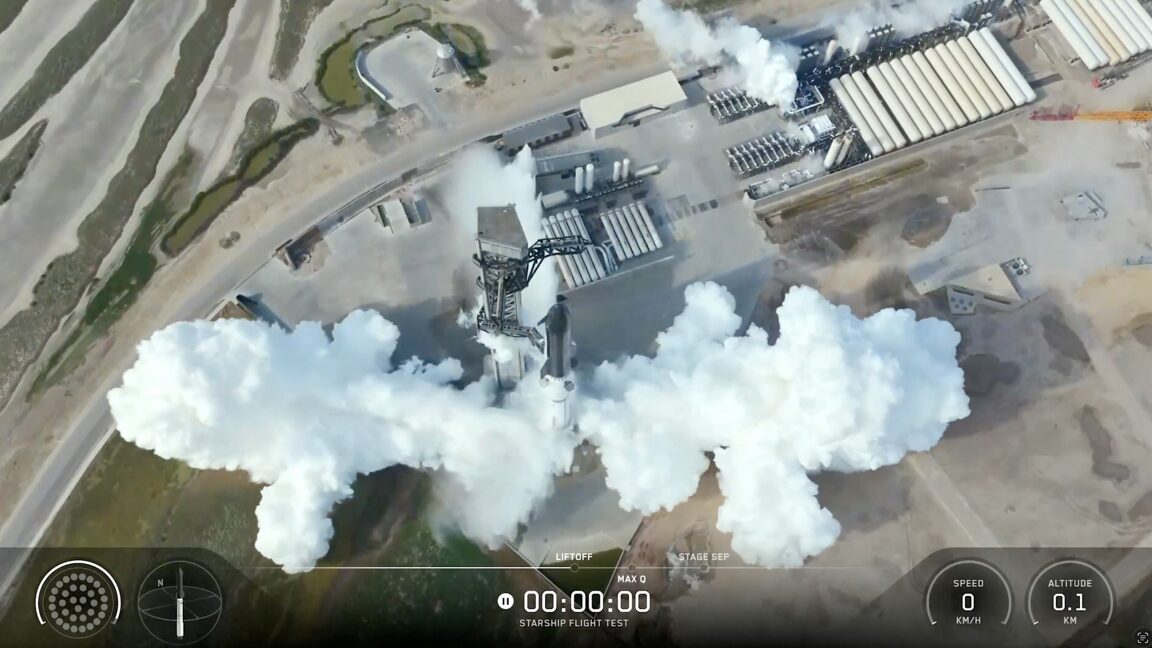
SpaceX aborted the test flight of its Starship rocket and Super Heavy booster at its Starbase facility in South Texas on Thursday after several Raptor engines failed to ignite during the startup sequence. The launch, scheduled for 5:45 pm local time, was called off after computers detected that multiple engines on the Super Heavy booster did not start, triggering an automatic abort.
The launch team had completed the loading of more than 11.5 million pounds of liquid methane and liquid oxygen into the two-stage rocket. However, the countdown was halted during the engine ignition phase. SpaceX has since initiated propellant offloading procedures to drain the rocket’s tanks, a necessary step before engineers can access the hardware for repairs.
CEO Elon Musk confirmed the technical issues via his social media platform, X, stating that "some of the engines didn’t start." While live video stream graphics indicated that four of the 33 engines failed to ignite, SpaceX officials did not explicitly confirm this number in their initial statement. Musk later clarified that ground teams at Starbase would replace two Raptor engines on the Super Heavy booster.
This event marks the second test flight for the upgraded Starship Version 3 rocket and the third-generation Raptor 3 engine, following a mostly successful debut in May. The previous flight, known as Flight 12, experienced engine startup timing issues that caused the Super Heavy booster to flip off-course by approximately 90 degrees. Flight 13 aimed to test modified startup sequences to improve booster flip reliability and achieve a controlled splashdown in the Gulf of Mexico.
A subsequent launch attempt is expected in early next week, though Musk noted it might not occur on the next available opportunity, which was scheduled for Friday evening. The company also aims to demonstrate reigniting a Raptor engine in space during this flight, a capability that was skipped during the May test. The successful execution of these objectives would pave the way for future orbital flights and support NASA’s Artemis lunar lander program.