SpaceX files for IPO, betting $26.5 trillion on AI ambitions as Grok lags rivals
The company’s S-1 filing positions artificial intelligence as its primary growth driver, despite Grok’s minimal market share and hardware inefficiencies at its Colossus facilities.
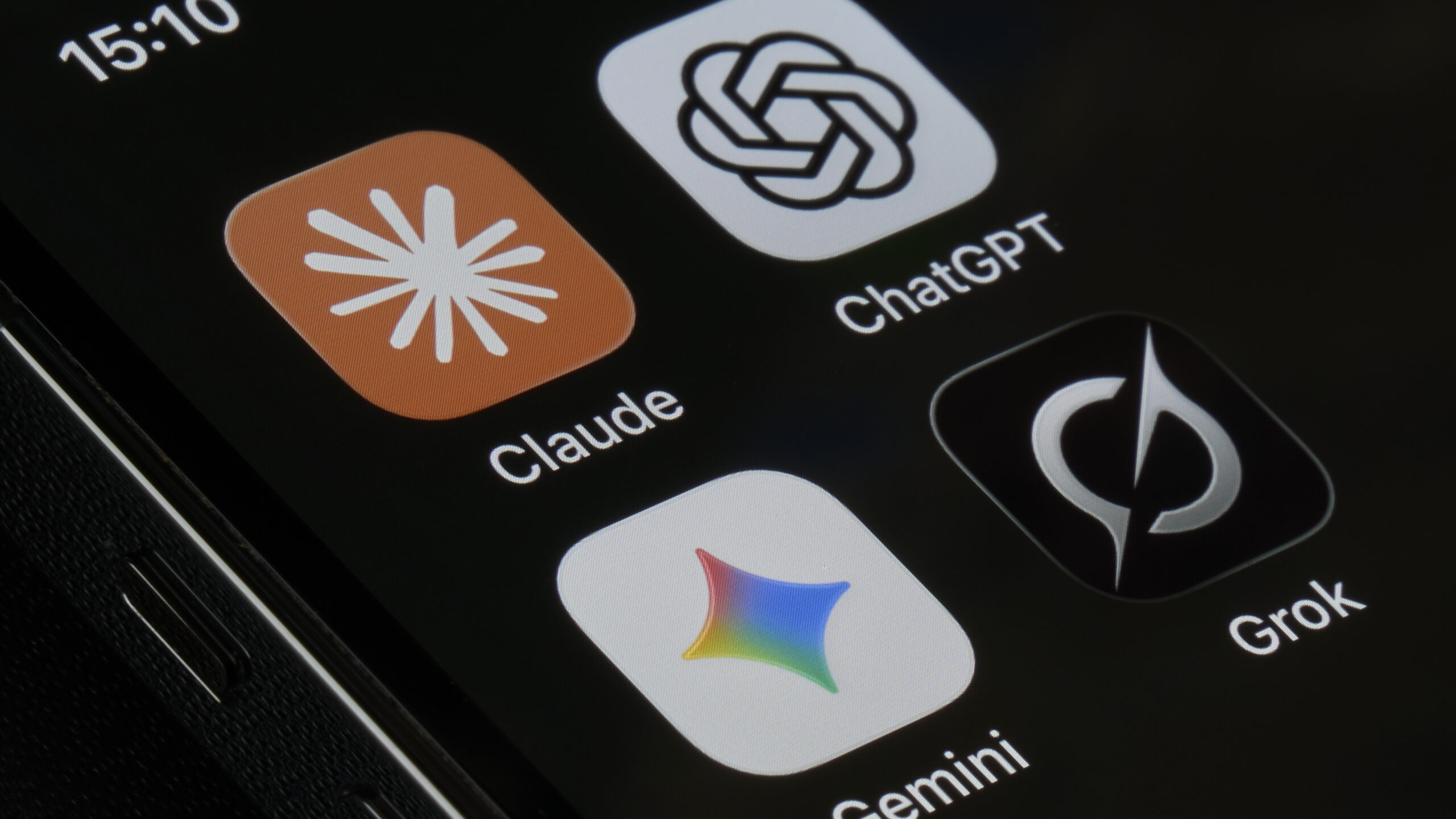
SpaceX has formally filed for an initial public offering, positioning artificial intelligence as the central pillar of its future strategy while acknowledging significant competitive challenges in the sector. The company’s financial disclosures indicate it has acquired Elon Musk’s xAI, integrating the Grok chatbot and associated models into a new SpaceXAI division. This move marks a strategic pivot, with the traditional space launch and satellite business now described as playing a supporting role to the fledgling AI enterprise.
The S-1 filing projects a total addressable market for AI at $26.5 trillion, a figure the company describes as the largest in human history. This estimate substantially exceeds third-party industry forecasts, such as Gartner’s projection of $3.3 trillion by 2027 and Citigroup’s suggestion of $4.2 trillion by 2030. SpaceX argues that AI represents the majority of this opportunity, aiming to rival the total value of US economic activity, which stood at nearly $32 trillion in the first quarter of 2026.
Despite these ambitious projections, Grok’s market penetration remains weak compared to established competitors. An AppMagic survey of 260,000 US consumers and workers found that only 0.174 percent paid for Grok in the second quarter of 2026, compared to over 6 percent for OpenAI’s ChatGPT. Corporate adoption has also lagged, with usage rising from 4 percent to 7 percent between 2025 and 2026, while Anthropic’s Claude and Google’s Gemini saw significant jumps to 48 percent and 40 percent respectively.
The company’s infrastructure strategy faces its own hurdles. Although SpaceX claims to operate the largest AI training data centre clusters on Earth via its Colossus facilities in Memphis, Tennessee, it recently leased the entire compute capacity of Colossus to rival Anthropic. This decision followed reports that the facility’s mixed Nvidia GPU hardware was inefficient for AI training workloads, making it more suitable for inference tasks. SpaceX is also developing Macrohard, an agentic AI platform, and the Terafab initiative with Tesla and Intel to build a chip manufacturing facility, though both projects remain in the very early stages.
Financial pressures underscore the urgency of the IPO. SpaceX reported a net loss of $4.3 billion in the first quarter of 2026, with total debt reaching $29 billion. The company spent more than $10 billion on AI infrastructure and hardware during the period, with Starlink being the only profitable unit. To realise its vision of deploying up to 1 million satellites as orbital data centres—a venture potentially requiring over $1 trillion—SpaceX requires a critical cash infusion from public markets.
