South Dakota State University team wins NASA aeronautics competition for AR maintenance tool
The fifth annual Gateways to Blue Skies Competition challenged students to address critical shortages in the aviation maintenance workforce by 2035.
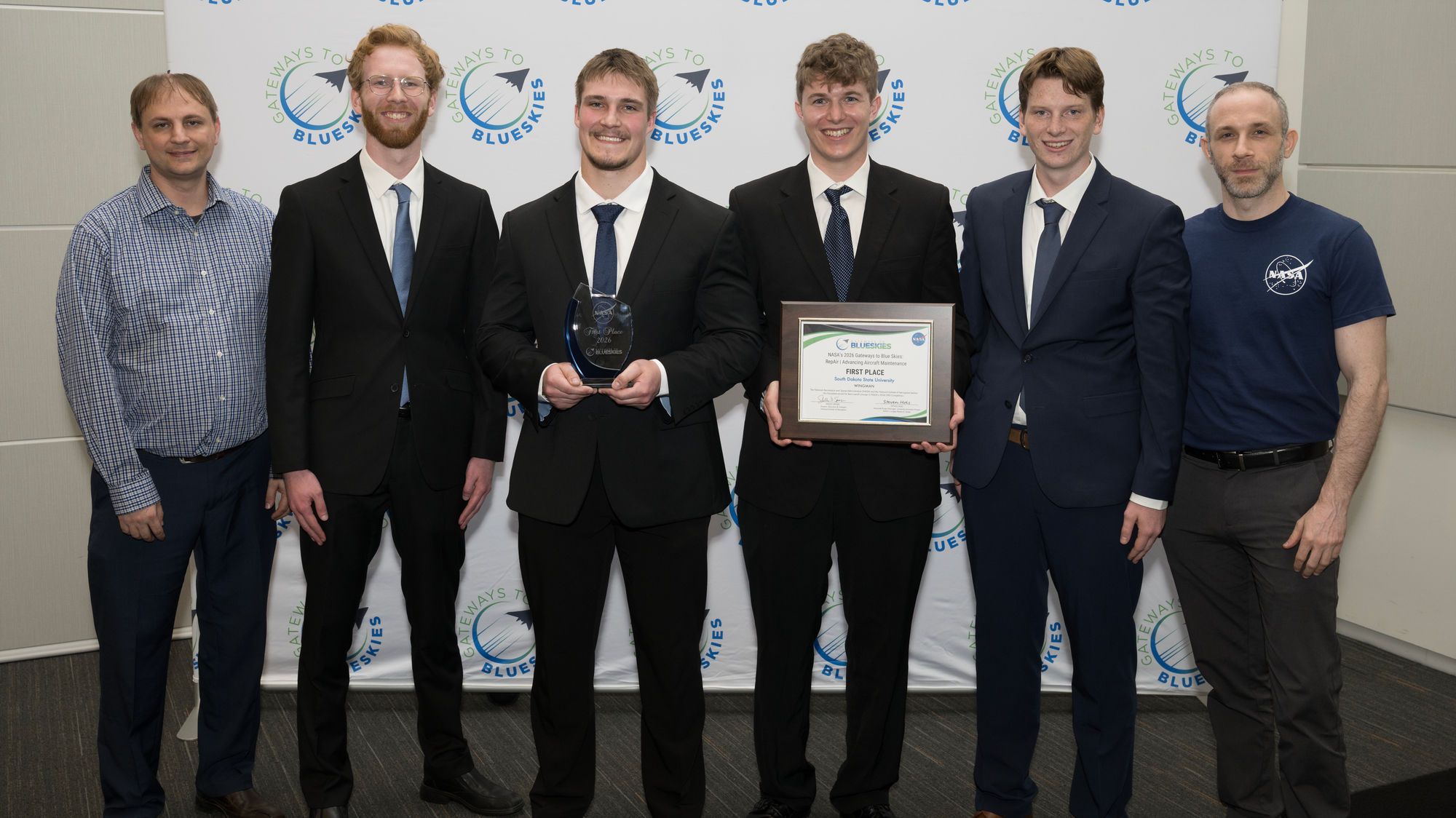
South Dakota State University’s WINGMAN team has secured first place at NASA’s fifth annual Gateways to Blue Skies Competition. The challenge, titled RepAir: Advancing Aircraft Maintenance, required postsecondary student teams to develop innovative systems for commercial aircraft maintenance and repair operations by 2035. The winning project proposed augmented reality safety glasses designed to assist mechanics during routine servicing and minor repairs.
The competition was sponsored by NASA’s University Innovation project within the agency’s Aeronautics Research Mission Directorate. It supports the agency’s broader objectives of fostering innovative research and strengthening the future aviation workforce. The commercial aviation industry faces significant challenges due to a shortage of qualified maintenance workers and increasing demands to keep aircraft running for longer periods.
The WINGMAN team’s solution involved augmented reality safety glasses equipped with voice-controlled manuals, automatic documentation, and photo recognition. These devices would function as a mechanic’s “wingman,” enabling hands-free access to the information and reporting mechanisms required for line inspections. The team presented their research alongside eight other finalists at the 2026 Gateways to Blue Skies Forum.
The forum was held on May 18 and 19 at NASA’s Langley Research Center in Hampton, Virginia. The event was judged by a panel of subject matter experts from NASA, the Federal Aviation Administration, and industry partners, including representatives from Southwest Airlines and American Airlines. Steven Holz, associate project manager for NASA’s University Innovation Project, served as the judging panel chair.
The winning team will have the opportunity to intern at one of NASA’s four aeronautics research centres during the 2026-27 academic year. These facilities include NASA Langley, NASA’s Glenn Research Center in Cleveland, NASA’s Ames Research Center in California’s Silicon Valley, and NASA’s Armstrong Flight Research Center in Edwards, California. The event was livestreamed, and presentations were recorded for public access.
Owen Diede, the WINGMAN team lead, described the experience as exciting, noting the value of feedback from faculty advisors and the design review committee. The Gateways to Blue Skies Challenge is part of the Transformative Aeronautics Concepts Program in NASA’s Aeronautics Research Mission Directorate. The NASA Tournament Lab manages the challenge through the National Institute of Aerospace on behalf of NASA.