Singapore GDP beats estimates as AI demand offsets Iran war fallout
First-quarter expansion of 6 per cent driven by semiconductor and finance sectors, though economists warn of delayed impact from Strait of Hormuz closure.
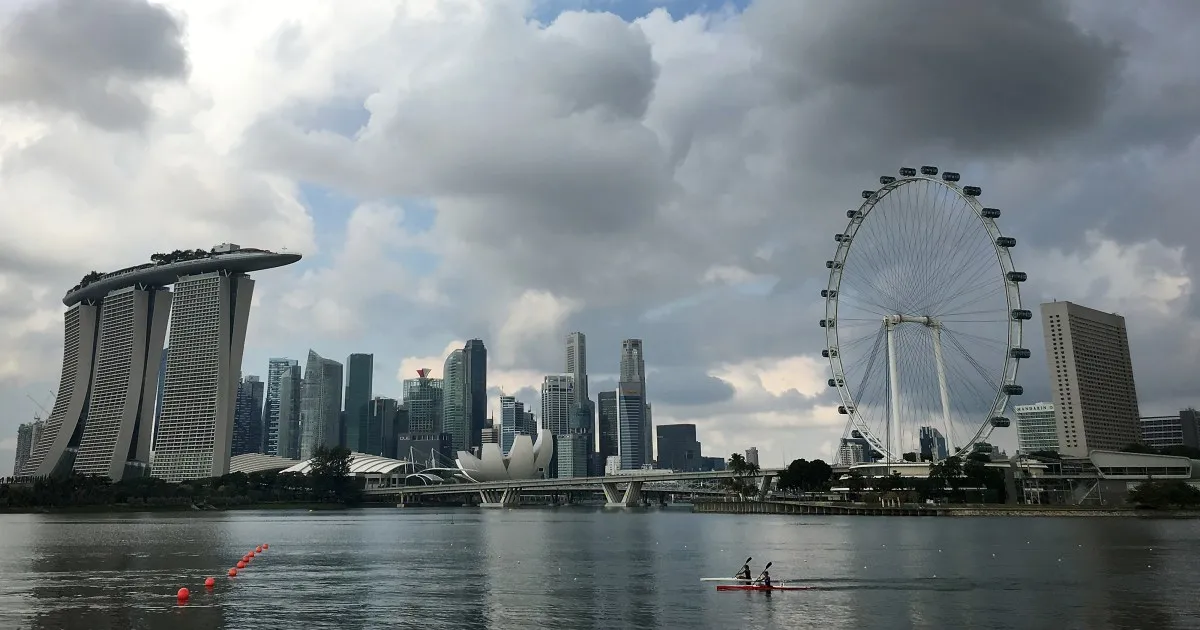
Singapore’s gross domestic product expanded by 6 per cent year-on-year in the first quarter of 2026, surpassing the official advance estimate of 4.6 per cent. The Ministry of Trade and Industry attributed the outperformance to robust demand for artificial intelligence chips, which drove strong results across the wholesale trade, manufacturing, and finance sectors. On a seasonally adjusted basis, the economy grew 1 per cent from the previous quarter.
The ministry highlighted that AI-related demand specifically boosted the machinery, equipment and supplies segment within wholesale trade, as well as the electronics and precision engineering clusters in manufacturing. This surge in activity helped offset rising energy and fertiliser costs resulting from the closure of the Strait of Hormuz to most shipping, a consequence of the United States-Israel war on Iran.
Despite the strong quarterly figures, the government maintained its 2026 growth forecast at between 2 and 4 per cent. Officials cited downside risks from the conflict, noting that higher input costs will weigh on global economic activity for the remainder of the year. However, the ministry emphasised that AI-related demand remains robust and is expected to continue supporting regional economic growth.
Local economists suggested the first-quarter data likely does not fully reflect the economic damage from the Middle East crisis. Khoon Goh, head of Asia research for ANZ, told Al Jazeera that the impact of the conflict may become more apparent in the second quarter. He noted that the solid first-quarter performance sets a strong base for the rest of the year, provided the manufacturing sector continues to operate without supply disruptions.
Singapore’s position as a critical node in global supply chains underpins its resilience. The city-state accounts for approximately 10 per cent of global semiconductor production and 20 per cent of semiconductor chip equipment production. Anthony Tay, an associate professor of economics at Singapore Management University, said the figures would be met with relief rather than glee, as local forecasters had already raised expectations for 2026 growth to around 3.6 per cent amid the AI boom.
The broader global context remains precarious. The United Nations recently cut its 2026 global economic growth forecast to 2.5 per cent, down from 2.7 per cent, citing the fallout of the conflict. With the Strait of Hormuz closure continuing to disrupt shipping three months into the war, the full extent of the geopolitical shock to Singapore’s trade-reliant economy may yet emerge in coming months.