Shoah Memorial exhibition reveals 1941 roundup of foreign Jews in Paris
Curated by Dr Jean-Marc Dreyfus, the collection documents the May 1941 operation as a precursor to the Vel’ d’Hiv roundup, exposing the mechanics of collaboration and the humanity of the victims.
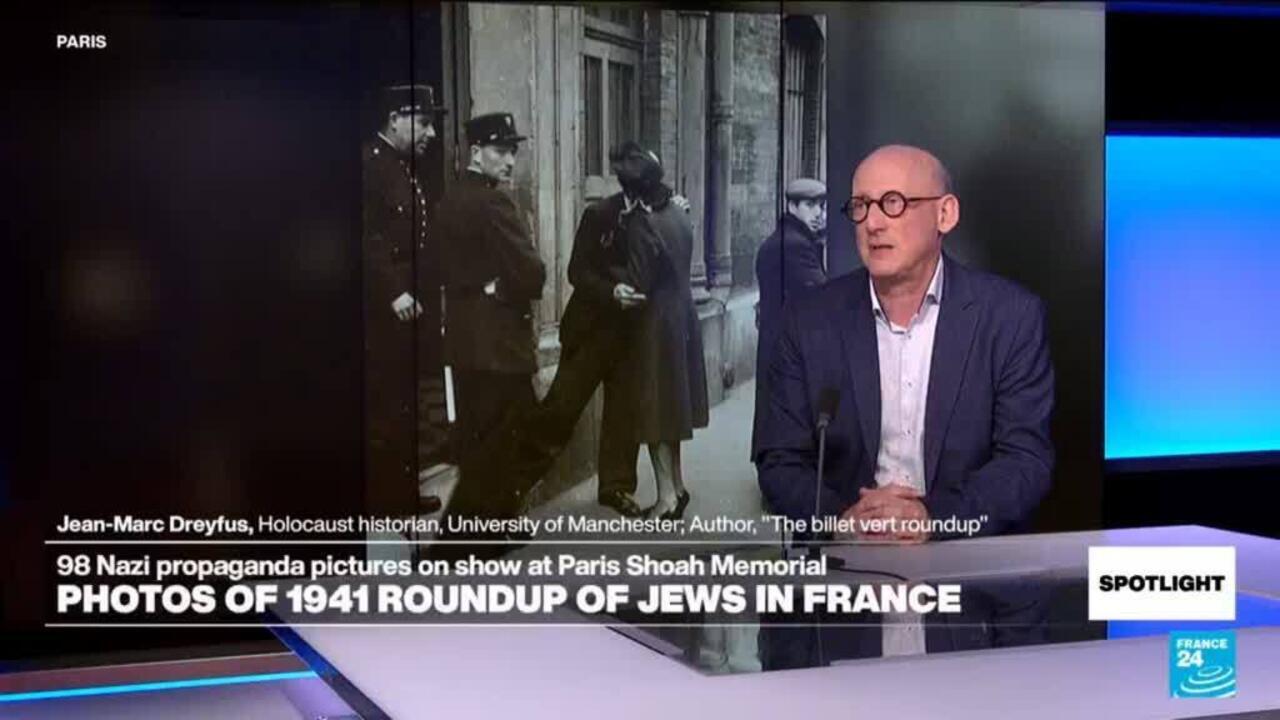
Ninety-eight previously unknown photographs documenting the May 1941 roundup of foreign Jews in Paris have been revealed in an exhibition at the Shoah Memorial. Curated by Dr Jean-Marc Dreyfus, Professor of Modern History at the University of Manchester, the images provide a detailed visual account of the operation, which is described as a precursor to the July 1942 Vel’ d’Hiv roundup. The collection offers what Dr Dreyfus characterises as a “real discovery for history,” presenting an almost minute-by-minute record of an event that has remained largely absent from French public consciousness.
The photographs were taken by Harry Croner, a half-German, half-Jewish photographer employed by the German Wehrmacht’s propaganda apparatus. Despite his role within the occupation’s media structure, the images were not utilised by German authorities at the time. Instead of celebrating state power, the photographs reveal vulnerability, sorrow, and human dignity. Dr Dreyfus notes the profound irony that none of the 98 images were used during the occupation, concluding that Croner was a significant photographer precisely because he captured “what is not supposed to be shown”: the humanity of those targeted by a machinery of exclusion.
The exhibition exposes the mechanics of the arrest, which was organised by Theodor Dannecker, Adolf Eichmann’s representative in Paris. Victims were summoned under the pretext of identity checks, only to find themselves trapped in a sports hall from which they could not leave. The images document the deception involved, showing spouses returning with suitcases and children accompanying their mothers, while also highlighting the role of French police in enforcing German orders.
At the centre of the collection is an iconic image of a farewell kiss between a Jewish man and his partner. Dr Dreyfus contrasts this with Robert Doisneau’s romantic depictions of Paris, noting that while Doisneau captured youthful love, this photograph signifies imminent separation, deportation, and certain death. The visual evidence challenges the dominant narrative of Holocaust remembrance in France, which has long centred on the Vel’ d’Hiv roundup, by restoring visibility to this earlier, forgotten episode.
Beyond the emotional weight of the images, the collection provides rare visual evidence of the hierarchy of occupation and collaboration. Dr Dreyfus observes that the photographs clearly show Germans in command and French police administrators abiding by their orders. By documenting both the deception and its human consequences, the exhibition at the Shoah Memorial offers a critical re-examination of the institutional dynamics that facilitated persecution in occupied France.