Serbia’s LGBTQ+ community faces ‘epidemic of violence’ amid record attack numbers
The NGO Da se Zna! has documented 110 cases of violence against queer people last year, a figure activists attribute to a lack of police accountability and a hostile political climate linked to the ruling Serbian Progressive Party.
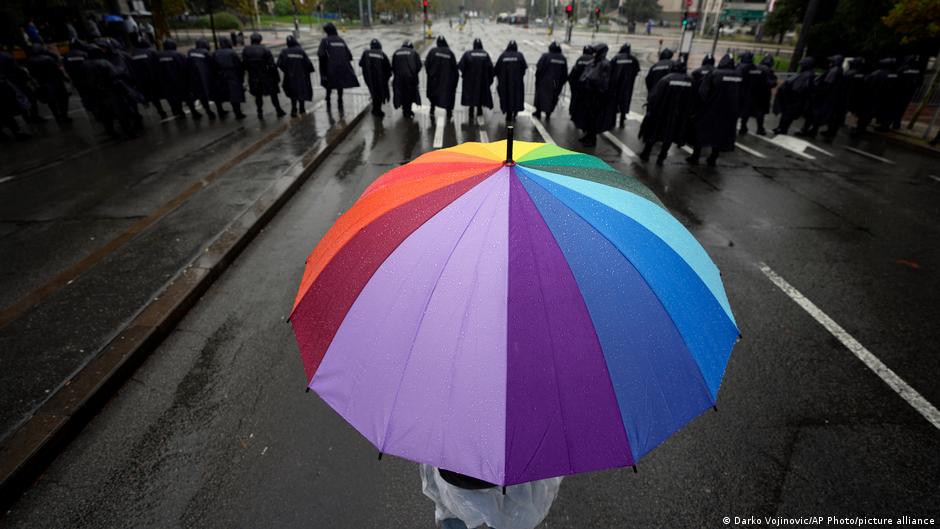
Documented cases of violence against Serbia’s LGBTQ+ community have reached unprecedented levels, with the NGO Da se Zna! recording 110 incidents last year. This surge in aggression has been described by activists as an "epidemic," reflecting a broader deterioration in the social climate for marginalized groups within the EU candidate country. The rise in attacks is increasingly attributed to right-wing nationalism and a perceived lack of police accountability for perpetrators.
High-profile assaults have underscored the severity of the situation. On 11 July, drag queen Aleksandar Savic, also known as Alexis Plastik, was stabbed on a bus in Belgrade, sustaining injuries to his calf and eye. Earlier that same day, author Vladimir Arsenijevic was attacked by right-wing thugs in central Belgrade while preparing for a memorial event commemorating the 1995 Srebrenica genocide. Savic publicly characterised these events as part of a systemic pattern of violence that has become increasingly normalised in the capital.
Matija Stefanovic, the program coordinator for Da se Zna!, emphasised that these are not isolated incidents but symptoms of a structural failure. He noted that the majority of attacks are not investigated and that perpetrators are rarely held accountable, which emboldens further aggression. Stefanovic linked the rising hostility to groups associated with President Aleksandar Vucic and his Serbian Progressive Party (SNS), arguing that the political environment reinforces the notion that anyone who differs from the mainstream is a valid target.
The fear generated by this environment has significantly altered public behaviour within the community. A recent survey by the European Union Agency for Fundamental Rights revealed that 80% of LGBTQ+ respondents in Serbia avoid holding their partner’s hand in public. Consequently, Serbia’s ranking on the Rainbow Map, compiled by the International Lesbian, Gay, Bisexual, Trans and Intersex Association, has slipped to 29th place in Europe, six positions below the European average and a decline from 22nd place five years ago.
Activists continue to face direct threats while attempting to engage with communities outside the capital. In mid-July, the Pride Caravan event in Pirot was cancelled due to safety concerns, during which three journalists covering the event were attacked by a mob. Stefanovic, who transitioned publicly after moving to Belgrade, described his journey from a conservative upbringing to becoming a visible trans advocate. He highlighted that while the political climate remains hostile, personal acceptance is possible, citing his own parents, who initially struggled with his identity but eventually became his allies and attended the Pride parade last year.