September 2026 skywatching guide: Diamond Moon, Neptune opposition, and meteor showers
Following a busy August, September offers a dense calendar of celestial events, including the Diamond Moon, the Epsilon Perseids peak, and optimal viewing conditions for Neptune.
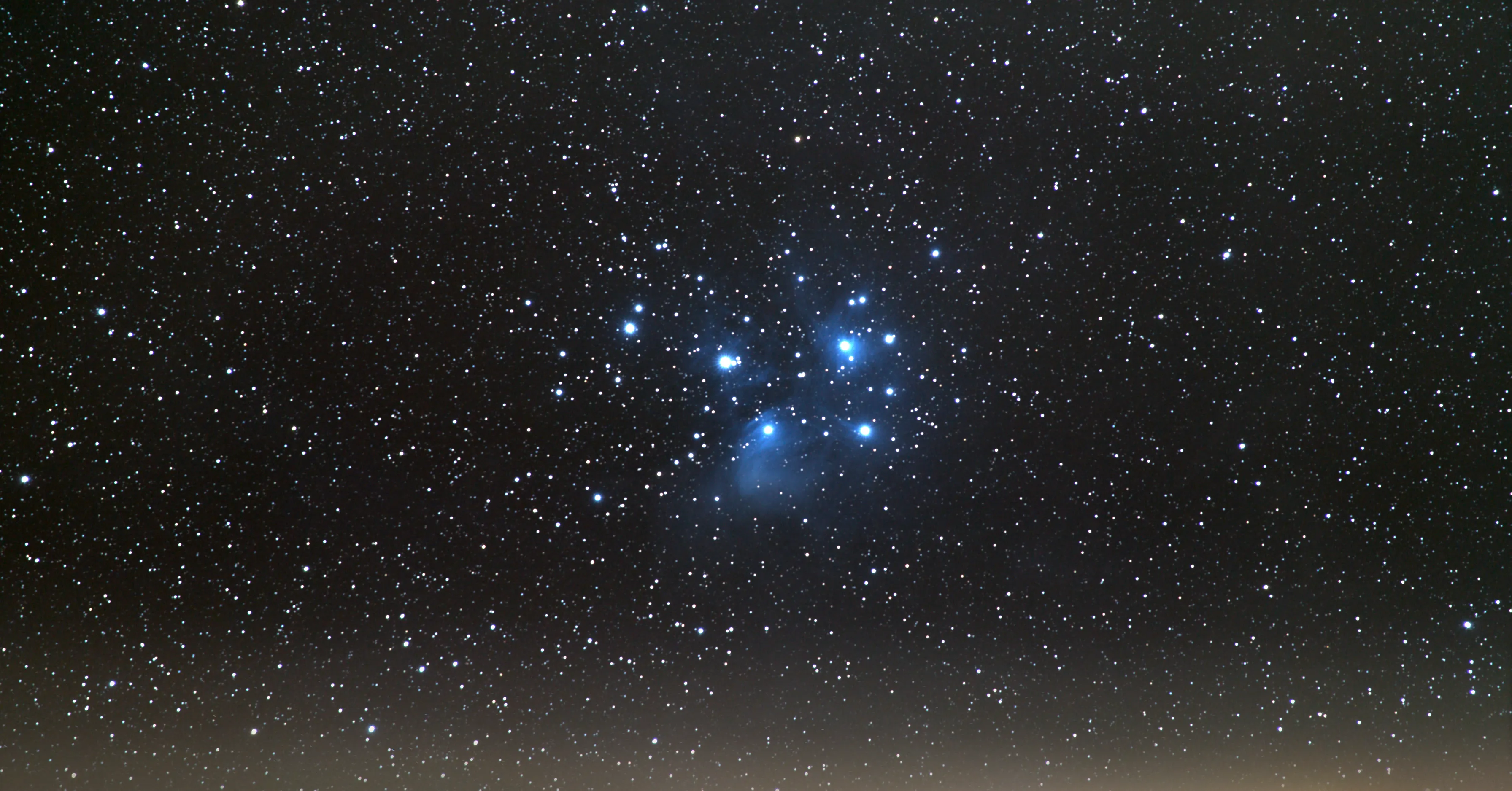
Stargazers have a packed schedule for September 2026, following a strong August that featured two eclipses and the peak of the Perseids meteor shower. The month is anchored by the "Diamond Moon" phenomenon, where the moon passes close to the Pleiades star cluster, alongside the peak of the Epsilon Perseids meteor shower and Neptune reaching opposition.
The month begins with a notable planetary conjunction on 2 September, when Venus appears approximately 1.5 degrees from Spica, the brightest star in the constellation Virgo. Both objects are visible to the naked eye, with Venus appearing as a bright, non-twinkling white dot and Spica as a fainter bluish point. The conjunction is timed for 00:17 UTC, meaning it may be visible in the afternoon or evening of 1 September depending on the observer's location.
On 3 September, the moon will pass within 1.1 degrees of the Pleiades, also known as the Seven Sisters or M45. With the moon approximately 59 percent illuminated, the cluster will appear as a small group of bright points next to the lunar disc, resembling diamonds to the naked eye. This close encounter will repeat on 30 September, when the two objects will once again be separated by just one degree.
Meteor enthusiasts can look forward to the Epsilon Perseids, which will peak on 9 and 10 September. While this shower produces fewer meteors than the August Perseids, with up to eight per hour, its timing is advantageous. The peak occurs just two days before the new moon, providing ideally dark skies for viewing, particularly from the northern hemisphere.
Venus will reach its peak brilliance of the year on 18 September, shining at an apparent magnitude of approximately -4.8. This makes it significantly brighter than Sirius, the brightest star in the sky, which reaches a magnitude of -1.46. Observers in the southern hemisphere will find the best conditions to view the planet low above the western horizon shortly after sunset.
The month also marks the September equinox on 23 September, signalling the astronomical start of autumn in the northern hemisphere and spring in the southern hemisphere. On 26 September, Neptune will reach opposition, placing it at one of its closest distances to Earth for the year. As the most distant planet in the solar system, Neptune requires a telescope to observe, appearing as a tiny bluish disk against the stars of Pisces.
September concludes with the Harvest Moon, the full moon closest to the equinox. According to WIRED, this traditional name relates to northern hemisphere harvests and does not denote a distinct physical change in the moon’s appearance, size, or brightness.