Seoul unsettled by Trump’s directive to scale back joint military drills
The directive, issued on 17 August 2026, marks a significant departure from previous joint training protocols and reflects a recalibration of US defence strategy in East Asia.
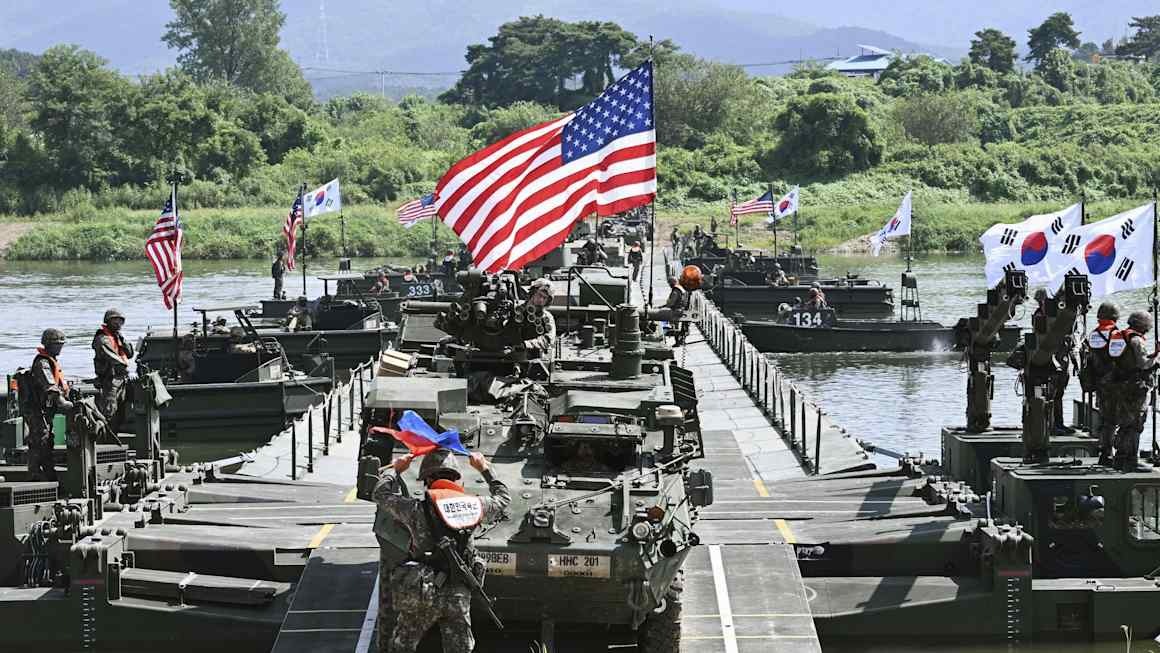
US President Donald Trump has directed the Pentagon to substantially reduce the scope of the annual Ulchi Freedom Shield joint military exercises with South Korea, a move that has unsettled the American ally. The directive, issued on 17 August 2026, marks a notable departure from previous joint training protocols and reflects a recalibration of US defence strategy in East Asia.
In justifying the reduction in drill scope, Trump cited his personal relationship with North Korean leader Kim Jong Un and South Korea’s refusal to join the US in its war on Iran. The President also praised Kim Jong Un, linking the diplomatic engagement to bolstered safety for South Korea.
The timing of the comments suggests an effort to contextualise the reduction in military preparedness as a strategic choice driven by diplomatic progress rather than a withdrawal of security commitments. By attributing South Korea’s safety to his engagement with Kim, the President is attempting to frame the policy shift as a proactive security measure.
However, the specific mechanisms by which dialogue with Kim Jong Un bolsters South Korea’s safety are not fully detailed. The exact extent of the 'substantial' reduction in drill scope is also not specified in the provided text, leaving the precise operational impact unclear.
The South Korean presidential office has responded to the reduction in drill scope, with reports indicating the ally has been rattled by the move. As the US continues to navigate its complex relationships in the region, the interplay between military reductions and diplomatic overtures will likely remain a focal point of international scrutiny.
The long-term impact on alliance dynamics remains to be seen and will be closely monitored. The South Korean government’s response to the drill scaling and the subsequent diplomatic claims from Washington will be watched for any further shifts in the strategic partnership.