Seoul Defies Washington as Trump Orders Pentagon to Scale Back South Korea Drills
The order, issued hours before the 11-day exercise was set to begin, cites Seoul’s refusal to assist in the war against Iran and claims the drills are hostile to North Korea.
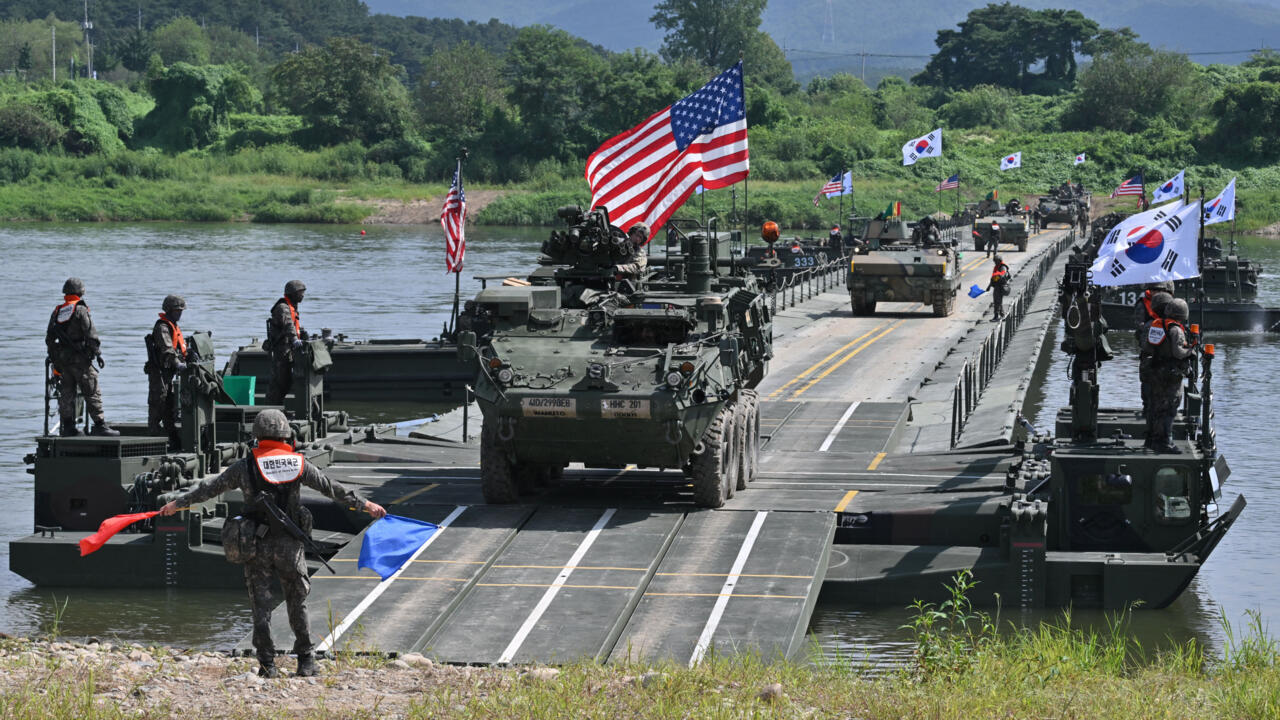
South Korea’s defence ministry has confirmed it will proceed with annual joint military exercises with the United States, rejecting a directive from US President Donald Trump to substantially reduce the operation. The order was issued on Sunday, just hours before the 11-day drill was scheduled to commence on Monday, creating immediate friction between Washington’s strategic pivot and established allied defence protocols.
President Trump posted on Truth Social that he had ordered Defence Secretary Pete Hegseth to scale back the exercises, describing them as "inappropriate and hostile." The President cited his "good relationship" with North Korean leader Kim Jong-un and claimed that Seoul had refused his request to join the US in the "Denuclearization of the Islamic Republic of Iran." Trump argued that the drills, which are largely funded by the United States, send a hostile signal to a country he claimed had been "unthreatening and respectful" during his presidency.
Because the cancellation of the drills was deemed too late in the planning cycle, the President directed the Pentagon to "substantially reduce" the scale of the operation rather than cancel it entirely. The exercises, involving 18,000 South Korean troops and US forces, are designed to simulate combat against North Korean troops that have been battle-hardened by deployments in the Russia-Ukraine war.
The drills place a heightened focus on drone warfare, GPS disruption, and cyber attacks. Colonel Ryan Donald, spokesman for the US and South Korean Combined Forces Command, stated that the simulations were necessary to prepare for potential aggression from Pyongyang. The announcement follows a week of warnings from North Korea, which recently test-fired a ballistic missile over the Sea of Japan and threatened a "new level of deterrent" response to the military activities.
Analysts suggest the downsizing may undermine alliance coordination and weaken deterrence in the region. Leif-Eric Easley of Ewha Womans University noted that while cost savings would be marginal, the diplomatic benefits for relations with North Korea are doubtful. Lim Eul-chul of Kyungnam University added that Pyongyang is unlikely to view a scaled-back exercise as meaningful, preferring the cancellation of joint drills in their entirety.
South Korean President Lee Jae Myung, who took office in June 2025, has pursued a more dovish approach than his predecessor, proposing talks with Pyongyang to formally end the Korean War. However, the leadership in North Korea has continued to accelerate its armament build-up, branding the South as the "most hostile state." The United States currently stations approximately 28,500 troops in South Korea to bolster defences against threats from the North, a legacy of the 1950-53 Korean War.