Seismic activity recorded in eastern Japan; authorities rule out tsunami threat
Shaking of intensity 3 felt in Chūji and Kumagaya as officials confirm no risk of coastal flooding
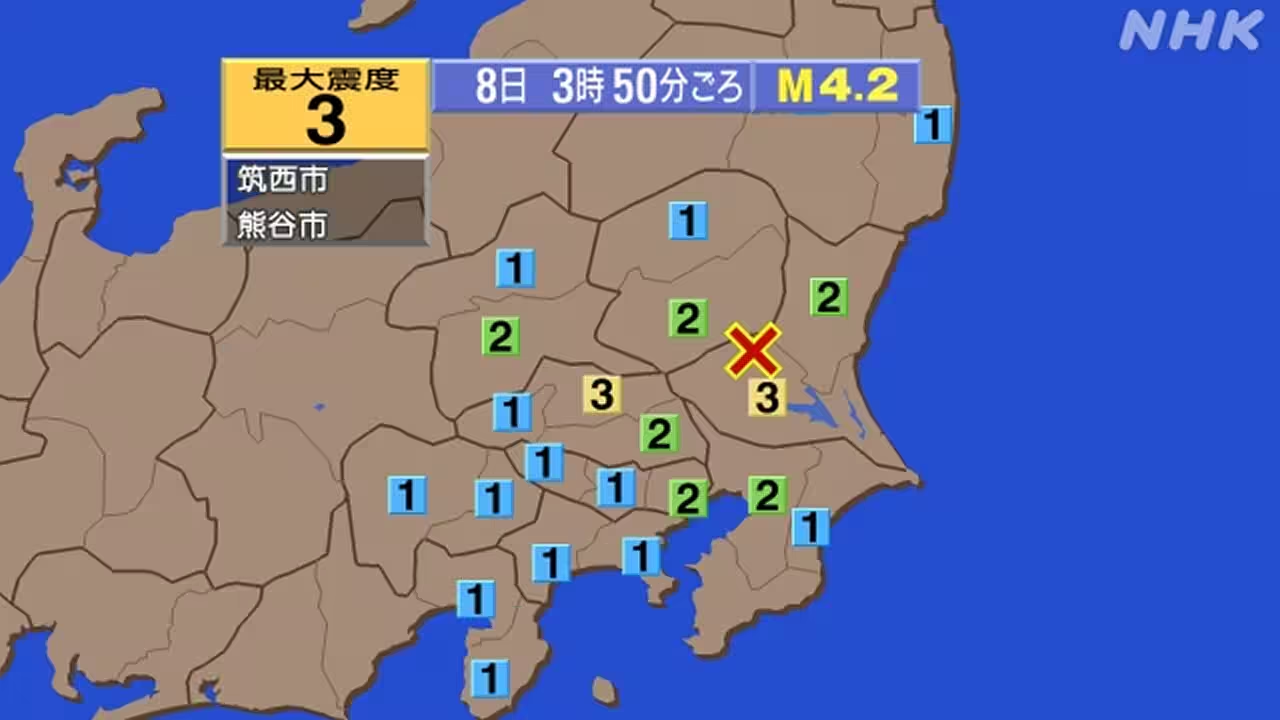
A minor seismic event was recorded early on 8 May 2026, with authorities in Ibaraki and Saitama prefectures confirming that the tremor posed no threat of a tsunami. The incident, which occurred around 03:50, registered as a magnitude 3 earthquake, marking a standard seismic activity update with no immediate evacuation orders issued beyond the observation of shaking.
Reports from NHK News Japan indicate that the shaking of intensity 3 was specifically observed in Chūji, Ibaraki, and Kumagaya, Saitama. While the energy released by the event was classified as magnitude 3, the physical impact was felt most strongly in these localities where residents experienced the intensity 3 tremor.
Government officials have stated there is no concern regarding a tsunami resulting from this event. This assessment aligns with the initial classification of the incident as a minor seismic occurrence, distinguishing it from larger magnitude events that typically trigger coastal warnings. The lack of a tsunami warning suggests the epicentre and depth of the quake did not affect the coastal zones of the two prefectures.
The report originates from NHK News Japan, which provided the primary update on the seismic activity and the subsequent tsunami status. The broadcast highlighted that while the shaking was noticeable in the specified towns, the broader administrative regions of Ibaraki and Saitama did not require emergency protocols beyond standard monitoring.
No further updates were available in the initial reports regarding aftershocks or structural damage to infrastructure. The focus of the response remained on public reassurance that the seismic activity, while perceptible, did not compromise public safety or necessitate a change in daily operations across the affected areas.