Security and Social Unrest Cast Shadow Over Mexico’s World Cup 2026 Opening
President Claudia Sheinbaum has pledged 100,000 security personnel, yet rights groups and unions warn of an acute human rights crisis and potential disruption to the June 11 match against South Africa.
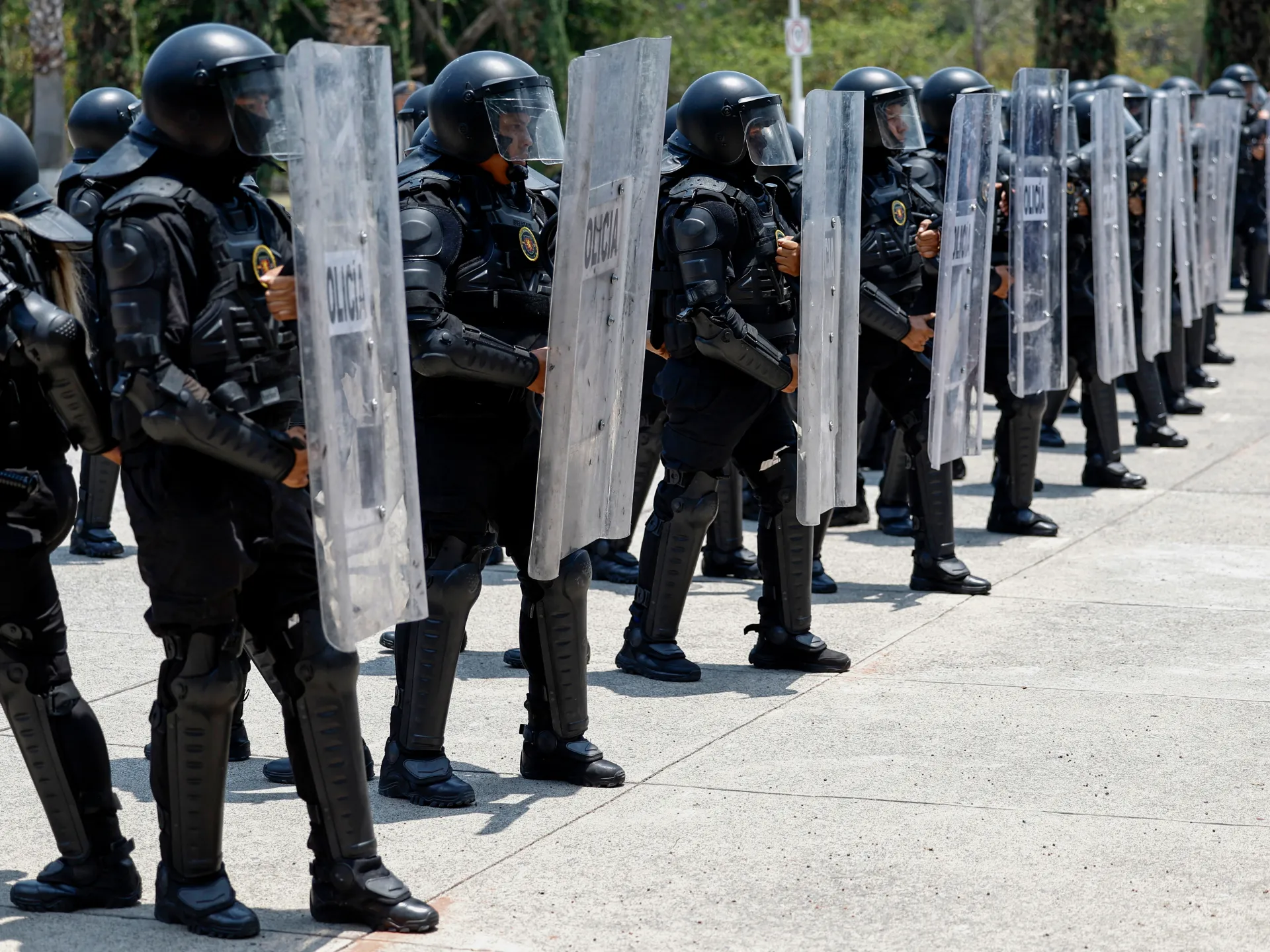
Security concerns and social unrest are intensifying in Mexico ahead of the FIFA World Cup 2026 opening match on June 11, where the host nation will face South Africa at the Estadio Azteca in Mexico City. Recent violent incidents, including a mass shooting in Puebla that killed 10 people and the killing of a Canadian tourist at Teotihuacan, have heightened safety fears among fans and human rights groups. The National Coordination of Education Workers (CNTE) has threatened a nationwide strike over pay and policy demands, warning that the opening match could be disrupted if their demands are not met by June 11. President Claudia Sheinbaum has pledged to deploy 100,000 security personnel, including National Guard troops and private security, to bolster safety. Human rights organisations, including Amnesty International and Human Rights Watch, have urged FIFA to address risks to journalists, fans, and local communities, citing an "acute human rights crisis" and the issue of missing persons in Mexico.
A mass shooting in the Mexican state of Puebla on Sunday killed 10 people, comprising six men, three women, and a minor, at a residence in Tehuitzingo, approximately 200 kilometres from Mexico City. The state Attorney General’s Office has opened an investigation into the attack. This incident follows a shooting at the Teotihuacan archaeological site less than a month ago, where a gunman killed a Canadian tourist and injured 13 others. These events have exacerbated security fears previously raised by international fans and rights bodies regarding the tournament's safety protocols.
In response to the escalating violence, President Sheinbaum announced the deployment of 100,000 security personnel, a force comprising National Guard troops, police officers, and private security employees. The US Department of Homeland Security Secretary, Markwayne Mullin, is scheduled to visit Mexico this week, according to the President, although the specific purpose of the visit was not detailed. FIFA President Gianni Infantino has stated he remains "very reassured" about Mexico’s ability to host the tournament, despite the violence triggered by the recent killing of cartel leader Nemesio “El Mencho” Oseguera.
Human rights organisations have been vocal about the risks facing participants and observers. Human Rights Watch highlighted in April that Mexico remains one of the most dangerous countries in the world for the media, noting that FIFA had not adequately addressed direct risks to journalists in host cities. Amnesty International called on FIFA and hosts to take urgent action to protect fans, players, and local communities, describing the situation as an "acute human rights crisis." These concerns are compounded by the issue of missing persons, with official government data indicating 133,960 people are unaccounted for, a crisis driven by decades of cartel violence and institutional neglect.
Social protests are also threatening the tournament's smooth operation. On Sunday, relatives of missing persons played a football match outside the Nuevo Leon government palace to demand answers regarding their loved ones. Earlier, on Teachers’ Day, thousands of people led by the CNTE marched through Mexico City. Pedro Hernandez Morales, General Secretary of CNTE Section 9, warned that if demands for doubled salaries and reversed education reforms are not met before June 11, a national strike would proceed. Authorities had recently reversed a plan to cut short the school year due to the tournament following backlash from parents and educators, but tensions remain high as the opening match approaches.