Satirical youth movement challenges Indian establishment over education and employment
Founder Abhijeet Dipke returns from the US to demand Education Minister’s resignation, sparking accusations of foreign influence and legal challenges over digital censorship.
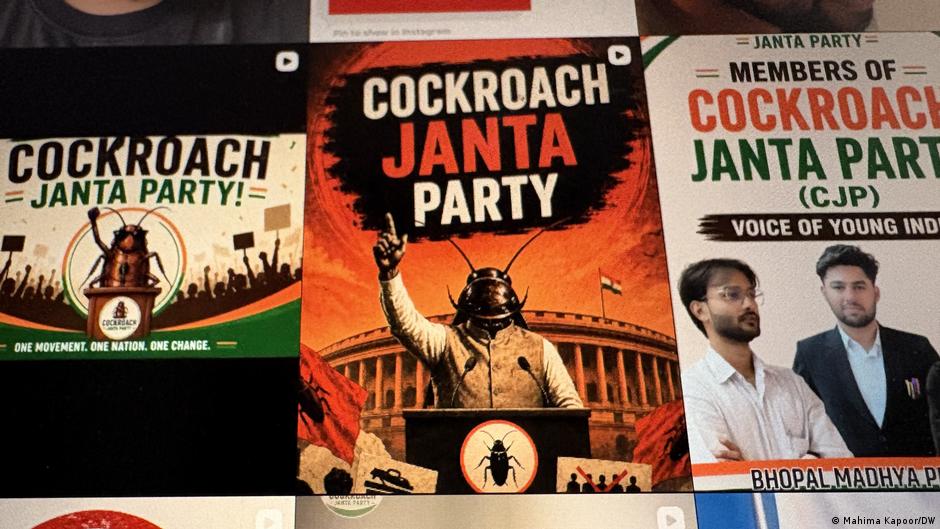
The Cockroach Janta Party (CJP), a satirical movement born from social media, is preparing to stage peaceful protests in India to address widespread youth grievances regarding unemployment and education. Founder Abhijeet Dipke, a 30-year-old graduate of Boston University, announced on Monday that he would return to India on June 6 to lead a demonstration demanding the resignation of Education Minister Dharmendra Pradhan. The protest follows allegations of irregularities in a nationwide medical entrance test, which authorities cancelled last month after approximately 2.2 million students had already sat the exam due to suspected question paper leaks.
The movement emerged in response to remarks attributed to Chief Justice of India Surya Kant, who reportedly compared some unemployed young people to "cockroaches" and "parasites." Although the Chief Justice later clarified that his comments referred specifically to individuals using fake degrees, the statement ignited anger among young Indians already grappling with economic insecurity and recurring examination scandals. Dipke stated in a video posted to the group’s Instagram handle that the movement aims to follow the path of the Constitution to peacefully raise voices against the current political system.
Since its launch, the CJP has amassed over 22 million Instagram followers, surpassing the digital reach of the ruling Bharatiya Janata Party (BJP) and the main opposition Congress Party. However, the group faces significant institutional resistance. Indian authorities have blocked the CJP’s X account, citing national security concerns, a move that has prompted a legal challenge from the movement. Senior government officials have accused the group of being a destabilising force, with BJP politician Rajeev Chandrasekhar describing it as a "cross-border influence operation" and Cabinet minister Kiren Rijiju alleging it seeks followers from Pakistan.
Dipke, who has lived in the United States for the past two years, has alleged surveillance and intimidation against the CJP, noting that his family and friends are concerned about his potential arrest upon return. Despite the hostility from authorities, the movement has established an immense online following and aims to create local chapters to campaign on issues ranging from joblessness to government accountability. The group’s meteoric rise reflects a broader trend of digital participation and decentralized organisation, relying on viral communication rather than traditional political machinery.
Experts suggest the movement highlights a widening disconnect between citizens and the establishment. Sociologist Avijit Pathak noted that while the CJP’s long-term viability is uncertain, it demonstrates how satire has served as a powerful instrument of political critique. Media critic Pamela Philipose argued that the group successfully transformed a symbol of humiliation into a badge of resistance, giving language to anxieties that had long existed beneath the surface of Indian society.
Transitioning from an online phenomenon to a registered political entity presents practical challenges, including strict election regulations and requirements for financial transparency. BJP spokesperson Tom Vadakkan warned that social media following and an electoral mandate are distinct matters, and the movement may face restrictions on using its signature imagery in official elections. Nevertheless, the CJP has already shifted the national conversation, forcing a dialogue on issues that critics argue mainstream media has overlooked in favour of political elites.