Satirical movement tests political viability as youth rally over exam failures
Hundreds of demonstrators demand the resignation of Education Minister Dharmendra Pradhan amid growing anger over the NEET medical entrance exam scandal.
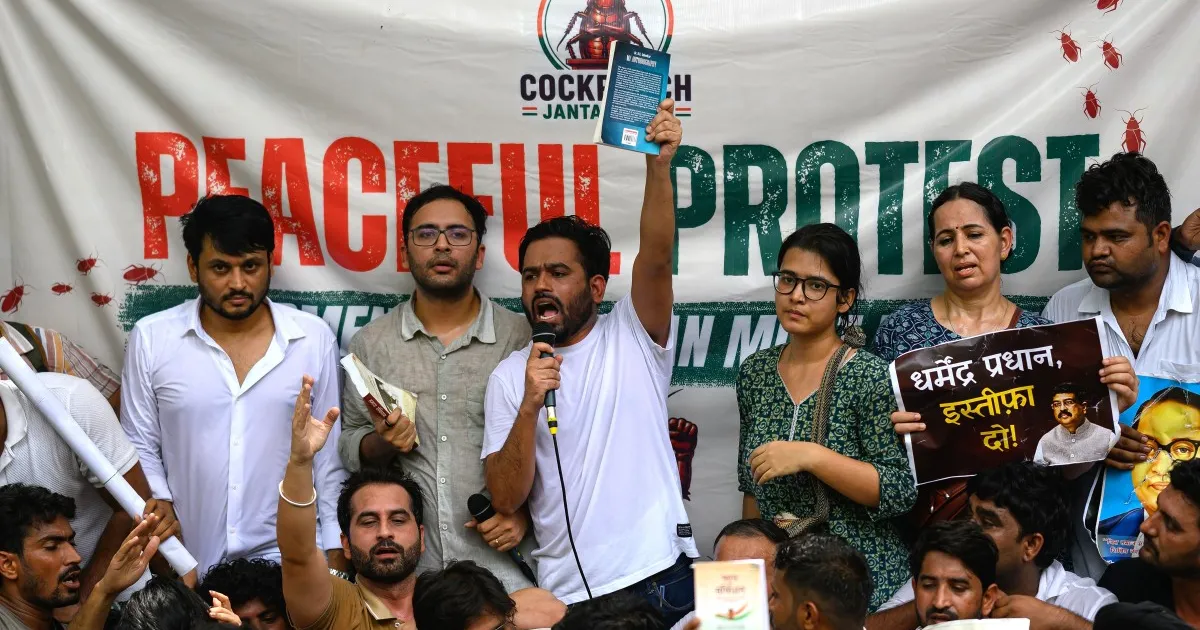
Hundreds of young protesters wearing cockroach masks gathered at Jantar Mantar in New Delhi on Saturday for the first physical street demonstration organised by the satirical Cockroach Janta Party (CJP). The rally, held at India’s most prominent protest site, saw participants waving national flags and clutching schoolbooks to demand the resignation of Education Minister Dharmendra Pradhan.
The demonstration was catalysed by a series of irregularities in India’s education sector, including paper leaks, technical glitches, and the cancellation of tests, particularly concerning the NEET medical entrance exam. For many attendees, the fiasco symbolises a broader loss of faith in the credibility of the education system and limited economic opportunities, with some citing reports of student suicides linked to the exam controversies.
The CJP emerged just three weeks ago as a parody account and meme factory following comments reportedly made by Chief Justice Surya Kant in May. During a court hearing, the Chief Justice likened government critics and unemployed youth to “cockroaches” and “parasites”. The movement, founded by 30-year-old political strategist and Boston University graduate Abhijeet Dipke, has since evolved from digital satire into a channel for public anger regarding economic promises and institutional failure.
Dipke flew in from the United States to lead the rally, telling supporters that “cockroaches don’t ever fear”. The group has rapidly amassed more than 20 million followers on Instagram, outgrowing many mainstream political parties online. The Saturday protest marks a critical test of whether self-deprecating memes and online engagement can be converted into a lasting political organisation capable of influencing governance.
Police in riot gear and steel barricades were deployed at the scene, underscoring the heightened security measures often applied to large protests in India. The presence of law enforcement highlights the risks associated with dissent in an era where large gatherings have frequently been met with crackdowns and criminal cases. The outcome of this mobilisation will indicate whether India’s hyper-connected youth can establish a new political language for their frustration.