Satirical 'Cockroach Janta Party' exposes India’s youth crisis amid diplomatic isolation
Analysts link the viral surge of the satirical party to high graduate joblessness, the collapse of the 'American Dream' for Indian students, and New Delhi’s perceived sidelining in West Asian affairs following the Iran war.
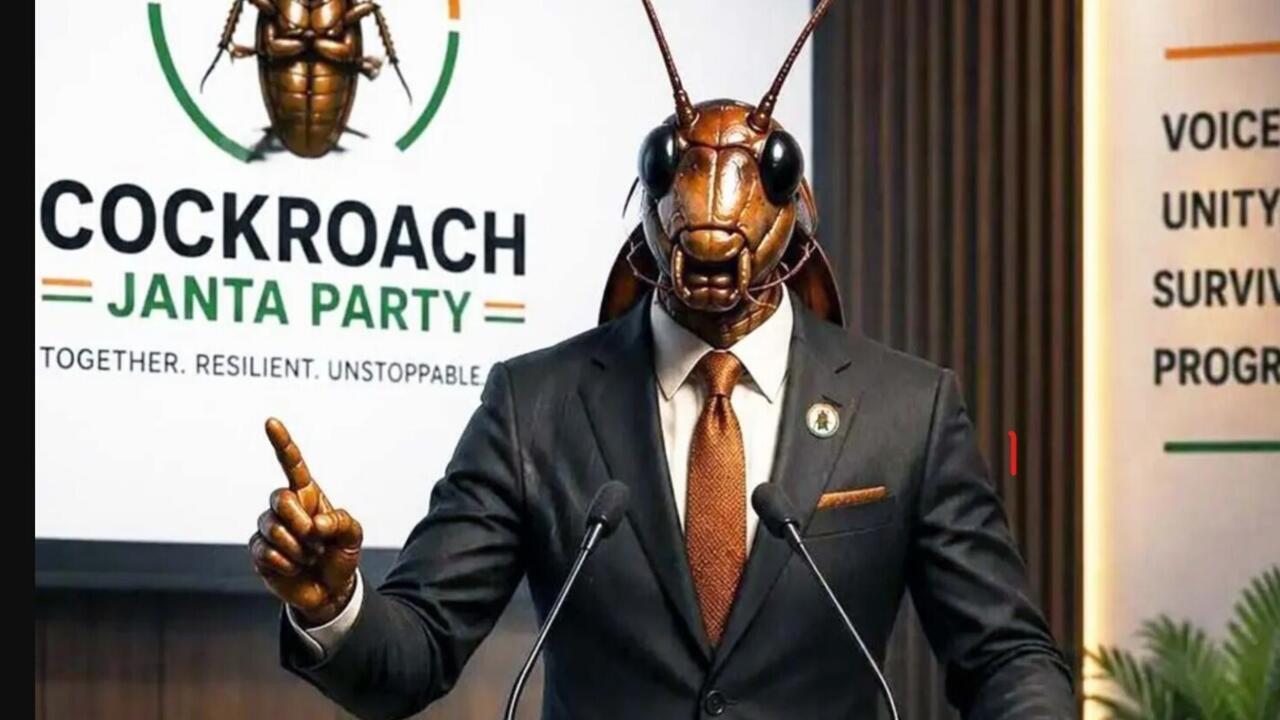
A satirical political movement known as the Cockroach Janta Party (CPJ) has emerged as a significant digital force in India, amassing nearly 23 million Instagram followers in a matter of weeks. The initiative was launched by Abhijeet Dipke, a 30-year-old political communications strategist and student at Boston University, in direct response to comments made by India’s Chief Justice Surya Kant, who referred to unemployed youth as "cockroaches". Although the Chief Justice later stated he was misquoted and was referring specifically to holders of fake degrees, the remark ignited a broader conversation about economic frustration and political alienation among India’s demographic majority.
The movement, a play on the ruling Bharatiya Janata Party, has quickly moved from online virality to street-level protest, with demonstrators wearing cockroach masks to voice their discontent. Dipke, who created the parody using artificial intelligence to generate its mascot, reported that the initiative has faced a coordinated online backlash. He alleges a "full-blown attack" to suppress the movement, citing hacking of social media accounts, the temporary removal of the CPJ website, and the withholding of its X account in India. Dipke also confirmed receiving death threats against himself and his family, prompting condemnation from digital rights groups regarding the erosion of free speech in the country.
Analysts suggest the surge in youth discontent is rooted in structural economic issues, particularly high unemployment rates that have persisted despite the government’s narrative of an "economic miracle". Official data indicates that joblessness among urban youth stands at 14%, significantly higher than the national average, while nearly 40% of graduates under the age of 25 are unemployed. This crisis is exacerbated by the economic fallout from the Iran war, which has driven up fuel costs and caused the Indian rupee to slump to record lows against the dollar, placing additional strain on households and industries dependent on Middle Eastern imports.
The discontent is further amplified by the fading of the "American Dream" for Indian students, a demographic that traditionally supports Prime Minister Narendra Modi’s administration. Under President Donald Trump’s second term, US student visas to India plummeted by 75% in the 2025 fall semester, with approximately 8,000 visas revoked before December 2025. The Trump administration’s imposition of a 50% tariff on Indian goods and its claims of mediating the recent India-Pakistan border conflict have further strained bilateral relations, leaving New Delhi feeling sidelined in key geopolitical debates.
India’s perceived diplomatic isolation has been highlighted by the Iran war, where Pakistan emerged as a key mediator and China strengthened ties with Islamabad, while India was notably absent from the resulting diplomatic frameworks. A recent visit by US Secretary of State Marco Rubio to New Delhi was viewed by analysts as lacking substantive outcomes, failing to reverse the deterioration in ties. As the CPJ movement continues to grow, experts warn that the convergence of economic anxiety and diplomatic marginalisation poses a potential political cost for the Modi government, challenging its ability to contain the growing unrest among the nation’s youth.