Satellite evidence reveals scale of Iranian strikes on US bases across Middle East
As the Pentagon estimates the cost of Operation Epic Fury at $29bn, experts warn that depleted air defence stocks leave Gulf facilities vulnerable to renewed assaults.
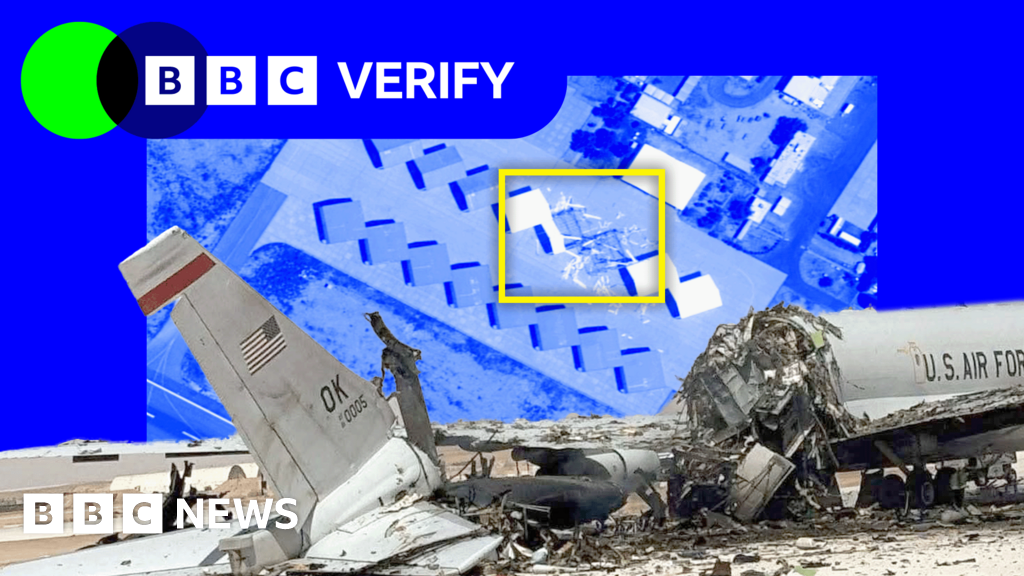
Satellite imagery analysed by BBC Verify indicates that Iranian strikes have damaged 20 US military sites across eight Middle Eastern countries since the conflict began in late February. The affected facilities, located in Saudi Arabia, the United Arab Emirates, Qatar, Kuwait, Iraq, Jordan, Bahrain, and Oman, have sustained significant damage to high-value assets, including Terminal High Altitude Area Defense (THAAD) batteries, refuelling aircraft, and surveillance planes. Analysts suggest Iran’s tactics have shifted from mass barrages to precise strikes on high-value targets, potentially exploiting perceived US complacency.
The Pentagon has estimated the total cost of Operation Epic Fury at $29bn, with a significant portion attributed to repair or replacement costs for destroyed equipment. However, Democrats have suggested this figure may be an underestimate. The report also identified that at least 42 aircraft, including F-15 and F-35 fighter jets, MQ-9 Reaper drones, and an A-10 attack plane, have been destroyed or damaged since February. By comparison, Iran has reportedly utilised cheap, easily replaceable drones to inflict this damage.
Among the most critical losses are three state-of-the-art anti-ballistic missile systems at airbases in the UAE and Jordan. The US operates only eight THAAD batteries globally, each costing approximately $1bn to manufacture. Vice-Admiral Mark Mellett, former head of the Irish Defence Forces, told BBC Verify that these batteries are central to a complex regional defence network that cannot be quickly or easily replaced. Each interceptor round costs around $12.7m, and the systems require crews of about 100 troops to operate.
Iran’s tactical approach has evolved significantly over the course of the war. Dr Kelly Grieco, an analyst with the US-based Stimson Centre think tank, noted that initial Iranian salvos were optimised for volume to overwhelm defences. Within days, however, Tehran shifted to smaller, precisely targeted salvos to conserve missiles and drones for specific high-value targets. An analyst at MAIAR suggested the US military appeared guilty of early-war complacency, failing to move aircraft out of range as Iranian tactics adapted.
The extent of the damage has prompted restrictions on satellite imagery. The US has requested Planet, a major provider, to impose an indefinite restriction on new images of Iran and most of the Middle East to prevent adversarial actors from targeting allied personnel. BBC Verify combined imagery from other international providers with older Planet images to track the damage. A US defence official declined to comment on the findings, citing operational security reasons.
Experts warn that depleted air defence stocks leave Gulf facilities vulnerable to renewed assaults. Dr Grieco stated that the current conflict has consumed US and partner air defence stocks at a significant rate, with no rapid path to replenishment. This suggests that any renewed Iranian assault would be met with a fraction of the interceptors available when the conflict started. Concurrently, US-Iran peace talks have stalled as air strikes resume near the Strait of Hormuz, with diplomatic channels currently unresolved.