Sanitation crisis deepens in Gaza seven months after ceasefire, driving surge in skin ailments
Residents face worsening conditions as the gap between the ceasefire agreement and tangible recovery widens, according to reports from NHK News Japan.
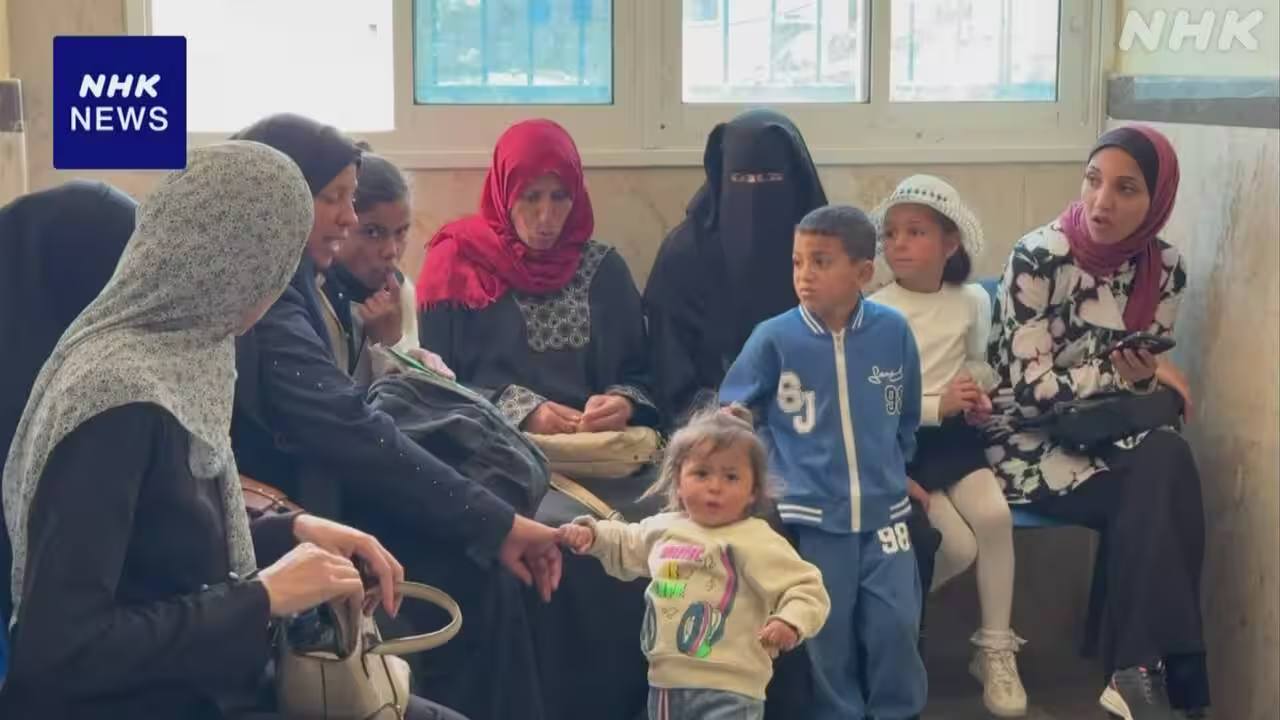
Seven months following the Israel-Palestine ceasefire agreement, the sanitation infrastructure in the Gaza Strip has continued to deteriorate, creating conditions that are directly correlating with a sharp increase in skin-related diseases among the local population. This decline in environmental hygiene highlights the persistent challenges facing the region as it attempts to stabilise post-conflict.
A United Nations agency currently assisting with relief efforts in the area has issued a specific plea for the immediate prioritisation of reconstruction work. The organisation argues that safeguarding the public health of residents is a critical factor that must drive the pace of rebuilding, yet the current reality suggests a significant lag in implementation.
The situation reported by NHK News Japan on 10 May 2026 underscores the long-term public health consequences of the ongoing conflict. While the ceasefire has provided a framework for peace, the physical decay of essential services remains a primary concern for those living in the Gaza Strip.
Specific details regarding the exact nature of the sanitation failures, such as water supply interruptions or waste management breakdowns, are not detailed in the available reporting. Similarly, while the rise in dermatological issues is described as sharp, precise statistical data regarding case numbers or percentage increases has not been released by the source.
Despite these gaps in specific data, the institutional warning from the United Nations remains clear: without accelerated reconstruction, the public health risks will continue to mount. The focus remains on the necessity of restoring basic services to prevent further deterioration of living conditions for the affected communities.
The report serves as a reminder that the transition from active conflict to sustainable recovery requires more than just a cessation of hostilities. It demands a robust policy response to infrastructure deficits that can directly impact the daily lives and health of the population.