SanDisk sets out long-term financial model as stock rallies 13.67%
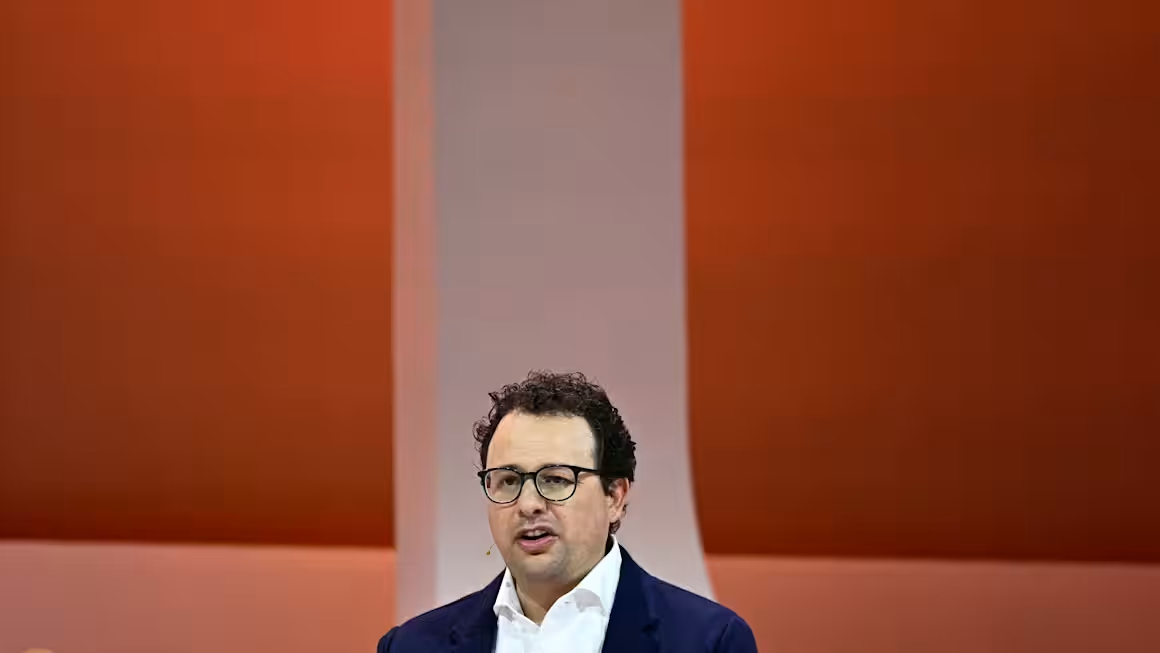
Following a massive earnings surge and share price jump, SanDisk CEO David Goeckeler details a strategy anchored in multi-year pricing agreements with hyperscale customers.
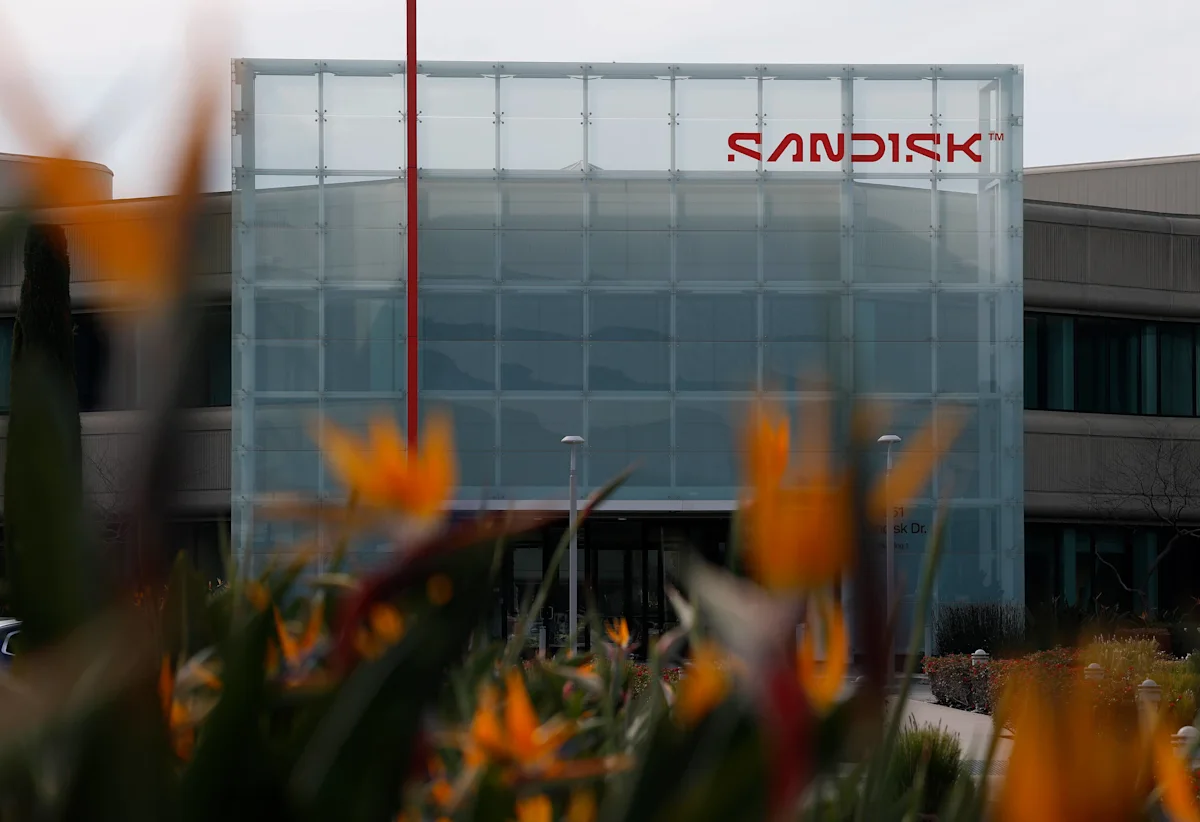
SanDisk has unveiled a long-term financial model projecting annual revenue growth in the mid-to-high teens, adjusted gross margins of approximately 80%, and adjusted operating margins of roughly 75% for fiscal years 2028 to 2030. The announcement came during the company’s Investor Day on 13 August 2026, triggering a 13.67% single-session share price surge to $1,528.11.
The presentation followed extraordinary fourth-quarter fiscal 2026 results, where revenue rose 372% year-on-year to $8.97 billion. Full-year fiscal 2026 revenue totalled $20.25 billion, up 175% from the previous year. Data centre revenue for the quarter hit $2.98 billion, a 103% sequential increase, contributing to a full-year data centre revenue of $5.15 billion, which represented a 437% year-on-year rise.
SanDisk committed to returning 100% of excess cash to shareholders after business investments. This policy, combined with projected adjusted free cash flow margins of approximately 50% after taxes, capital expenditures, and working capital, signals a significant shift in capital allocation for the memory and storage manufacturer.
Chief Executive Officer David Goeckeler attributed the current performance to a strategy outlined 18 months prior, emphasising disciplined execution and multi-year New Business Model (NBM) agreements. These agreements lock in pricing with hyperscale customers at margins above 80%, with more than one-third of fiscal year 2027’s output already committed under these contracts.
For the first quarter of fiscal 2027, SanDisk guided revenue between $10.30 billion and $10.80 billion. The company expects non-GAAP gross margins of 83.0% to 85.0% and non-GAAP diluted earnings per share of $44.00 to $46.00. Goeckeler noted that approximately two-thirds of the fourth quarter’s sequential revenue growth was driven by higher pricing rather than volume, indicating sustained supply-demand tightness in the market.