Russia's return to the Venice Biennale ignites diplomatic confrontation and jury resignations
Activists and dissidents argue that cultural institutions have become instruments of state power as international turmoil penetrates the exhibition
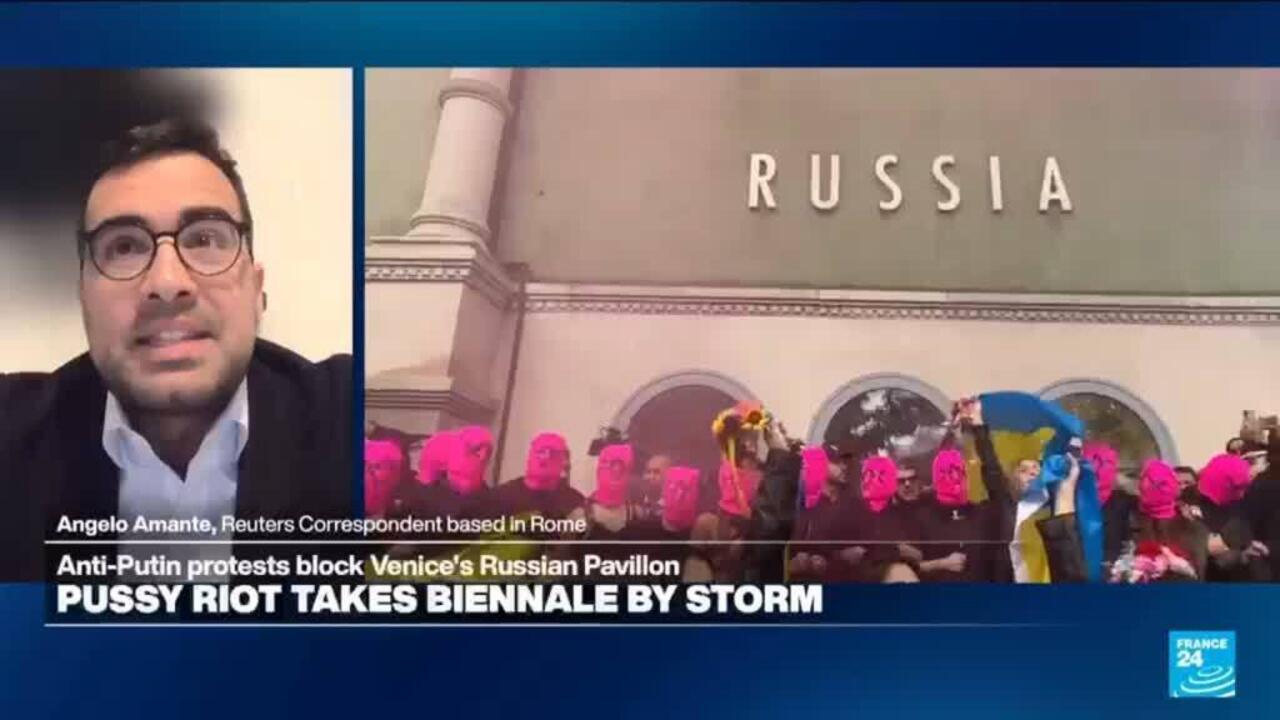
Russia has returned to the 2026 Venice Biennale, marking its first participation since the full-scale invasion of Ukraine in 2022. This decision to re-enter the international cultural calendar has immediately triggered protests from activists, artists, and political dissidents who contend that culture has effectively become an extension of state power and warfare. The presence of the Russian pavilion has transformed the event into a focal point for moral and diplomatic confrontation, reflecting broader global political fractures involving Russia and Israel.
The controversy has escalated to the point where the 2026 Venice Biennale jury has resigned amidst the debates surrounding the inclusion of the Russian pavilion. Organisers are now navigating complex questions regarding reputational damage versus the potential publicity of the event, illustrating how deeply international conflict has penetrated cultural life. The resignation underscores the extent to which the institution can no longer maintain a neutral stance in the face of such acute geopolitical tensions.
Protesters have articulated specific critiques of Western institutions, arguing that they celebrate while being soaked in the blood of Ukrainian children. Inna Shevchenko of the group Femen declared that the only culture in Vladimir Putin's Russia is blood, a statement that moved the discussion beyond symbolic protest to an interrogation of legitimacy. Similarly, Nadya Tolokonnikova of Pussy Riot accused Western institutions of drinking vodka and champagne in their pavilions while ignoring the ongoing violence.
These visceral statements reflect a broader analysis of soft power as a strategic weapon. Museums, exhibitions, and artistic prestige are increasingly viewed as instruments in the struggle for influence, rather than neutral spaces for dialogue. The rhetoric employed by the activists highlights a fundamental disagreement over whether cultural institutions can remain impartial during active warfare and state-sponsored conflict.
Reuters correspondent Angelo Amante frames the Biennale as a microcosm of global political fracture, noting that the turmoil on the international scene has really entered the exhibition. His observation captures the transformation of the event from a celebration of global art into an arena where diplomatic and moral conflicts are played out publicly. The situation reveals how the boundaries between cultural diplomacy and political warfare have become increasingly porous.
The events in Venice occur against a backdrop of wider international instability, including armed group attacks on military positions in Mali on 25 April 2026. This concurrent violence highlights a broader context of global conflict where cultural and military spheres are both arenas of struggle. The Biennale, therefore, serves not only as a site of artistic display but also as a barometer for the state of international relations.