Russia test-launches Sarmat ICBM as Putin claims strategic parity with West
The RS-28 Sarmat is set to replace Soviet-era Voyevoda missiles by year-end, amidst ongoing conflict in Ukraine and new US defence spending estimates.
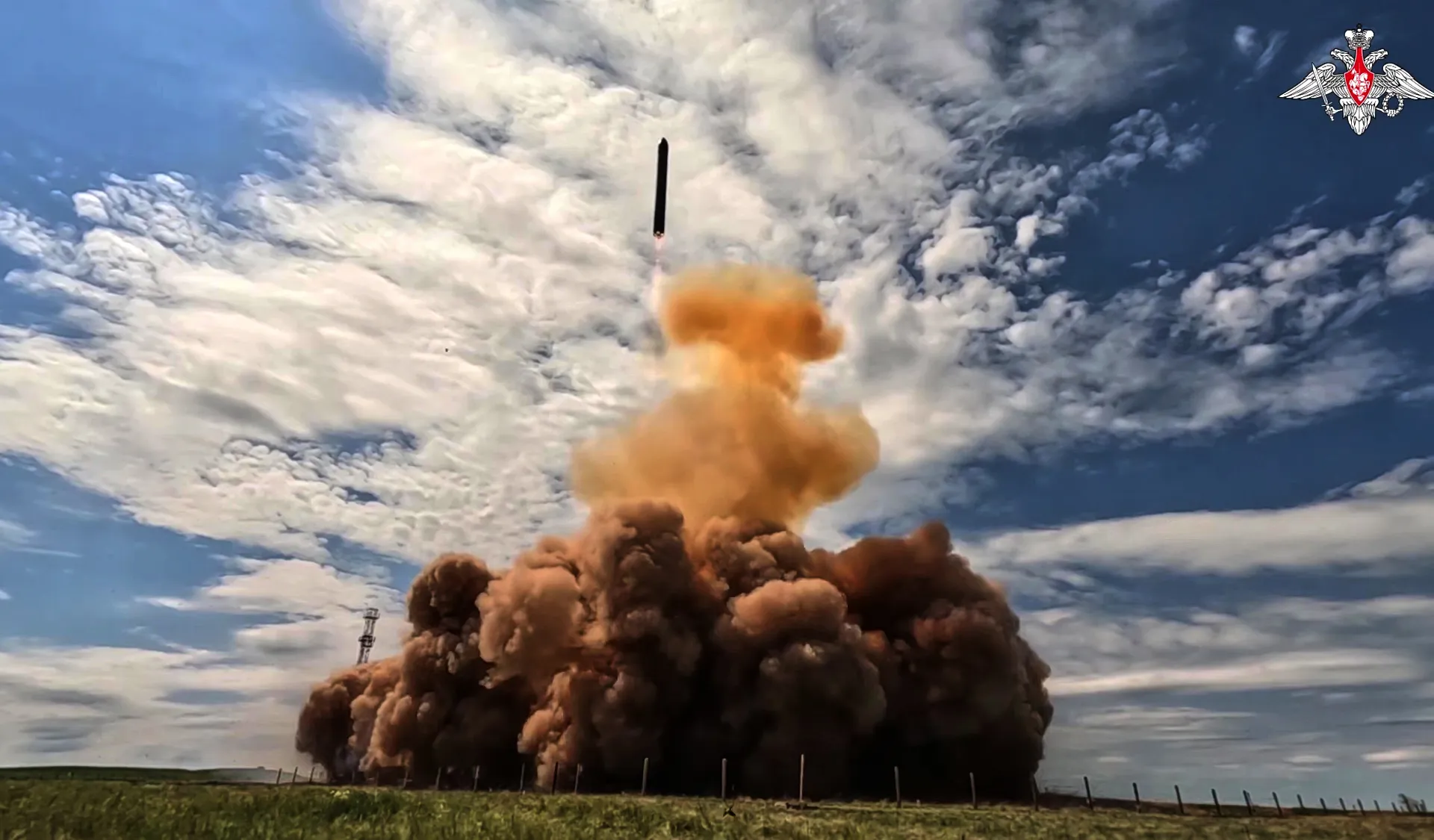
Russia has conducted a test launch of the RS-28 Sarmat intercontinental ballistic missile, a development President Vladimir Putin has described as the most powerful weapon in the world. The launch occurred on Tuesday, shortly after Putin claimed that the conflict in Ukraine was nearing its conclusion. The Russian leader stated that the nuclear-armed missile would enter combat service by the end of the year, designed to replace approximately 40 Soviet-era Voyevoda missiles currently in the strategic arsenal.
Putin asserted that the Sarmat possesses a maximum range exceeding 35,000km, a figure he claimed is far beyond Western estimates. He further stated that the weapon is capable of penetrating all existing and future antimissile defence systems. Western analysts, however, estimate the operational range at approximately 18,000km. Despite the discrepancy, both figures indicate the missile’s capacity to reach targets across the United States from Russian territory, with Moscow situated roughly 7,500km from New York and 9,700km from Phoenix.
The missile, known in the West as “Satan II,” has been in development since 2011. According to a 2024 report by the Center for Strategic and International Studies, the Sarmat weighs 208.1 tonnes, measures 35.3 metres in length, and carries a maximum payload of 10 tonnes. Previous testing has faced setbacks, including a reported explosion during a test in September 2024. Putin described the new system as offering higher precision than its predecessor while utilizing suborbital flight paths to reduce the window for detection and interception by missile defence systems.
The announcement coincides with broader shifts in global defence policy. On Tuesday, the US Congressional Budget Office released an analysis estimating that President Donald Trump’s proposed “Golden Dome” missile defence system would cost $1.2 trillion to build and maintain over 20 years. Russian officials have expressed concern that such robust defences could incentivise a first strike by Washington, prompting Moscow to maintain strategic parity through advanced weaponry. Putin has previously framed these developments as a necessary response to US withdrawal from Cold War-era missile defence limitations.
Amidst these strategic announcements, the war in Ukraine continues to escalate. Ukrainian President Volodymyr Zelenskyy announced on Tuesday that Ukrainian forces had struck gas facilities in Russia’s Orenburg region, located more than 1,500km from the border. Zelenskyy described the strikes as symmetrical retaliation for recent Russian attacks, part of a broader strategy to target energy infrastructure to reduce revenues funding the war. The Kremlin has reiterated that progress in talks with the US and Ukraine will soon bring the conflict to a close, though it cautioned that specific details were not yet available.