Russia deepens military and political integration with Madagascar's transitional government
The transitional administration, led by Colonel Michaël Randrianirina, has welcomed Russian hardware and personnel to bolster defence capabilities, while civil society groups question the strategic implications and the role of Africa Corps instructors in the country.
Since the military takeover in October 2025, security cooperation between Madagascar and Russia has intensified significantly, moving beyond diplomatic gestures to include substantial arms deliveries and the deployment of Russian personnel. The transitional government, led by Colonel Michaël Randrianirina, has openly welcomed this support, citing the need to strengthen defence capabilities and address growing insecurity across the island nation.
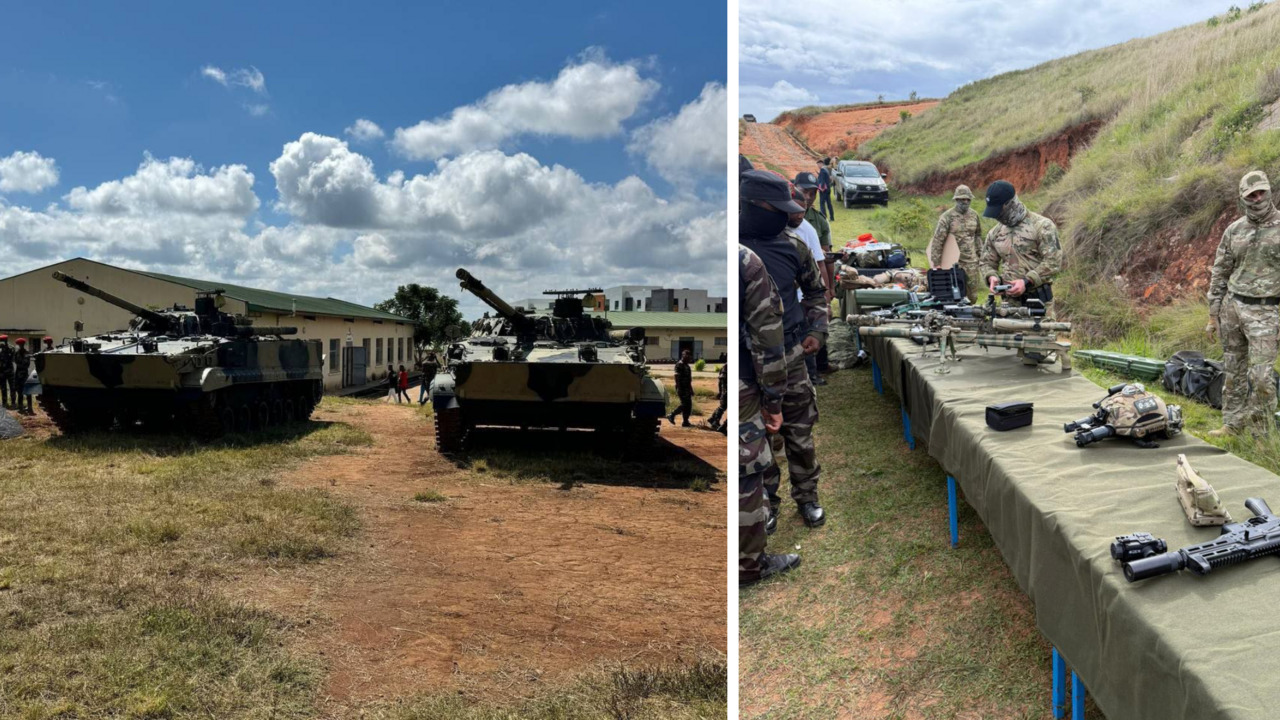
This deepening partnership has materialised through a series of coordinated handovers and training initiatives documented throughout 2025 and 2026. In December 2025, a 40-member Russian delegation arrived, reportedly led by Andrei Averyanov, the deputy head of Russian military intelligence and alleged commander of the Africa Corps. This visit saw the delivery of 16 kamikaze drones, 50 handguns, and 50 Kalashnikovs to the presidential guard, a move that raised immediate questions regarding the transparency of the arrangement.
Further escalations in military capacity occurred in early 2026, with the arrival of 140 Russian instructors tasked with training the Malagasy army. By late January, the first cohort of 140 soldiers had completed an eight-week programme covering military engineering, assault units, snipers, and drone operations. Subsequent reports indicated that these instructors, linked to Africa Corps, were teaching techniques for deploying reconnaissance and attack drones, as well as conducting drills involving small arms.
The scope of Russian involvement expanded into the logistical and political spheres as well. In February 2026, following severe cyclones, Russia delivered six Kamaz trucks and two Mi-8 helicopters. While initially designated for humanitarian relief, the transitional presidency announced that the equipment would subsequently be handed over to security forces to combat crime. Politically, a new pro-Russian party, the "Patriotic Awakening of a United Madagascar", was launched in March, alongside the establishment of a Russian-Malagasy Chamber of Commerce.
Despite the government's assertion that these measures are essential for national protection, civil society and opposition groups have expressed deep concern over the militarisation of the country. The Collective of Citizens and Civic Organisations (CCOC) has called for greater transparency, questioning the justification for importing heavy armoured vehicles and hiring foreign mercenaries when local soldiers are available. Critics argue that the current administration should focus on governance reforms rather than forging new foreign ties that bind the country's future.
Diplomatic friction has also arisen as a byproduct of this shifting alignment. On April 28, Madagascar called for the expulsion of a French embassy official amid accusations of destabilisation, a move that followed social media rumours which the French Embassy denied. This diplomatic row underscores the complex geopolitical landscape, where Russia's growing influence in the region is being viewed by some analysts as an effort to shift African foreign policy away from traditional Western partnerships.