Runway pivots to infrastructure layer with new AI model router
The Runway Media Router, available via the Runway Dev platform, automatically selects optimal third-party or proprietary models based on quality, speed, or cost, targeting enterprise customers including Adobe and Shutterstock.
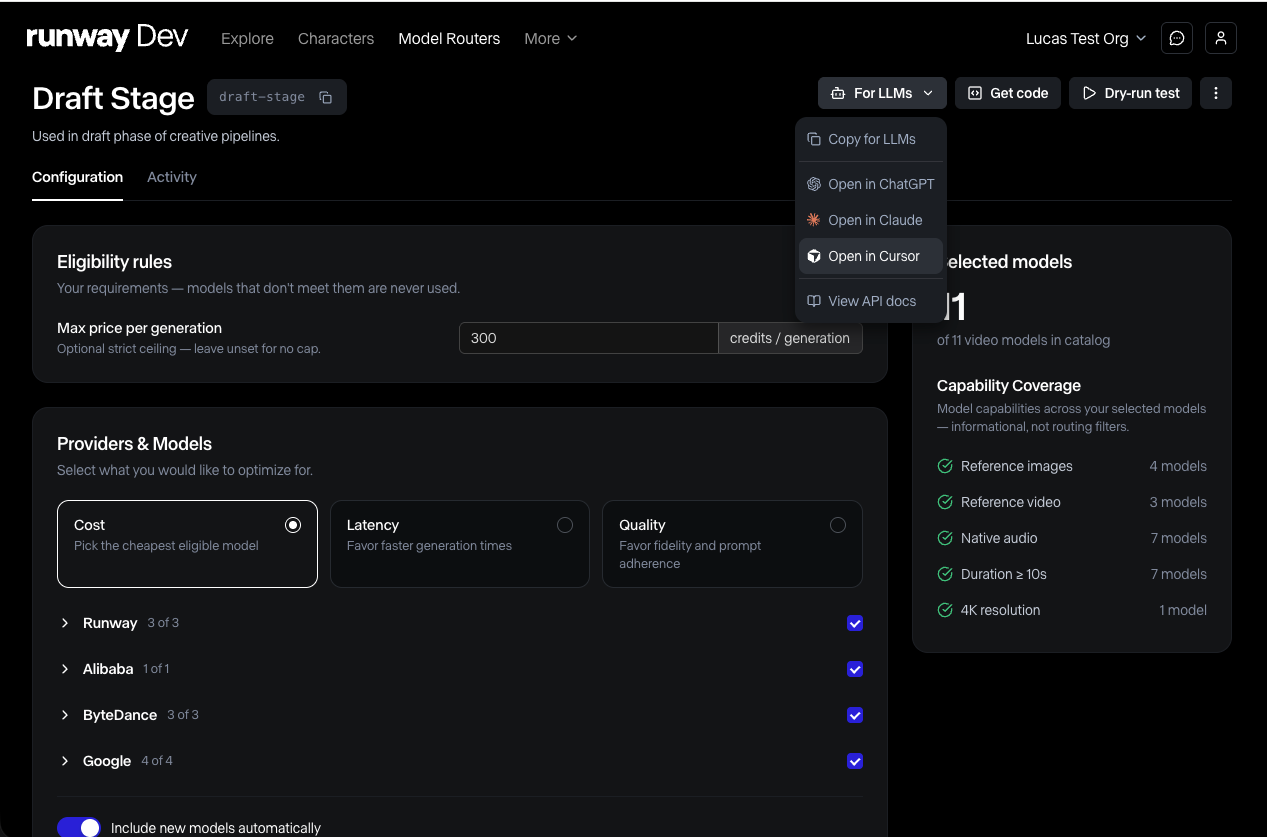
Runway has launched the Runway Media Router through its Runway Dev platform, a strategic move that repositions the company from a standalone AI model provider to an infrastructure layer for generative media. The router automatically selects the optimal image, video, or audio generation model—whether proprietary or third-party—based on developer priorities for quality, speed, or cost. This launch marks a significant evolution for the startup, aiming to simplify integration for enterprise customers such as Adobe, Cloudflare, and Shutterstock by abstracting the complexities of a fragmented market.
The tool addresses the growing difficulty developers face in evaluating diverse model capabilities across different media types. While model routing has become common in large language models, Runway states this is the first infrastructure tool built specifically for generative media. Anthony Maggio, Runway’s chief product officer, noted that most developers do not have the time to assess every new release, making the router’s ability to match model performance with business context a key value proposition.
Intelligence for the router is derived from Runway’s in-house creative team, which evaluates outputs for specific technical criteria such as motion handling in video, composition in images, and lip-syncing in audio. This capability builds on technology previously developed for Runway’s agent product, launched in May 2026, which serves as a conversational AI creative partner for generating multi-shot videos and marketing campaigns.
The pivot comes amid rising concerns over token pricing volatility, particularly for enterprises utilising agentic AI in 2026. The router allows businesses to manage costs by selecting models that balance performance with budget constraints. Additionally, the tool offers flexibility for companies navigating geopolitical risks, allowing them to set preferences for American model providers over Chinese alternatives, which may be subject to potential regulatory scrutiny or sanctions.
This strategic shift reflects Runway’s response to a competitive landscape where its own frontier video models no longer dominate leaderboards. While its video editing model Aleph 2.0 remains a leader, top spots in text-to-video and image-to-video categories are held by competitors including Google, ByteDance, and Alibaba. Co-founder and co-CEO Anastasis Germanidis acknowledged that while great models remain essential, the orchestration layer is increasingly critical for companies building entire campaigns or multi-scene generations.