Royal diplomacy stabilises tone but UK-US strategic divergence persists
While personal rapport between the monarch and President Trump has improved, analysts warn that deep disagreements on defence spending and policy remain unresolved
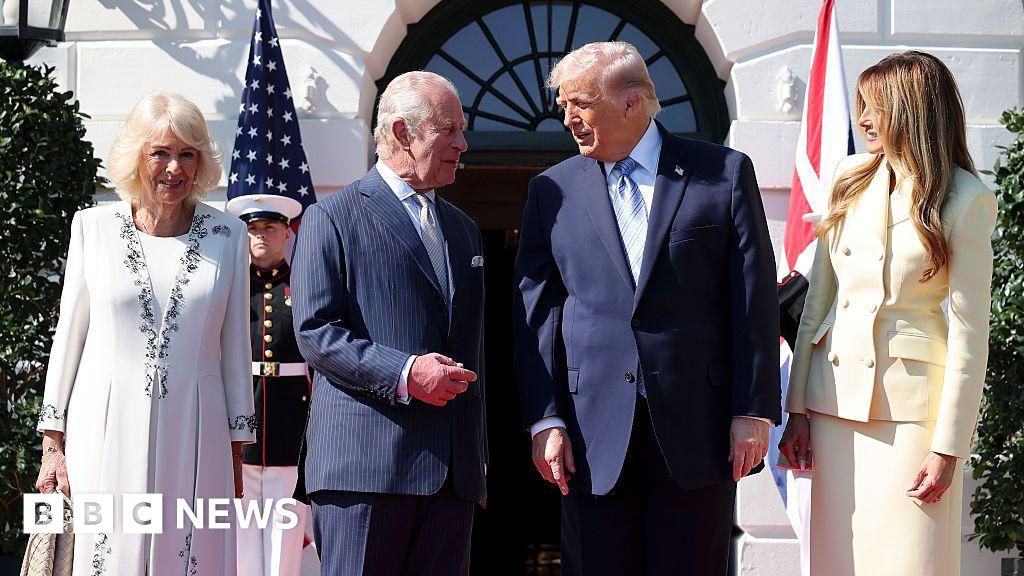
King Charles III has concluded a state visit to the United States, delivering addresses to Congress and President Donald Trump that emphasised the strength of the UK-US alliance, support for NATO, and the defence of Ukraine. The tour successfully improved the diplomatic tone between London and Washington, with US Senator Lindsey Graham noting a "much needed morale boost" for politicians. However, while the visit offered personal warmth between the sovereign and the President, analysts caution that deep disagreements over Iran, trade, and rhetoric remain.
British diplomats had entered the engagement with pragmatic expectations, acknowledging that a total reset of the relationship was impossible given the depth of differences regarding Iran, NATO, Ukraine, and President Trump's rhetorical attacks on UK Prime Minister Sir Keir Starmer. Instead of seeking a complete overhaul, the mission was designed to act as a "shock absorber" to lower tensions and create a better climate for re-engaging on difficult bilateral issues. The visit proceeded as planned despite a recent shooting incident at the White House and coincided with the 250th anniversary of American independence.
In his speeches, the King leveraged personal warmth and humour to frame the partnership as resilient, explicitly challenging isolationist ideologies by advocating for a "twin pillars" approach involving Europe and America. He stated that the challenges facing the world are "too great for any one nation to bear alone," directly countering President Trump's "America First" ideology. A key moment of this diplomatic effort was the monarch gifting President Trump a ship's bell from HMS Trump, a move described as a masterstroke of deft diplomacy.
The King addressed the polarised US audience by referencing the "living mosaic" of the nation and reminding Americans of their shared history. He highlighted that the Atlantic partnership was "based on twin pillars: Europe and America" and argued that the alliance was "more important today than it has ever been." He also noted that NATO had supported the US "shoulder to shoulder" after the 9/11 attacks and emphasised the need for "unyielding resolve" for Ukraine.
The success of this engagement now hinges on whether the personal rapport translates into sustained government cooperation and increased UK defence spending to reassure US generals. Experts suggest that no amount of royal soft power will fully compensate for concerns regarding the UK's hard power capabilities. The legacy of the visit will ultimately depend on whether the UK can avoid cheap political shots and demonstrate it remains an independent security actor capable of burden sharing.
While the state banquet and ceremonies have passed, the test remains for politicians to build on the historic trip. The visit may have smoothed over immediate frictions, but it is unlikely to guarantee that President Trump will cease his criticism of Sir Keir Starmer in the future. The proof of the visit's utility will be found in subsequent policy actions rather than the pomp of the occasion.