Ronaldinho joins Ravenna: A governance test for third-tier Italian football
The 46-year-old Brazilian legend has officially arrived in Ravenna, where club leadership is framing his return as a strategic partnership rather than a guaranteed on-field solution.
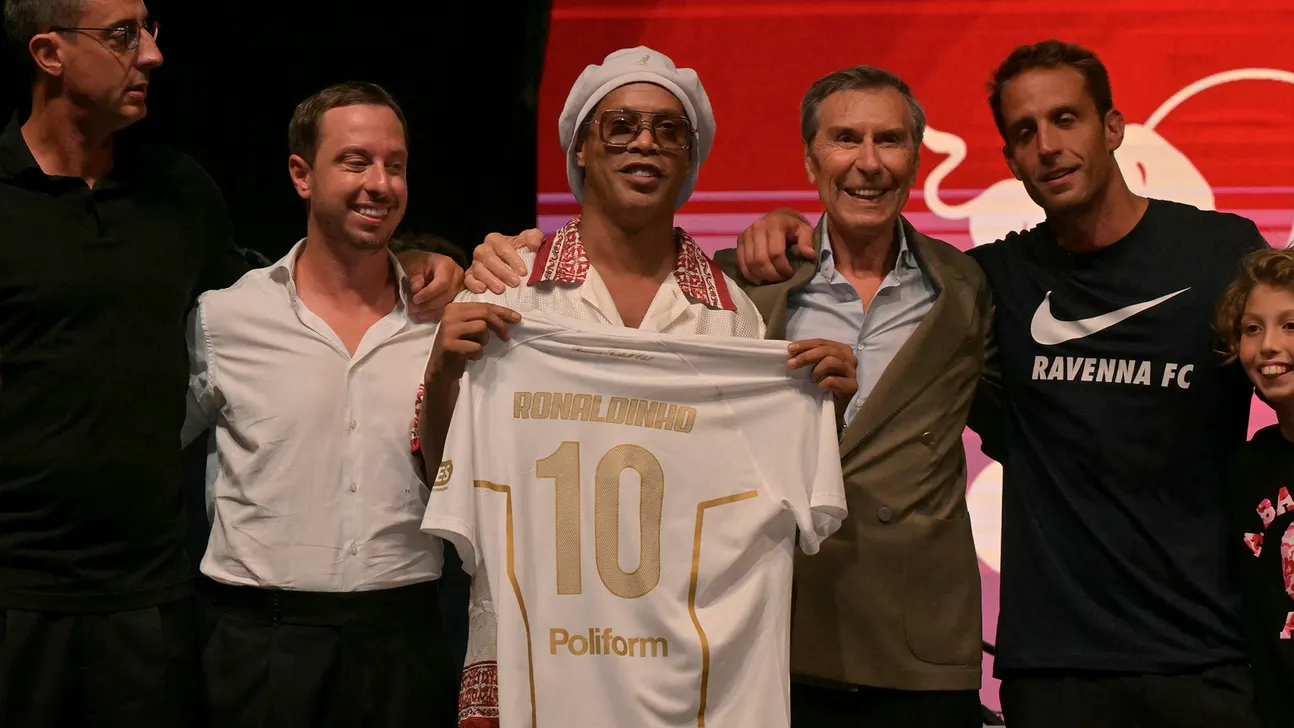
Brazilian football icon Ronaldinho has officially arrived in Ravenna, marking his return to professional competition more than a decade after his last appearance for Fluminense in 2015. The 46-year-old’s signing, which was announced in a surprise move in June, represents a significant institutional step for the Italian third-division club, which competes in Serie C.
The player’s arrival was marked by a public presentation ceremony dubbed "Ronaldinho day," attended by approximately 6,000 fans. The event, held on a beachside venue despite intermittent rain, saw Ronaldinho unveiled as the team’s new number 10. He arrived at Forlì Airport by private jet around midday, signing memorabilia for staff before travelling to the city alongside Ravenna President Ignazio Cipriani.
While the spectacle of the unveiling has generated considerable media attention, the practical implications for the squad remain subject to internal deliberation. Ronaldinho stated that his playing time is not yet defined, noting that it depends on the decisions of the club president and the coaching staff. He described his primary motivation as a desire to help the team, citing a personal friendship with the club’s leadership.
Club President Ignazio Cipriani has articulated a specific objective for the campaign, expressing hope that Ronaldinho could score his final career goal for Ravenna. However, this remains a stated aspiration rather than a confirmed tactical certainty. The club’s approach appears to balance the commercial and symbolic value of the signing with the operational realities of a third-tier season.
Ronaldinho will not feature in Ravenna’s first Serie C match of the season, which is scheduled for Monday against Reggio Emilia. This exclusion suggests that the club is managing his integration carefully, prioritising team performance in the immediate term over the presence of their most high-profile asset.
This marks Ronaldinho’s second spell in Italy, following a previous tenure with AC Milan from 2008 to 2011. As a two-time Ballon d’Or winner and 2002 World Cup champion, his presence in Ravenna offers a unique case study in how lower-league institutions leverage global star power to define their identity and governance structure.