Romania’s political crisis deepens as moderate coalition collapses and far-right gains ground
With moderate parties unable to form a new administration despite presidential mediation, experts warn that the PSD’s legislative cooperation with extremist factions signals a dangerous normalization of right-wing politics in a key NATO and EU member state.
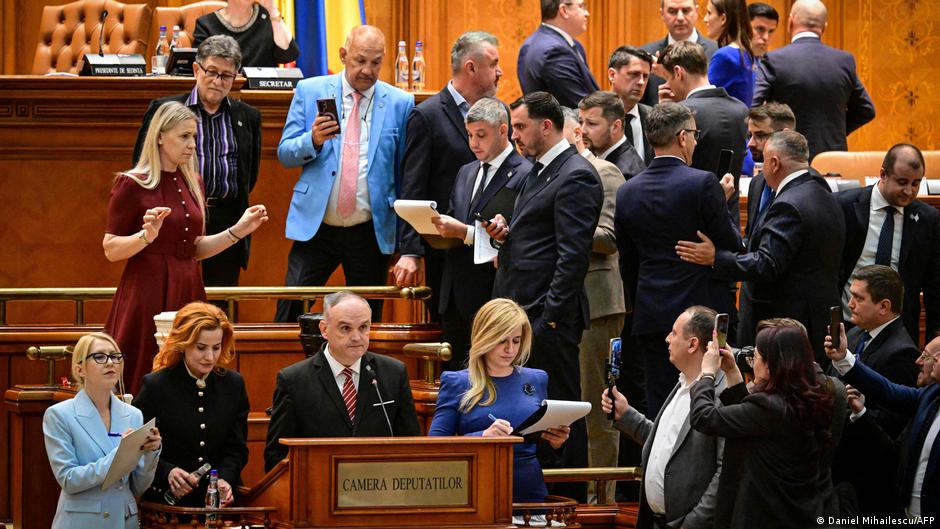
The political stability of Romania has deteriorated significantly following the collapse of Prime Minister Ilie Bolojan’s four-party coalition in early May. The government, which had been viewed by many observers as the final bulwark against far-right ascendancy, fell after a vote of no confidence initiated by the Social Democrats (PSD) and the Alliance for the Unification of Romania (AUR). Despite extensive mediation efforts by President Nicusor Dan, moderate parties have failed to reach an agreement on a successor, leaving the country in a prolonged state of political limbo.
The crisis has been exacerbated by the PSD’s increasing legislative collaboration with the AUR, despite the social democrats’ formal commitment to European Union values. This cooperation, which includes the joint effort to bring down the Bolojan government, has prompted political scientist Raluca Alexandrescu to describe a "normalization of right-wing extremism" within Romanian politics. The PSD, which holds the most seats in parliament, had previously been part of the Bolojan coalition, making this the first instance where moderate and far-right forces joined forces to topple a sitting administration.
Legislative actions in mid-to-late May have further illustrated this shifting alliance. In the Senate, the PSD and AUR voted together to support an NGO law requiring the publication of donor names for contributions exceeding €1,000 annually, a measure critics have likened to the "Putin-Orban playbook." Additionally, the PSD backed the "We-are-not-selling-our-land" law, which prevents the sale of minority shareholdings in state-owned companies, a move that revives nationalist rhetoric from the post-communist era.
Controversy also arose in mid-May when the PSD supported a legislative project in the human rights committee to overturn bans on anti-Semitic, fascist, and racist propaganda. The move sparked public outcry, leading PSD leader Sorin Grindeanu to later characterize the vote as a "slip up." However, the pattern of cooperation with far-right parties, including SOS Romania and the Party of Young People (POT), suggests a strategic realignment that has alarmed democratic observers.
The political realignment comes at a critical time for Romania’s strategic position in southeastern Europe. As the EU member state with the longest border with Ukraine and a host to significant NATO infrastructure, Romania’s political trajectory carries substantial geopolitical weight. Recent polls indicate the AUR could secure 32% of the vote, potentially surpassing the PSD’s projected 24%, raising fears that the current crisis could transform into a systemic democratic challenge ahead of the 2028 parliamentary elections.