Roman Space Telescope to Probe Early Universe Black Holes via Stellar Shredding
Scheduled for launch in August 2026, the observatory’s near-infrared capabilities will allow astronomers to observe events from up to 11 billion years ago, helping to distinguish between competing theories of black hole origins.
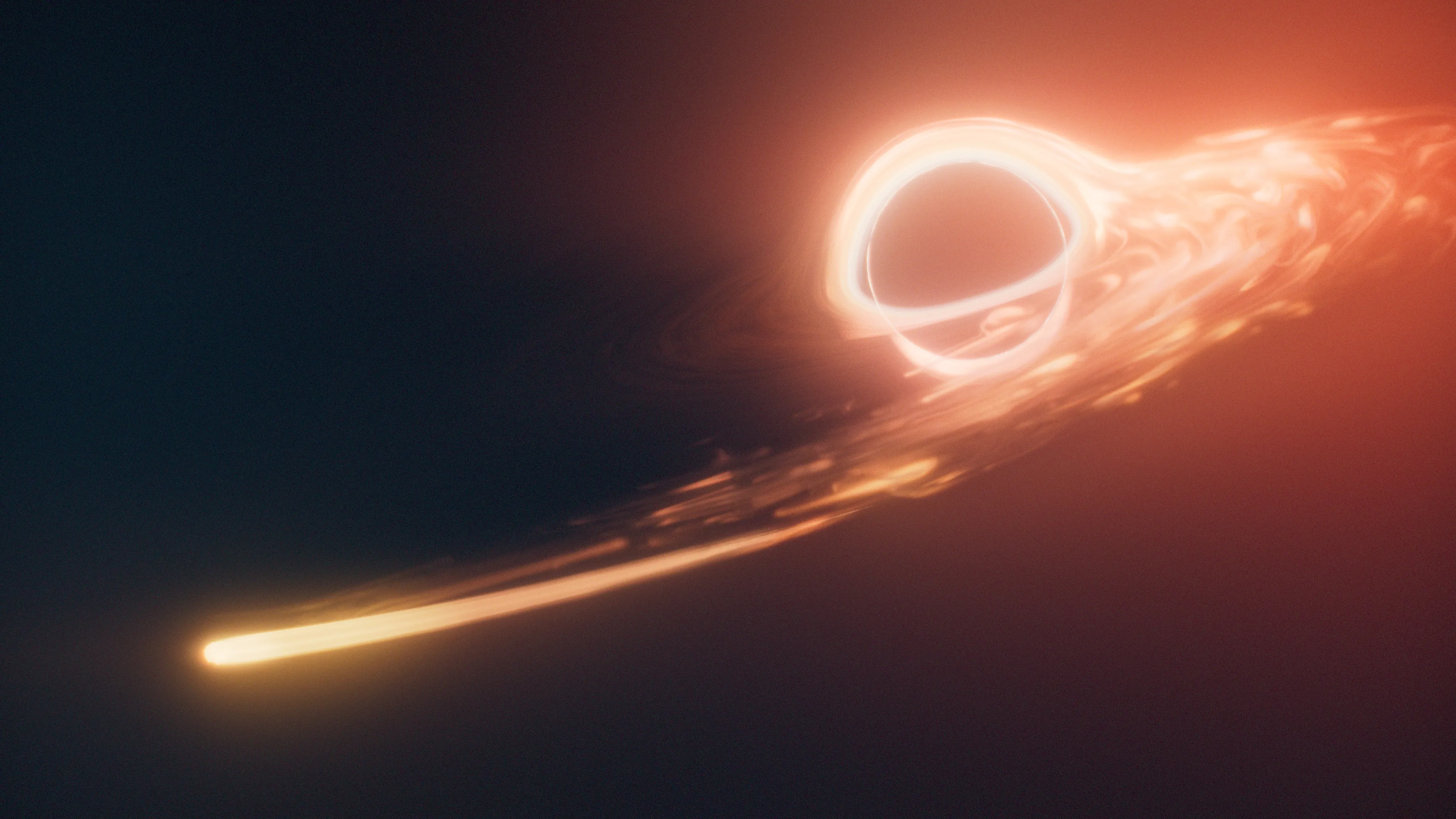
New research published in The Astrophysical Journal suggests that NASA’s Nancy Grace Roman Space Telescope will be uniquely positioned to detect distant supermassive black holes by observing tidal disruption events. These phenomena occur when a black hole shreds and consumes a star, creating a bright beacon that can outshine its entire host galaxy. The study indicates that the telescope’s high sensitivity and near-infrared capabilities will enable it to observe these events from up to 11 billion years ago, providing crucial insights into the early universe.
The Roman telescope is scheduled to launch on 30 August 2026 and is expected to detect up to 100 tidal disruption events per year. While this number is lower than the thousands of events anticipated from other observatories, Roman’s observations will focus on significantly greater distances. This capability is essential for distinguishing between “light seed” and “heavy seed” theories regarding the formation and growth of supermassive black holes.
Lead author Mitchell Karmen, a graduate student and National Science Foundation Graduate Research Fellow at Johns Hopkins University, described the telescope as transformative for transient science. Karmen noted that Roman’s high sensitivity allows for the detection of multiple tidal disruption events at greater distances and earlier cosmic times than previously possible. The research models predict that the rate of these events will increase as Roman probes deeper into space, peaking during “cosmic noon” approximately 11 to 12 billion years ago, before decreasing again.
Roman’s ability to observe these distant events is facilitated by its optimisation for near-infrared wavelengths. As the universe expands, light from distant sources is stretched to longer wavelengths, a phenomenon known as cosmological redshift. This makes Roman inherently suited to detect tidal disruption events whose light has travelled between 8 billion and 11 billion years to reach Earth. The telescope’s High-Latitude Time-Domain Survey will cover approximately 18 square degrees of the sky, revisiting regions at a regular cadence to identify these transient events.
The findings complement the work of the Vera C. Rubin Observatory, which will detect thousands to tens of thousands of tidal disruption events per year using visible-light observations. However, Rubin’s visible-light focus limits it to closer events compared to Roman’s near-infrared reach. Co-author Suvi Gezari, an associate professor of astronomy at the University of Maryland, stated that counting tidal disruption events as a function of redshift will allow astronomers to place meaningful constraints on the population of million-solar-mass black holes.
The research aims to clarify how supermassive black holes formed so early in the universe’s history. The “light seed” theory posits that black holes began as remnants of massive stars, weighing a few hundred times the mass of the Sun, while the “heavy seed” theory suggests they formed with masses up to a million times that of the Sun through direct gas cloud collapse. By probing the population of lighter supermassive black holes, tidal disruption events will help scientists discriminate between these models.
The Nancy Grace Roman Space Telescope is managed at NASA’s Goddard Space Flight Center in Greenbelt, Maryland, with participation from the Jet Propulsion Laboratory, Caltech/IPAC, and the Space Telescope Science Institute. The primary industrial partners include BAE Systems, L3Harris Technologies, and Teledyne Scientific & Imaging.