RISE scientist urges Europe to overhaul land management amid 'new normal' of wildfires
A senior research scientist from Sweden’s RISE Research Institutes contends that European nations must pivot to preventative strategies centred on strategic landscape design and ecological planning.
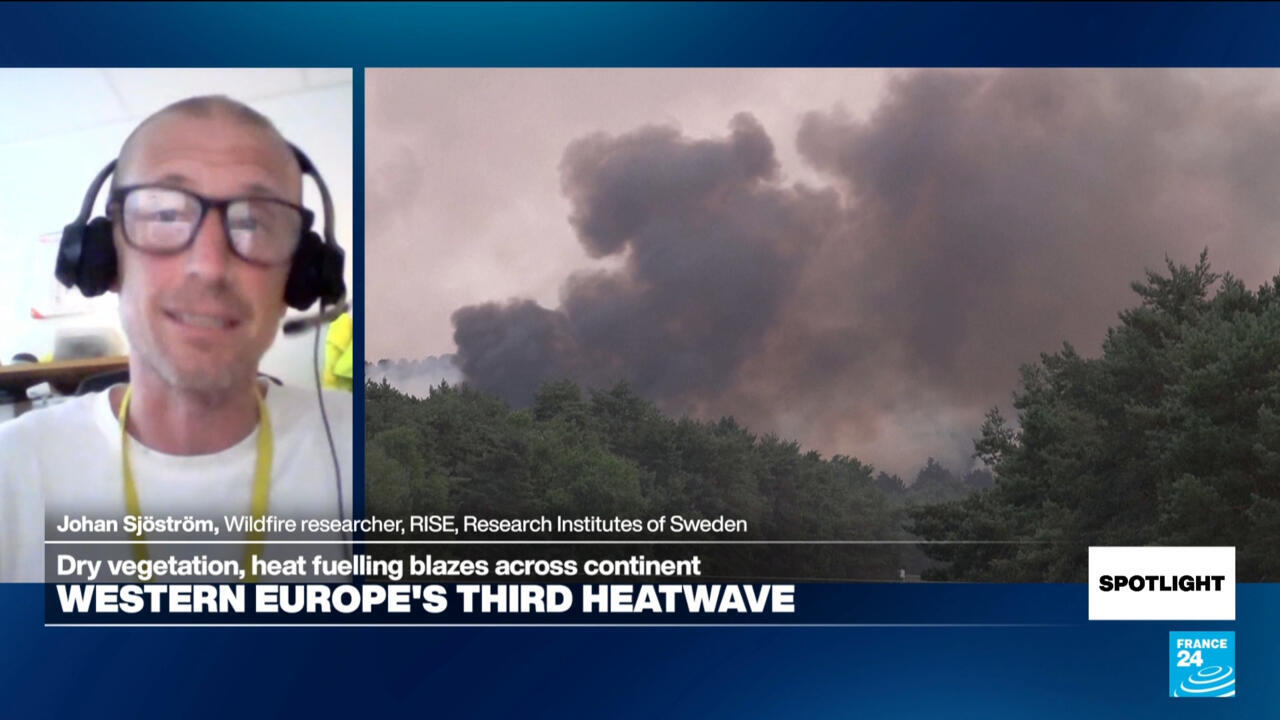
Johan Sjöström, a senior research scientist at RISE Research Institutes of Sweden, has called for a fundamental shift in how European nations manage wildfire risk, describing recent devastating fires in northern France as part of a "new normal" rather than an isolated anomaly. Speaking on the France 24 program Spotlight on 15 July 2026, Sjöström argued that the continent’s approach must move beyond reactive emergency response to embrace preventative strategies rooted in strategic landscape design and long-term adaptation.
Sjöström’s analysis, conducted during an interview with François Picard, moves beyond attributing wildfire crises solely to rising temperatures. He contends that the heightened risk is the product of multiple reinforcing factors that interact to create volatile conditions. These include wetter winters that generate excessive combustible vegetation, repeated heatwaves that desiccate landscapes, and strong winds that accelerate fire behaviour.
A critical component of this risk profile, according to Sjöström, is the failure of existing land management systems to adapt to these evolving environmental conditions. He emphasises that institutional preparedness must be re-evaluated to account for the complex interplay between climate patterns, vegetation density, and soil moisture levels.
The scientist urges European governments to prioritise ecological planning and strategic landscape design as core components of their security and environmental policies. This preventative model would aim to mitigate fuel loads and create defensible spaces, reducing the likelihood of catastrophic fire spread before emergency services are required to intervene.
While the discussion was framed against the backdrop of recent severe fires in northern France, Sjöström’s recommendations apply to the broader European context. He suggests that without a structural shift towards long-term adaptation, the continent will remain vulnerable to increasingly frequent and intense wildfire events driven by the convergence of climatic and managerial failures.
The source material does not specify the exact dates, locations, or casualty figures associated with the referenced wildfires in northern France. Furthermore, it is not defined whether the designation of a "new normal" represents a consensus view among all climate scientists or is specific to Sjöström’s research findings at RISE.