Putin enacts debt relief and foreign deployment law to bolster Ukraine war effort
Russian President Vladimir Putin has signed legislation cancelling debts for new recruits and authorising military deployment to protect citizens abroad, marking a significant escalation in Moscow’s institutional support for the conflict.
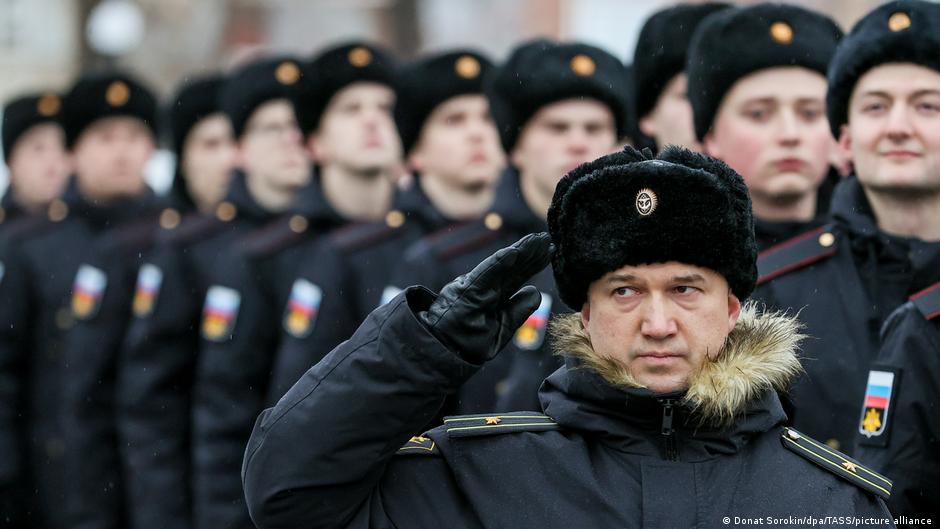
Russian President Vladimir Putin has signed a decree providing debt relief of up to 10 million rubles for new military recruits who signed contracts after 1 May 2026 to fight in Ukraine. The measure extends to spouses and mandates contracts of at least one year. Concurrently, Putin enacted legislation permitting the deployment of armed forces abroad to protect Russian citizens facing arrest or judicial processes in third countries. This follows Russia’s long-standing practice of offering financial incentives for military service in Ukraine, with the economy now prioritising military needs. The new deployment law was reportedly prompted by the case of Russian architect Alexander Butyagin, who was arrested in Poland in December 2025 at Kyiv’s request regarding excavations in Crimea.
The decree, signed on Monday, applies to debts incurred before 1 May 2026. According to the Russian real estate database Cian, the 10 million ruble limit is approximately equivalent to the cost of a 35-square-metre one-room apartment in Moscow. To qualify for the exemption, recruits must sign contracts specifically for "fulfilling the tasks of the special military operation," the Kremlin’s term for its full-scale invasion. This financial incentive builds upon more than four years of lucrative salary offers to men signing up to fight in the forces carrying out the offensive against Ukraine.
In a separate legislative move, Putin enacted a law allowing the deployment of Russian armed forces outside the country to protect citizens facing justice in other nations. The legislation permits military intervention in third countries where the liberty of Russian citizens is threatened by judicial processes or arrests conducted without Moscow’s permission or outside international law. The head of the Russian parliament’s defence committee, Andrey Kartapolov, cited the case of Alexander Butyagin as a potential application of this new authority.
Butyagin, a Russian architect, was arrested in Poland in December 2025 at Kyiv’s request regarding excavations in Crimea. The annexation of Crimea by Russia from Ukraine in 2014 is described as illegal by Ukraine and much of the international community. Butyagin was released in April 2026 as part of a prisoner exchange between Ukraine and Russia, a case that Kartapolov argued justified the need for the new deployment law.
These measures align with broader strategies to sustain the war effort, including previous directives for Ukraine war veterans to be given prestigious positions in Russia upon their return. Veterans are also to be given priority when applying for university or colleges of further education. Russia’s economy is now on a war footing, with military needs taking precedence over other sectors, as the state continues to institutionalise support for its armed forces.